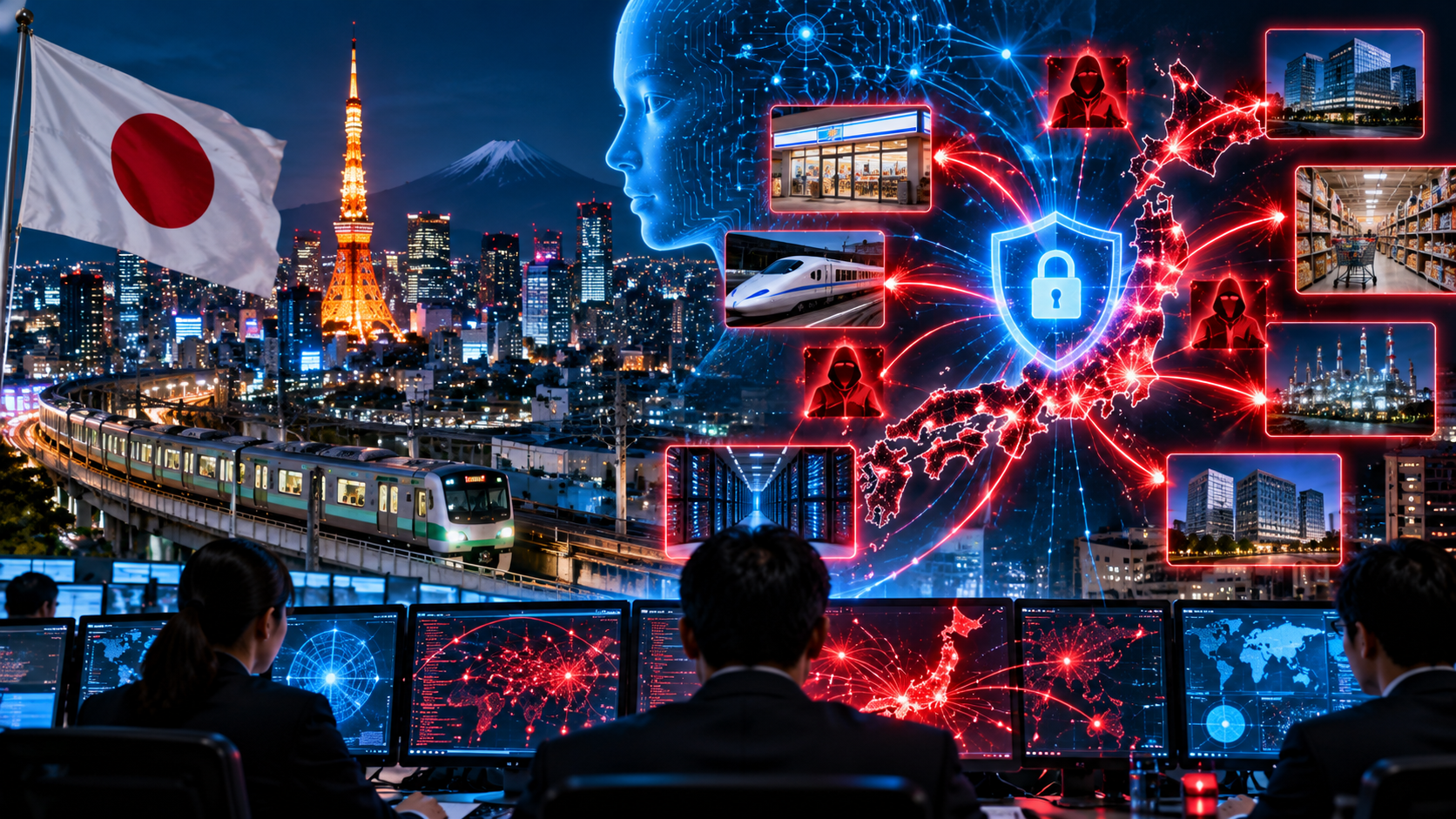
Japan's National Cybersecurity Strategy Headquarters held an emergency meeting Friday after cyberattacks affected more than 20 prominent companies, including Lawson, Times Car and JR East. The attacks compromised tens of millions of customer records, according to the available report.
The development has been described as an emergency in cyberspace by NCSH head Masaaki Taira. Cybersecurity minister Toshiharu Furukawa called the situation “extremely critical.”
Companies and records affected
JR East was among the affected companies, with 1.67M email addresses exposed. Lawson and Times Car were also identified among the prominent firms hit by the attacks.
The broader incident involved tens of millions of customer records across the affected companies. a separate figure for each company is not yet available.
AI's role in the attacks
Officials and analysts cited AI's role in lowering barriers for carrying out cyberattacks. The available report does not provide further details about the specific tools, techniques or groups involved.
Japan's emergency meeting brought together the National Cybersecurity Strategy Headquarters after the attacks spread across more than 20 prominent firms. The available information does not state what additional measures officials announced after the meeting.
Conclusion
Japan has treated the attacks as an emergency in cyberspace after more than 20 companies were affected and tens of millions of customer records were compromised. JR East's reported exposure involved 1.67M email addresses.
Frequently Asked Questions
Q. What happened in Japan?
Japan held an emergency meeting after cyberattacks affected more than 20 prominent companies.
Q. Which companies were named?
The named companies were Lawson, Times Car and JR East.
Q. How many records were compromised?
The attacks compromised tens of millions of customer records.
Q. What information was exposed at JR East?
JR East had 1.67M email addresses exposed.
Q. How did officials describe the situation?
NCSH head Masaaki Taira called it an “emergency in cyberspace,” while cybersecurity minister Toshiharu Furukawa described it as “extremely critical.”