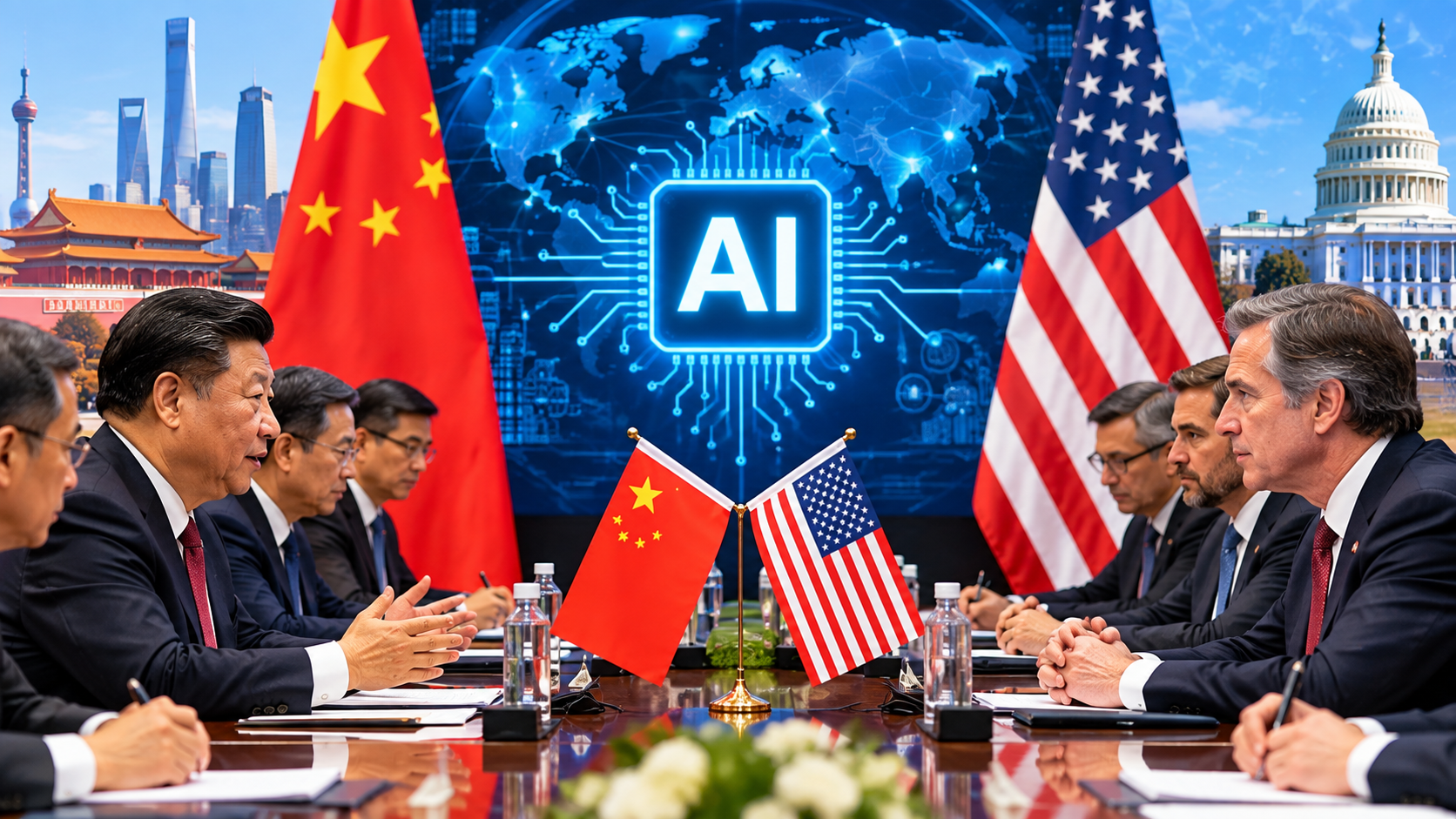
China and the United States have completed their first dialogue on artificial intelligence (AI), marking a new channel for discussion as disputes over technology, trade and access to advanced chips continue to intensify.
China's Vice-Premier He Lifeng and US Treasury Secretary Scott Bessent led the talks for their respective countries, China's Ministry of Commerce said on Thursday. He Yadong, a ministry spokesman, confirmed the meeting while briefing reporters on the eighth round of US-China trade talks held in New York on Sunday.
AI tensions behind the talks
AI has become a major point of friction between Beijing and Washington. The United States maintains strict controls on Chinese access to advanced AI chips, while US officials have accused Chinese developers of using “distillation” to reproduce capabilities associated with more advanced American systems.
Distillation is a technique in which a smaller AI model learns from the output of a more advanced model. Beijing has rejected the accusations as groundless and warned that it would retaliate if Washington used them to restrict China's technology sector.
The technology dispute also reflects a wider debate in the AI industry over the pace of development and the safeguards intended to manage increasingly capable systems. OpenAI chief executive Sam Altman, Anthropic chief executive Dario Amodei and xAI founder Elon Musk have publicly called for “pacing” frontier AI development, citing concerns that progress may be outstripping safety measures.
Their position has faced opposition from other technology leaders. Meta Platforms chief executive Mark Zuckerberg and Nvidia chief executive Jensen Huang have rejected those concerns, with Huang describing them as “complete nonsense” at an event last week.
Trade discussions continue
The commerce ministry said the US and China also held “candid, in-depth and constructive” discussions on economic and trade matters of mutual concern. The 2 sides reached “a number of consensuses” during the New York talks, according to the ministry.
The statement followed an unscheduled meeting between He Lifeng and Bessent at World Bank headquarters in Washington on Wednesday morning. During that meeting, the countries agreed to extend the trade truce reached in Busan, South Korea, last October.
Bessent said the Chinese side had also proposed a “bigger deal” on trade. The proposal and the agreement to extend the truce add a trade dimension to the new AI dialogue, although the ministry did not provide further details of the arrangement.
Conclusion
The first AI dialogue places artificial intelligence alongside trade as a formal area of US-China engagement. It comes while disagreements over chips, technology safeguards and alleged model replication remain unresolved, even as both sides continue discussions on broader economic issues.
Frequently Asked Questions
Q. What did China and the US discuss?
They discussed artificial intelligence as well as economic and trade issues of mutual concern.
Q. Who led the AI dialogue?
Chinese Vice-Premier He Lifeng and US Treasury Secretary Scott Bessent led the talks for their respective sides.
Q. Why are AI tensions high between China and the US?
The tensions involve US controls on advanced AI chips and American accusations concerning the use of “distillation” by Chinese developers.
Q. What is AI distillation?
It is a technique in which a smaller AI model learns from the output of a more advanced model.
Q. How did Beijing respond to the accusations?
Beijing dismissed them as groundless and warned of retaliation if Washington used them to restrict China's technology sector.
Q. What happened in the wider trade talks?
The 2 sides reached a number of consensuses on economic and trade issues and agreed to extend the trade truce reached in Busan last October.
Q. What trade proposal did China make?
According to Bessent, China proposed a “bigger deal” on trade.