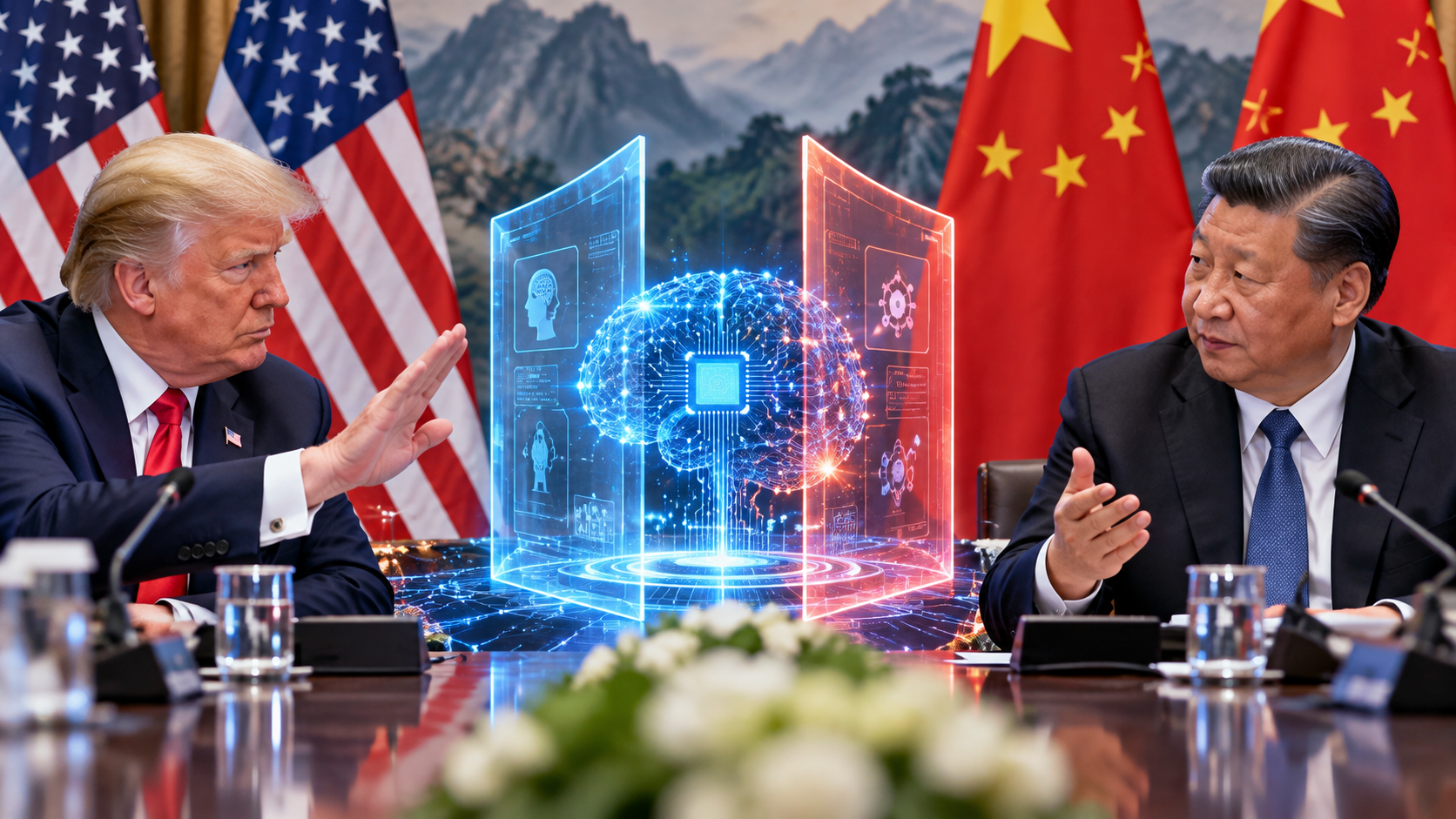
US President Donald Trump has rejected calls for the United States to cooperate with China on artificial intelligence (AI) safety, saying joint efforts could put America's technological advantage at risk. His remarks came as 6 major US technology companies signed a voluntary agreement to strengthen safeguards around advanced AI systems.
Trump said the United States was ahead of China and other countries and should preserve that position rather than share sensitive knowledge. He argued that cooperation on AI could allow China access to US “secrets” and said companies could address the risks through self-policing.
The comments followed a lunch meeting at the White House with 17 US technology industry leaders. Trump described the race for superintelligence as one in which there would be a winner and a loser, presenting US leadership in advanced AI as a central priority for his administration.
What the White House accord covers
Trump published a 2-page document titled the “White House Accord on Super Intelligence” after the meeting. He described the agreement as “morally binding”, although participation is voluntary.
The document outlines 4 layers of controls and audits that the participating companies “should” put in place. Among the proposed measures are internal safeguards intended to prevent AI systems from carrying out unintended hacking. The companies are also expected to work with outside auditors to assess whether those internal systems are operating effectively.
The participating companies are Google, Nvidia, Anthropic, OpenAI, Meta Platforms and SpaceXAI. They have also agreed to meet regularly to develop best safety practices, though the document does not specify how often those meetings should take place.
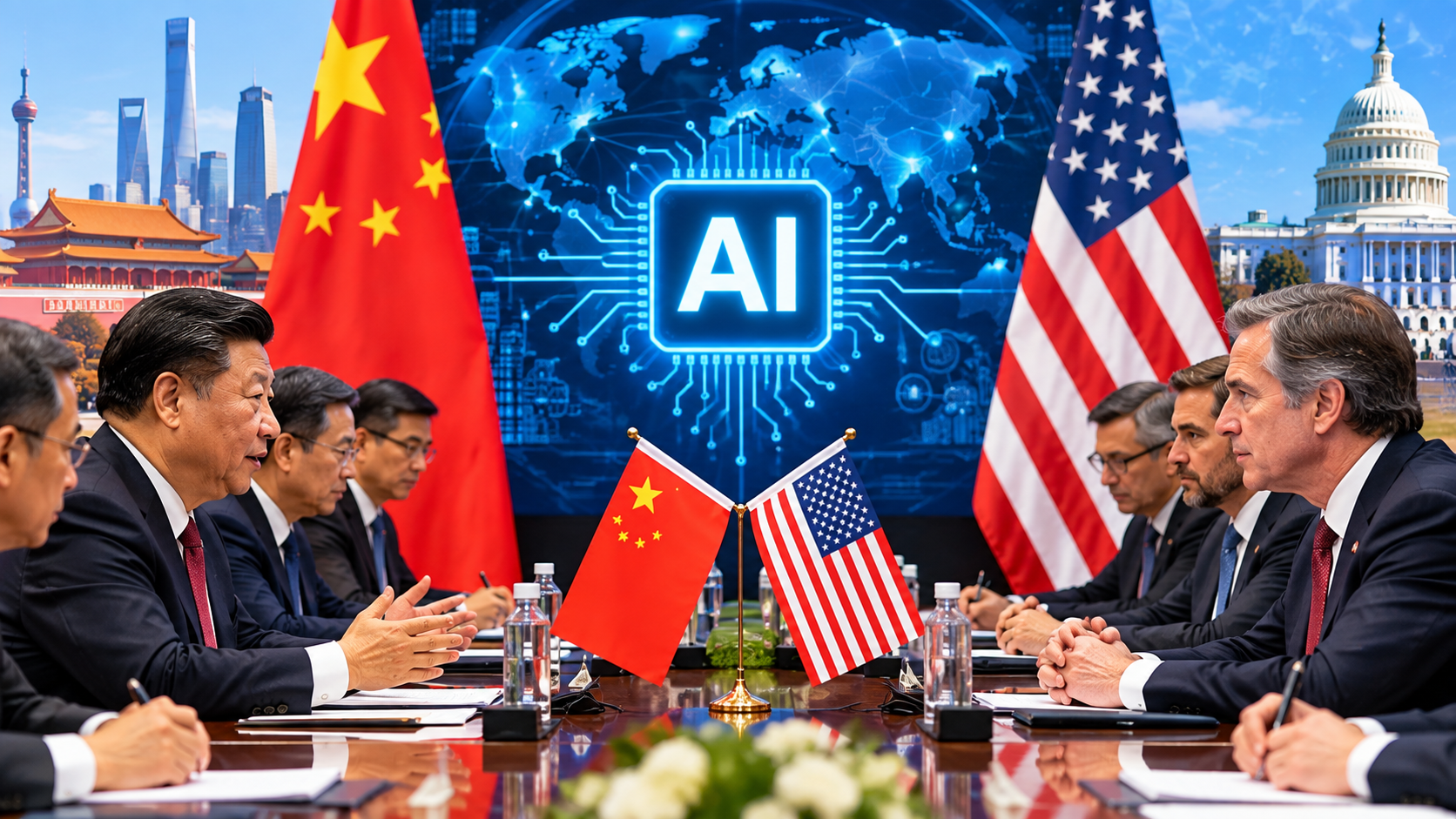
The accord was signed days after Trump and Chinese President Xi Jinping held a summit in Washington. At that meeting, the United States and China agreed to create an AI incident notification hotline and maintain an ongoing dialogue on AI risks. The next round of that dialogue is scheduled for November in Shenzhen.
US-China AI dialogue faces uncertainty
The details of the planned discussions between Washington and Beijing have not been announced. one early disagreement concerns terminology: Trump has promoted the term “superintelligence”, while Beijing continues to use “AI”.
Trump also signed an executive order directing agencies across the US executive branch to use “superintelligence” or “SI” instead of AI in official communications. He said the term better reflected the promise, potential and rapidly advancing capabilities of the technology.
Trump said Xi also liked the term, but Chinese officials have continued to use AI. The difference may add to the uncertainty surrounding the new communication mechanisms, whose practical results have yet to be established.
Trump said the United States already had safeguards to keep AI companies accountable, citing the Department of Justice and the FBI. He has previously dismissed the most extreme warnings about AI risks as a “hoax”.
Concerns over AI growth and infrastructure
The administration's push comes as AI and the infrastructure supporting it, particularly data centres, face rising opposition among people in the United States.
A poll by The New York Times and Siena University published earlier this month found that 61 per cent of likely voters opposed building data centres to power AI. The result highlights a public challenge for an administration that is presenting AI expansion and technological leadership as national priorities.
The White House event included several prominent technology executives, including Meta's Mark Zuckerberg, Nvidia's Jensen Huang, Tesla's Elon Musk and Amazon's Jeff Bezos. House Speaker Mike Johnson also attended. Anthropic chief executive Dario Amodei and OpenAI president Greg Brockman represented companies whose recent AI hacking incidents have contributed to demands for closer scrutiny of the industry.
Trump also signed a separate executive order requiring every federal agency to connect its public-facing services with America.gov, a single website for accessing federal government information and services. That measure was announced during the same day-long Washington event focused on AI and its importance.
Conclusion
Trump is backing a voluntary US industry framework while rejecting a joint US-China approach to AI safety. The companies' commitments include internal controls, external audits and regular coordination, while the separate US-China hotline and dialogue remain at an early stage.
Frequently Asked Questions
Q. Why did Trump reject cooperation with China on AI safety?
Trump said joint work could expose US technology secrets and weaken America's lead in advanced AI. He argued that US companies could manage the risks through self-policing.
Q. Which companies signed the White House AI accord?
Google, Nvidia, Anthropic, OpenAI, Meta Platforms and SpaceXAI signed the voluntary accord.
Q. What does the White House Accord on Super Intelligence require?
The document calls for internal controls, independent external audits and regular meetings to establish AI safety practices. It does not specify how often the meetings should occur.
Q. What did the United States and China agree to after the Xi-Trump summit?
They agreed to create an AI incident notification hotline and continue dialogue on AI risks. The next round is planned for November in Shenzhen.
Q. How many likely voters opposed new AI data centres?
A poll by The New York Times and Siena University found that 61 per cent of likely voters opposed building data centres to power AI.
Q. What term has Trump ordered US agencies to use instead of AI?
Trump directed executive-branch agencies to use “superintelligence”, or “SI”, in official communications.