Recent SEC filings are offering a detailed view of how companies are moving agentic AI from broad product language into specific business workflows. The disclosures cover payroll, regulated manufacturing, quantum computing, retail recommendations, consumer data and security robotics.
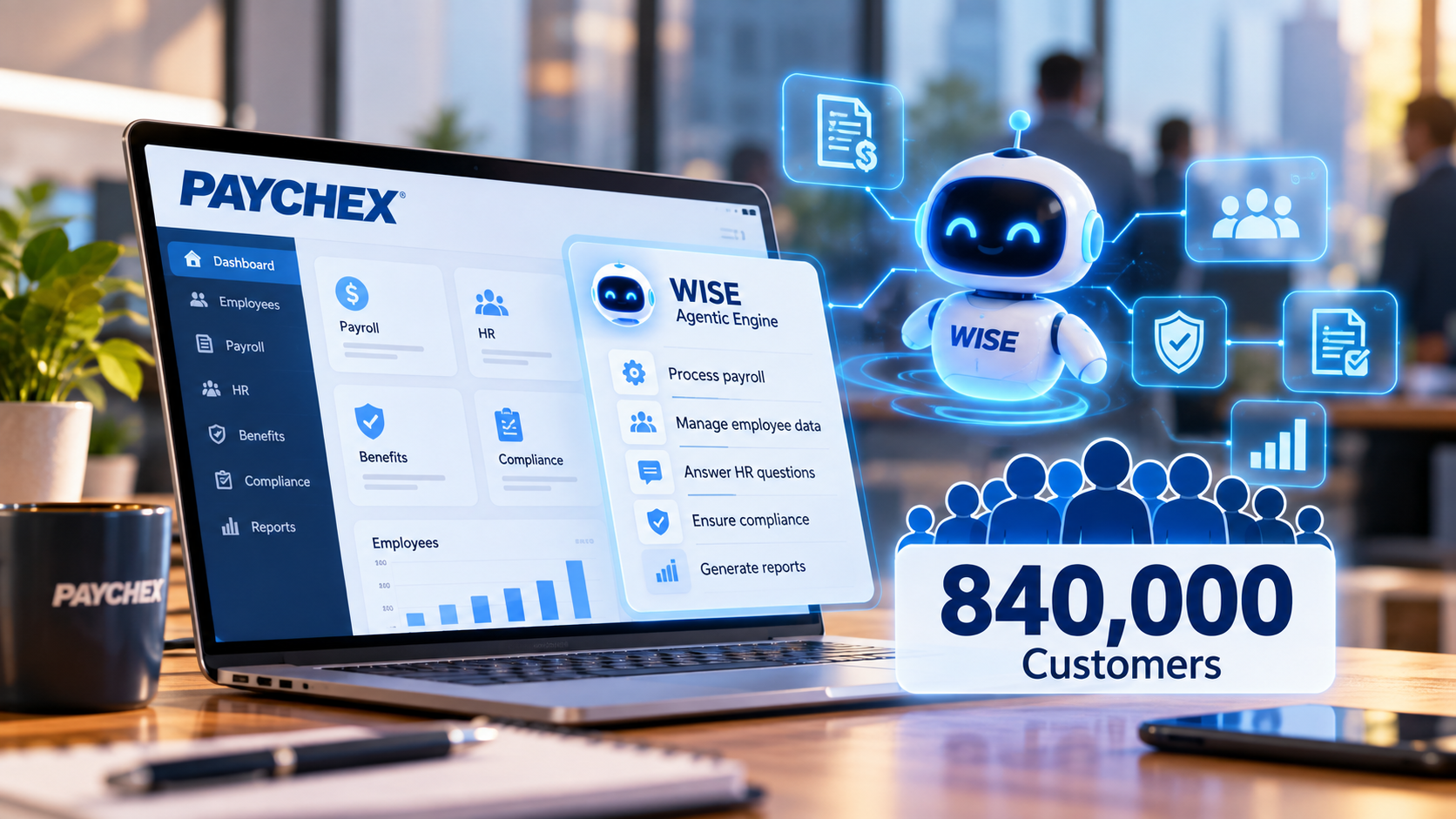
Paychex's first-quarter fiscal 2027 filing named the WISE platform and said it embeds agentic AI into HR and payroll workflows across the company's 840,000-customer base. Paychex processes payroll for roughly one in eleven U.S. private-sector workers, making the company's workforce data a central part of how it presents the platform's competitive position.
Where agentic AI is being applied
IB Acquisition Corp described BioVerdict in a Form 425 connected with its combination with GNQ. The platform uses agentic AI to assemble FDA submission documents. The filing also refers to GxP compliance and a 21 CFR Part 11 audit trail, placing the product within regulated manufacturing workflows rather than general drug discovery tools.
The same disclosure describes safeguards intended to preserve human oversight. That detail is significant because the system is aimed at work involving regulatory agencies, where document preparation and review must fit established compliance processes.
Zapata Quantum's 8-K identified Quantum Pilot, a product designed to apply agentic AI to quantum resource estimation. The platform uses capabilities developed through a named collaboration with NVIDIA and is intended to help enterprises assess which computational tasks may be suitable for quantum hardware. The filing presents that assessment as a focused commercial use case while quantum hardware remains costly.
Stitch Fix took a different route in its annual 10-K. The company identified AI regulation as a named material risk rather than placing it only under a broader technology-risk category. Its core product relies on an AI-driven styling algorithm, so potential regulatory limits could affect the technology at the centre of its market position.
Data, privacy and the AI business model
Snowdrift Parent Corp included a specific privacy concern in an S-4 for a biopharma combination. It said consumer privacy rights that permit data deletion may be “incompatible with our use of artificial intelligence” and could require the company to “retrain our artificial intelligence.” The disclosure links privacy obligations with a direct operational effect on AI systems.
SPACSphere Acquisition Corp filed a Form 425 transcript connected with its $250 million combination with Mobilewalla. Mobilewalla aggregates behavioral and location data for marketing applications, and the transaction's competitive argument positions that dataset as the foundation for an agentic layer. The data asset existed before the current AI framing and is now being directed toward that use.
Costs reach AI-enabled hardware
Artificial Intelligence Technology Solutions disclosed a price increase for its RAD security robot line in an 8-K. The company attributed the move to “rising materials, compute and transportation costs.” The filing provides a company-level example of how expenses can affect businesses that manufacture AI-enabled hardware, rather than delivering software through rented computing capacity.
Conclusion
Taken together, the filings show agentic AI being connected to operational data, regulated documentation, specialist computing decisions, consumer information and physical products. They also show that oversight, privacy requirements, regulation and hardware costs remain part of the business case.
Frequently Asked Questions
Q. Which company disclosed an agentic AI platform for payroll and HR workflows?
Paychex identified its WISE platform as an agentic AI system embedded in HR and payroll workflows.
Q. What does BioVerdict do?
IB Acquisition Corp described BioVerdict as a platform that uses agentic AI to assemble FDA submission documents.
Q. What is Quantum Pilot designed to assess?
Zapata Quantum's Quantum Pilot is designed to help enterprises determine which computational tasks may be suited for quantum hardware.
Q. Why did Stitch Fix identify AI regulation as a material risk?
Stitch Fix relies on an AI-driven styling algorithm, so regulation could affect technology central to its product and business position.
Q. Why did Artificial Intelligence Technology Solutions raise RAD robot prices?
The company cited rising materials, compute and transportation costs in its disclosure about the price increase.