Actor Prakash Raj has backed the demand for a change in government but said India must pursue it through elections and constitutional methods. He said the democratic struggle should continue from Uttar Pradesh through the 2029 Lok Sabha election, while rejecting comparisons that could frame the movement as violent or anarchic.
Raj contrasted India's political system with developments in Bangladesh and Nepal, where large protests in 2024 and 2025 were followed by governments being removed from power. He said India has a Constitution, the right to vote and the right to protest, and that political change should be pursued through those avenues.
Raj's call for a constitutional route
Raj said people seeking a change in government should work through democratic means. Referring to India's constitutional and freedom-movement legacy, he invoked Dr. Bhimrao Ambedkar, Mahatma Gandhi and Bhagat Singh while emphasising the importance of voting and peaceful dissent.
He said citizens were using constitutional rights to ask questions, protest and express their views through elections. His message, as presented in the remarks, was that people were not armed for political change; they were equipped with the Constitution and the right to protest.
Raj also argued that calls for a change in government should not automatically be linked to violence. He said the country's young people would express themselves through peaceful demonstrations and that any political transition should follow Gandhi's path.
Questions over detention before Delhi march
The remarks also focused on the detention of CJP founder Abhijit Dipke before a proposed Tiranga March in Delhi. The Cockroach Janata Party has been protesting against Chief Election Commissioner Gyanesh Kumar and raising questions about alleged irregularities in the Special Intensive Revision of voter lists.
The party has alleged irregularities in the election process and demanded Kumar's resignation. Raj questioned why Dipke was detained before the proposed march and raised broader concerns about the treatment of people taking part in peaceful demonstrations.
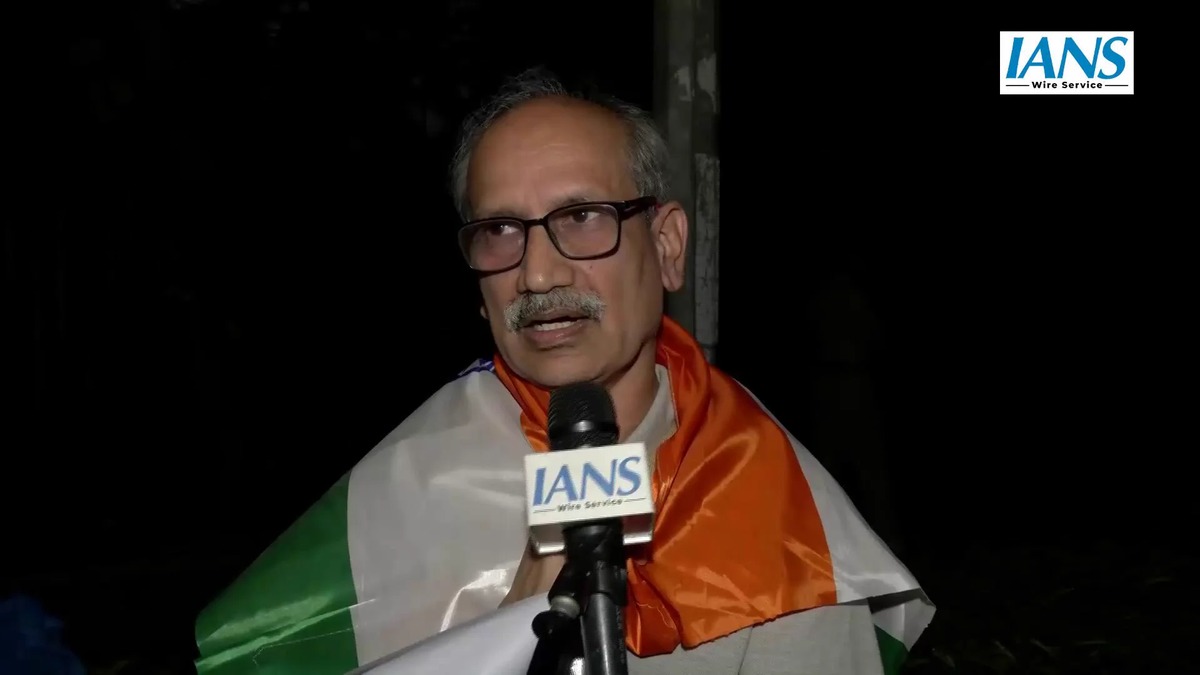
He referred to Ashutosh Ranka and questions surrounding the detention process after a person who took the national flag to Jantar Mantar was sent to 5 days of custody. Raj asked whether demonstrators should be treated as terrorists, stressing that those involved were citizens taking part in a peaceful protest.
Raj also questioned whether carrying the national flag while demonstrating was being treated as an offence. He urged people to express their views peacefully with the flag wherever they were, while asking how many more people could be detained for taking part in such protests.
Demands for answers from authorities
Raj alleged that force was being used to silence demonstrators and asked why authorities were not responding to the questions surrounding the Election Commission. He said that if the allegations were incorrect, the concerned people should come forward and answer them with evidence.
He also questioned claims that Prime Minister Narendra Modi and Union Home Minister Amit Shah had acted to protect Kumar. Raj said his questions concerned the Election Commission and asked why the government was not clearly stating whether it had any connection with the matter.
The actor referred to the “Har Ghar Tiranga” campaign while asking why young people were being stopped from walking with the national flag. He also alleged that police had used violence against protesters, particularly women, and appealed to opposition parties to raise the issue in Parliament during the winter session.
Responding to an appeal by Dhruv Rathee concerning the armed forces and police, Raj said those institutions belonged to the citizens rather than to any government or political party. He added that people in power would not remain there permanently and would also face questions 1 day.
What Raj said about future protests
After Saurabh Das and Ashutosh Ranka were sent to 5 days of judicial custody, Raj said he had no separate strategy for future demonstrations. He said questions would continue to be asked and that attempts to suppress people could not silence the voice of the entire country.
He suggested that further demonstrations could spread widely, using Jantar Mantar as a symbol of public protest. His central argument remained that political change in India should be peaceful, constitutional and pursued through voting and democratic dissent.
Conclusion
Prakash Raj has supported the demand for a change in government while insisting that the process must remain peaceful and constitutional. He also questioned the detention of protest-linked figures, alleged excessive action against demonstrators and called for answers on issues involving the Election Commission.
Frequently Asked Questions
Q. What position has Prakash Raj supported?
Raj has supported the demand for a change in government, provided it is pursued through democratic and constitutional means.
Q. By when did Raj say the democratic struggle should continue?
He referred to continuing the democratic struggle through the 2029 Lok Sabha election.
Q. How did Raj distinguish India from Bangladesh and Nepal?
He said India has a Constitution, voting rights and the right to protest, and should use those democratic channels for political change.
Q. Why was Abhijit Dipke's detention raised?
Dipke was detained before a proposed Tiranga March in Delhi, and Raj questioned the action.
Q. What issue is the Cockroach Janata Party protesting?
The party is protesting against Chief Election Commissioner Gyanesh Kumar and raising questions about alleged irregularities in the Special Intensive Revision of voter lists.
Q. What did Raj say about the national flag?
He questioned whether people were being stopped or detained for demonstrating with the national flag and called for peaceful expression.
Q. What happened to Saurabh Das and Ashutosh Ranka?
The article says both were sent to 5 days of judicial custody.
Q. What approach did Raj advocate for political change?
He advocated peaceful demonstrations, voting and the use of constitutional rights rather than violence.