The Congress Working Committee has decided that only the first two stanzas of “Vande Mataram” will be sung at party programmes. The decision follows criticism from the BJP over the song’s performance at Independence Day events and at a later programme in Goa.
Congress has referred to a resolution adopted by the Working Committee in 1937. The party says leaders of the freedom movement, including Mahatma Gandhi and Rabindranath Tagore, supported singing only the opening two stanzas at public events.
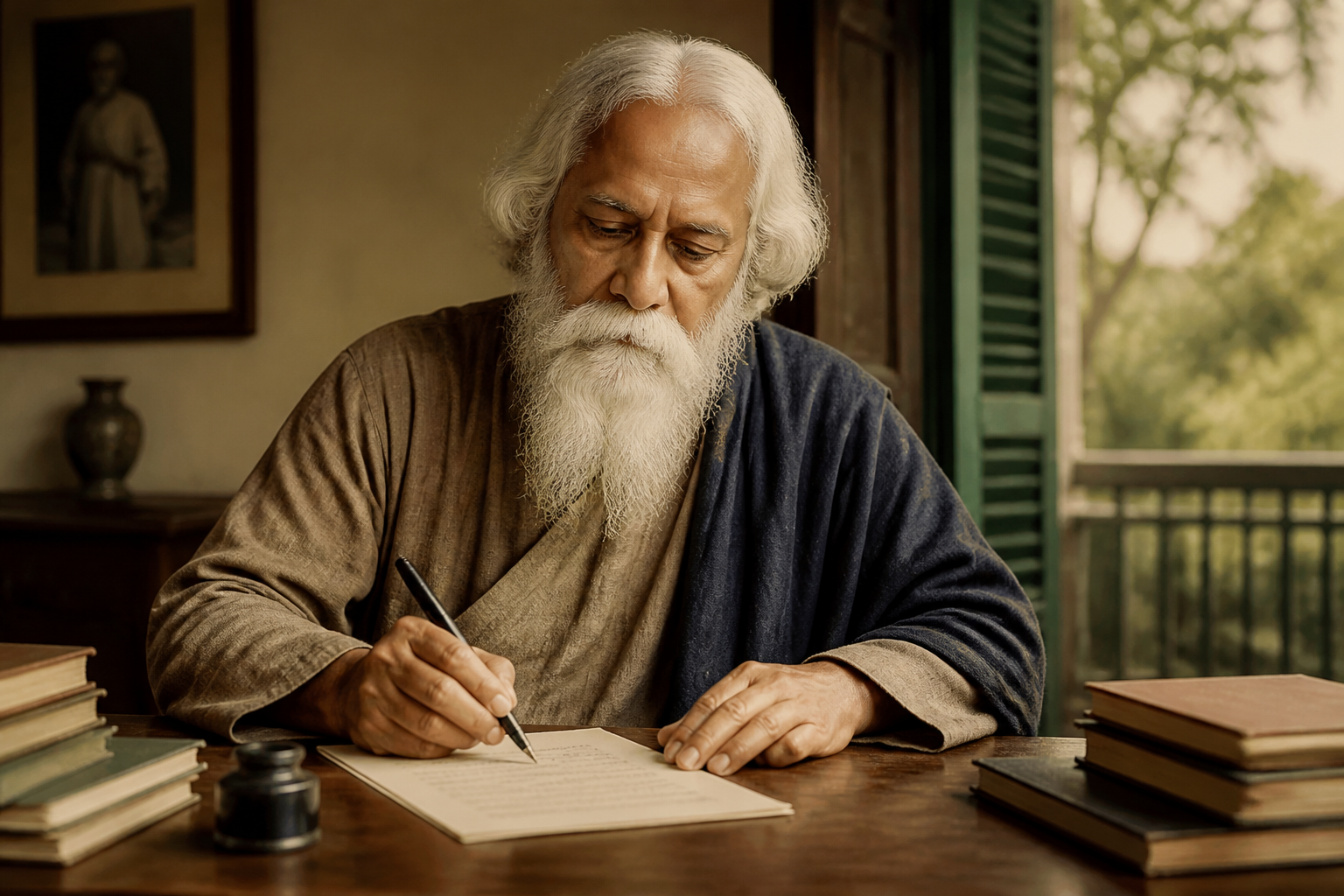
The issue has renewed interest in Tagore’s views because he helped bring the song to wider public attention. Historian Mridula Mukherjee said Tagore popularised it during the Swadeshi and anti-Partition movements in Bengal, set it to music and sang it for the first time at a Congress session in 1896.
When objections to the song arose within Congress, a subcommittee was formed to examine them and sought Tagore’s advice. Mukherjee said Tagore wrote to Jawaharlal Nehru that the complete poem, read in its context, could be interpreted in ways that might hurt Muslim sentiments.
Tagore nevertheless distinguished the opening section from the rest of the poem. In his view, the first two stanzas had acquired an independent identity and inspirational significance. He did not see anything in them that would offend a religious group or community. The later stanzas refer to Hindu deities, including Durga, Saraswati and Lakshmi, and portray India as a revered goddess.
A note attributed to Tagore and dated 30 October 1937 described the dispute over Vande Mataram as unfortunate. He wrote that the first section expressed tenderness and devotion while focusing on beautiful and benevolent images of the motherland. The final four stanzas, he concluded, were provocative, whereas the first two had a separate meaning and could be accepted by all communities without controversy.
The Congress Working Committee meeting was held in Calcutta, now Kolkata, under Nehru’s chairmanship. Leaders including Sardar Vallabhbhai Patel, Rajendra Prasad, Maulana Abul Kalam Azad and Subhas Chandra Bose were present. Mahatma Gandhi attended as a special invitee, although he was not a committee member. A proposal presented by Rajendra Prasad and supported by Patel recommended using only the first two stanzas, with Tagore’s version and music, at national gatherings.
Bankim Chandra Chattopadhyay wrote Vande Mataram in 1875. Its later stanzas were included in his 1882 novel Anandamath, while Tagore sang it at the 1896 Congress session. In 1939, Gandhi supported views similar to Tagore’s in Harijan.
The debate has also involved the song’s legal and constitutional status. The source reports that Parliament has given Vande Mataram legal protection, while also noting that the Constitution did not make any national song part of its framework. The Prevention of Insults to National Honour Act, 1971 explicitly addresses interruption of the national anthem, but the source says it contains no parallel provision for the national song.