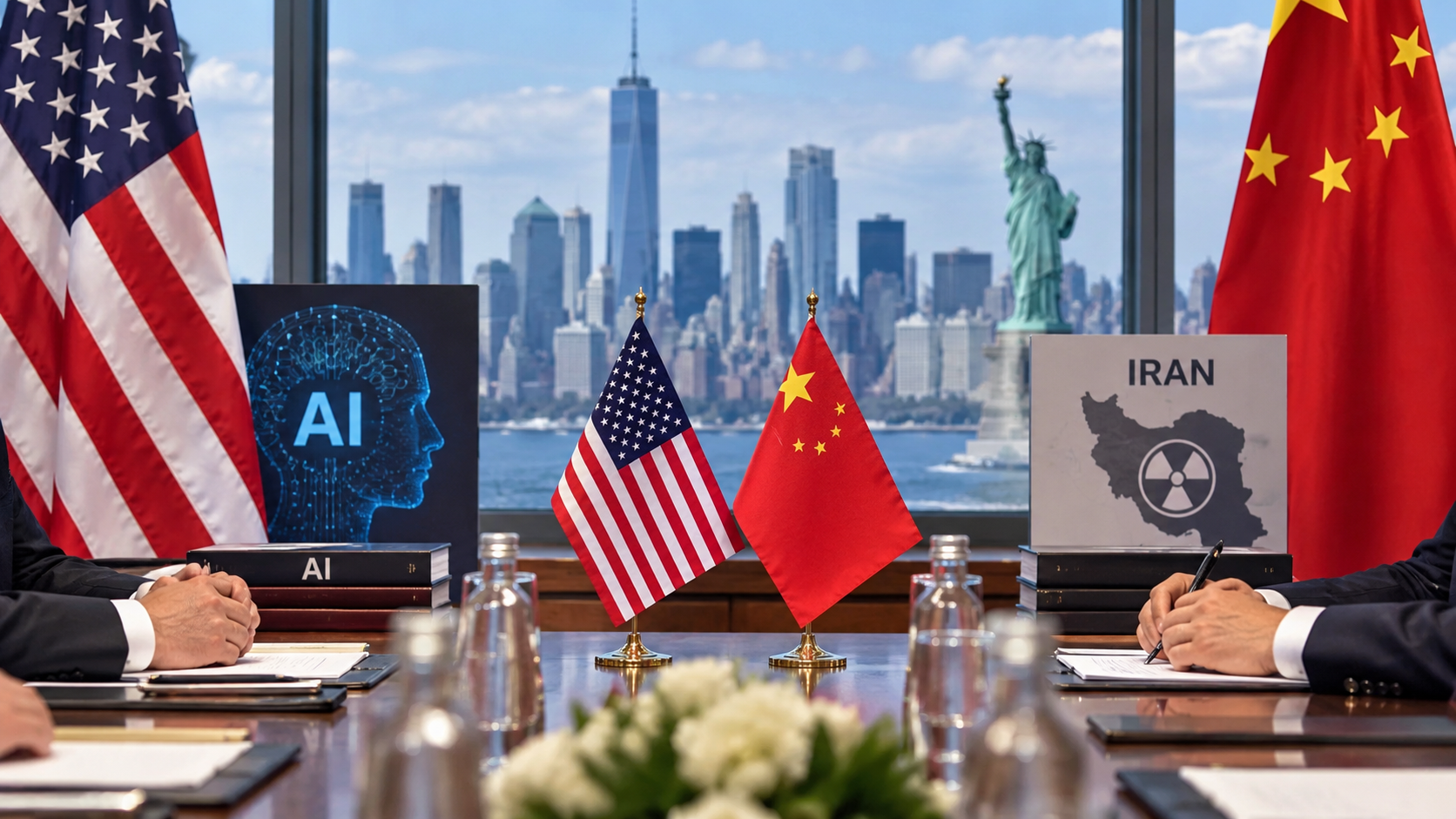
US Treasury Secretary Scott Bessent and China’s Vice Premier He Lifeng are set to lead trade discussions in New York before President Donald Trump meets Chinese President Xi Jinping in Washington on Sept. 24. The talks are intended to prepare the ground for the leaders’ summit while addressing several disputes between the world’s 2 biggest economies.
US Trade Representative Jamieson Greer will also attend, according to a statement from his office. China’s Commerce Ministry confirmed the meeting, which comes as both governments try to preserve a trade truce due to expire in November.
What will be discussed
Artificial intelligence, tariff policy, investment and the economic effects of the Iran war are expected to dominate the agenda. Agricultural products, autos, technology and e-commerce are also likely to be discussed.
Washington has been restricting China’s access to advanced chips and has accused Chinese companies of developing domestic artificial intelligence models by drawing on capabilities from American technology. Beijing has rejected calls from US technology leaders to slow AI development for safety reasons, describing those arguments as “fear-mongering.”
Bessent has said the 2 countries should establish safeguards and maintain close communication because they are the leading powers in AI. He has also said the US is open to discussions on reducing shared risks and preventing the separation of the 2 countries’ technology systems.
Tariffs and agricultural trade are expected to offer a comparatively easier route for progress. The 2 sides have been working to reduce levies on American energy and farm products as part of a wider effort involving $30 billion worth of goods from each country under the Board of Trade mechanism launched earlier this year.
Pressure over Iran and energy
Iran-related energy disruptions add an immediate economic concern. China is the biggest buyer of Iranian oil and provides Tehran with an important economic lifeline, while the US Treasury Department is increasing pressure on financial institutions involved in Iran-linked trade and financial flows.
Bessent told the House Financial Services Committee that he had held private discussions with Chinese officials about the issue and hoped to make further progress during the New York meeting. Speculation has grown that Chinese banks could face US action.
A US naval blockade has sharply reduced crude oil flows to China, creating the possibility of refinery cuts in the coming weeks among smaller refineries known as the teapot sector. That segment accounts for one-third of China’s national refining capacity.
China has an interest in reopening the Strait of Hormuz but has limited leverage to force either side to change course, according to Jesse Marks, founder of Rihla Research & Advisory and a former Middle East policy adviser in the US government. Prolonged closure of the waterway could affect China’s economic interests in Iran through sanctions and wider disruption to regional trade.
Trade truce faces new risks
The meeting also comes as US officials consider delaying an announcement of new tariffs over allegations that trading partners have excess manufacturing capacity. The announcement has been delayed until after the talks, according to people familiar with the matter.
The 2 governments are seeking to keep their relationship from deteriorating, but the wider tariff dispute remains unresolved. Bloomberg Economics analysts Nicole Gorton-Caratelli, Adam Farrar and Maeva Cousin wrote that relative stability was likely to continue while warning that renewed escalation remained possible as the US rebuilt its tariff barriers.
Chinese exports to the US have rebounded this year. That has highlighted the limits of Trump’s tariffs and coincided with strong demand for China-made electronics linked to the AI industry.
US officials also face domestic pressure to extend the truce. The Nov. 3 midterm elections are approaching, and inflation remains an important concern for voters.
Rare earths, Taiwan and the summit
A Chinese official involved in planning for the summit said Taiwan would be China’s main issue, particularly a planned US weapons sale. The official said discussions on tariffs and farm goods such as soybeans would be less difficult, while AI, autos, technology and e-commerce would remain on the agenda.
China may offer additional permits for rare-earth exports as part of the negotiations, although details of any requested US concessions were not disclosed. The flow of Chinese rare-earth magnets has been a priority for Trump since the trade truce was agreed.
Monthly exports of those industrial components have remained substantially below earlier levels since China imposed export controls in April 2025. Their availability is therefore tied to a broader effort to reduce pressure on supply chains and keep trade ties from worsening.
Chinese officials have also considered BYD Co. for a possible business delegation accompanying Xi at the summit. The prospect could be sensitive because of US tariffs on Chinese-made electric vehicles. Trump has indicated that he might allow a Chinese car company to build vehicles in the US if it used American workers.
Bessent and He have held several discussions over the past 18 months, mostly in a third country to signal neutrality. Holding the latest meeting in New York, ahead of the United Nations General Assembly gathering, could reflect convenience or a degree of increased trust. It also raises the possibility that a future round could take place in China on reciprocal grounds.
Conclusion
The New York talks will test whether Washington and Beijing can preserve their trade truce while managing disputes over AI, Iran, tariffs, rare earths, Taiwan and technology. The discussions will also shape the issues placed before Trump and Xi at their Sept. 24 summit.
Frequently Asked Questions
Q. When will the US-China talks take place?
The talks are scheduled for Sunday in New York.
Q. Who will lead the discussions?
Scott Bessent will lead the US side, while He Lifeng will lead China’s delegation. Jamieson Greer will also attend for the US.
Q. What are the main topics?
The agenda includes AI, Iran-related energy disruptions, tariffs, agriculture, autos, technology, e-commerce, investment and trade.
Q. When is the Trump-Xi summit?
President Donald Trump and President Xi Jinping are scheduled to meet in Washington on Sept. 24.
Q. What is the trade truce deadline?
The current trade truce is due to expire in November.
Q. Why are rare earths part of the talks?
China may offer more permits for rare-earth exports, while the US has made the continued flow of Chinese rare-earth magnets a priority.
Q. Why is Iran important to the negotiations?
China is the biggest buyer of Iranian oil, and US pressure on Iran-linked financial and trade flows could affect Chinese banks and energy supplies.
Q. What is the AI dispute about?
The US has restricted China’s access to advanced chips, while Beijing rejects US-led efforts to shape the rules for AI development.