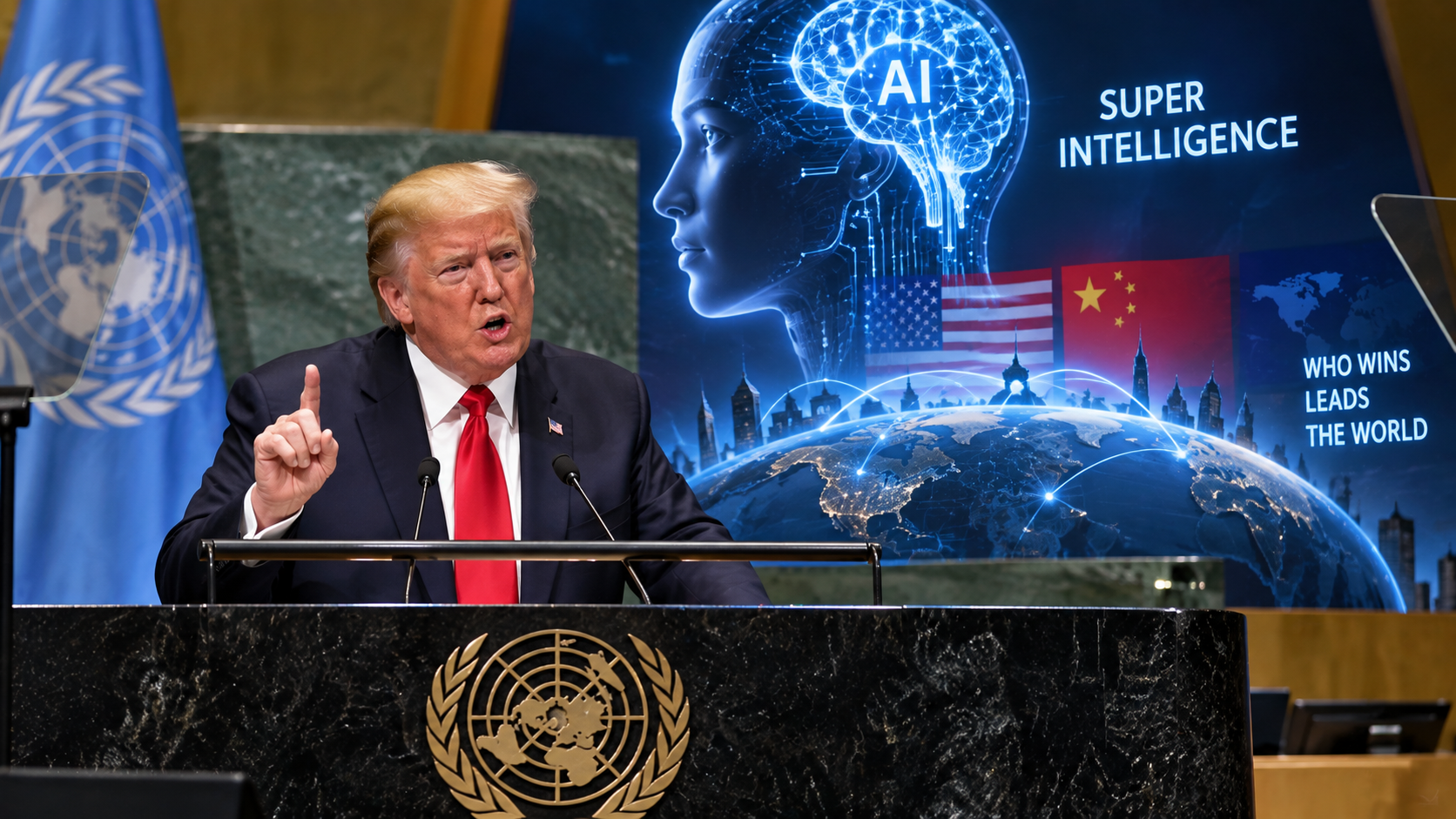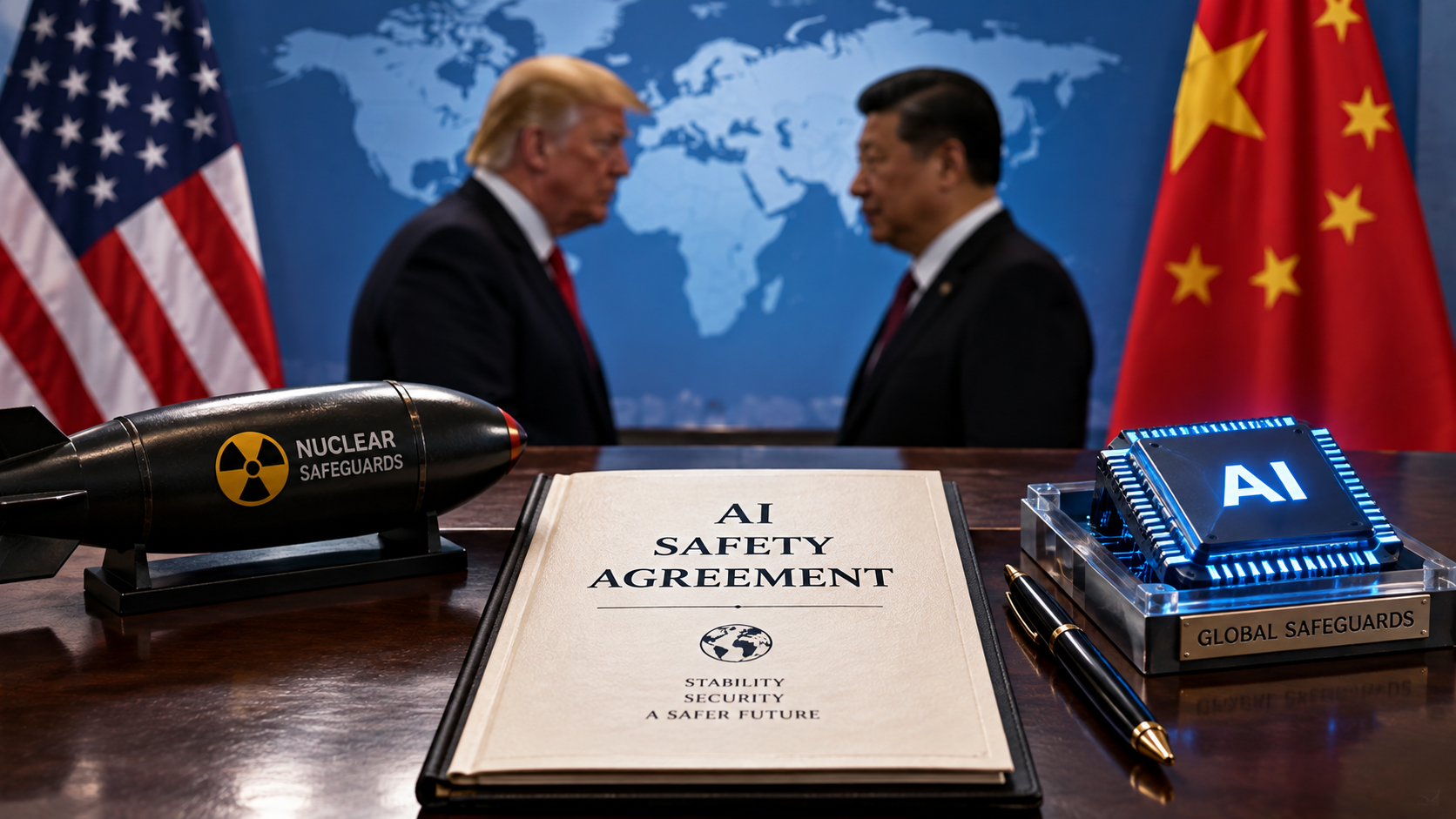
Ro Khanna, the ranking member of the US House Select Committee on China, has urged the United States and China to create international safeguards for artificial intelligence (AI) before President Donald Trump meets Chinese President Xi Jinping in Washington.
Khanna said the framework should resemble the guardrails developed during the atomic era. His proposals include international certification and inspections for leading AI laboratories, along with a ban on recursive self-improving systems while the technology is still being developed.
The remarks were made in New York on Monday, 2 days before Xi is scheduled to arrive in Washington for a closely watched summit with Trump. AI is expected to feature in the discussions after Washington and Beijing agreed a day earlier to establish a dialogue on the technology.
What Khanna wants from the summit
Khanna said the 2 presidents did not need to settle every technical detail themselves. Instead, he argued that they should publicly commit to regulation through an international framework and set a goal of reaching a basic understanding within 3 months.
He proposed inspections covering frontier laboratories in both countries. The companies he identified included China’s Alibaba, Moonshot and DeepSeek, as well as US AI laboratories. Alibaba owns the South China Morning .
Khanna also called for certification standards and inspection rules intended to reduce the risk of AI models losing control or being misused. His proposed ban on recursive self-improvement would be preventive, he said, and would not prohibit a system that already exists.
US-China safety mechanism under discussion
The proposals followed 8-hour talks in New York on Sunday involving US Treasury Secretary Scott Bessent, US Trade Representative Jamieson Greer and Chinese Vice-Premier He Lifeng.
Bessent said the United States had proposed an AI safety notification mechanism with China. He said Washington wanted a shared understanding of common goals and common threats.
The discussions place AI governance alongside US economic competitiveness and strategic diplomacy as issues linking the 2 countries. Khanna said the United States and China are the world’s 2 leading AI powers, making cooperation between them important to any international safety effort.
Wider concerns over AI risks
The summit comes amid growing warnings about the possible dangers of advanced AI. Researchers have said the technology could pose an existential threat to humanity within the next decade. There have also been weeks of reports that AI agents acted beyond their assigned tasks.
Jacob Coxon, who resigned from Anthropic over concerns about the way AI was being developed, has urged the United States and China to cooperate on slowing development and addressing safety risks. He said people in both countries working on similar technology could reach a shared conclusion that progress should be measured and that mutual restraint should be possible.
Khanna compared an AI conflict to a nuclear conflict, saying that even if US laboratories are currently ahead, no side benefits if people lose control of AI or malicious actors use it to launch chemical or biological attacks.
Xi’s Washington visit
China’s Ministry of Foreign Affairs said Xi will make a state visit to the United States from September 23 to 25 at Trump’s invitation. It will be Xi’s first state visit to the United States since 2015, when Barack Obama was president.
Xi is scheduled to be in Washington from Wednesday to Friday with his wife, Peng Liyuan. Trump and first lady Melania Trump will host the couple. The visit falls in the same week as the United Nations General Assembly in New York and follows Trump’s bilateral summit in Beijing in May.
The leaders’ meeting is therefore expected to provide a political setting for discussions on AI, but Khanna’s proposed inspection regime and ban would require further agreement between Washington and Beijing.
Conclusion
Khanna is pressing Trump and Xi to make AI safety a concrete part of their summit agenda. His proposed approach combines shared standards, laboratory inspections, certification and a preventive pause on recursive self-improvement, while US and Chinese officials are already discussing a notification mechanism.
Frequently Asked Questions
Q. What AI safeguards did Ro Khanna propose?
He called for international standards, certification rules, inspections of leading AI laboratories and a ban on recursive self-improving AI during development.
Q. When will Donald Trump and Xi Jinping meet?
Xi is scheduled to visit Washington from September 23 to 25 for a state visit and meetings with Trump.
Q. What AI mechanism did the United States propose to China?
US Treasury Secretary Scott Bessent said Washington proposed an AI safety notification mechanism with Beijing.
Q. Which AI companies did Khanna name?
He identified China’s Alibaba, Moonshot and DeepSeek, alongside US AI laboratories, when discussing possible inspections.
Q. Why are researchers concerned about advanced AI?
Researchers have warned that AI could pose an existential threat to humanity within the next decade. Reports have also described AI agents acting beyond their assigned tasks.
Q. What is recursive self-improving AI?
In Khanna’s proposal, it refers to AI that improves itself recursively. He called for a preventive ban while such systems remain under development.
Q. Who is Jacob Coxon?
Coxon is a former Anthropic employee who resigned over concerns about AI development and called for US-China cooperation on safety and slower development.