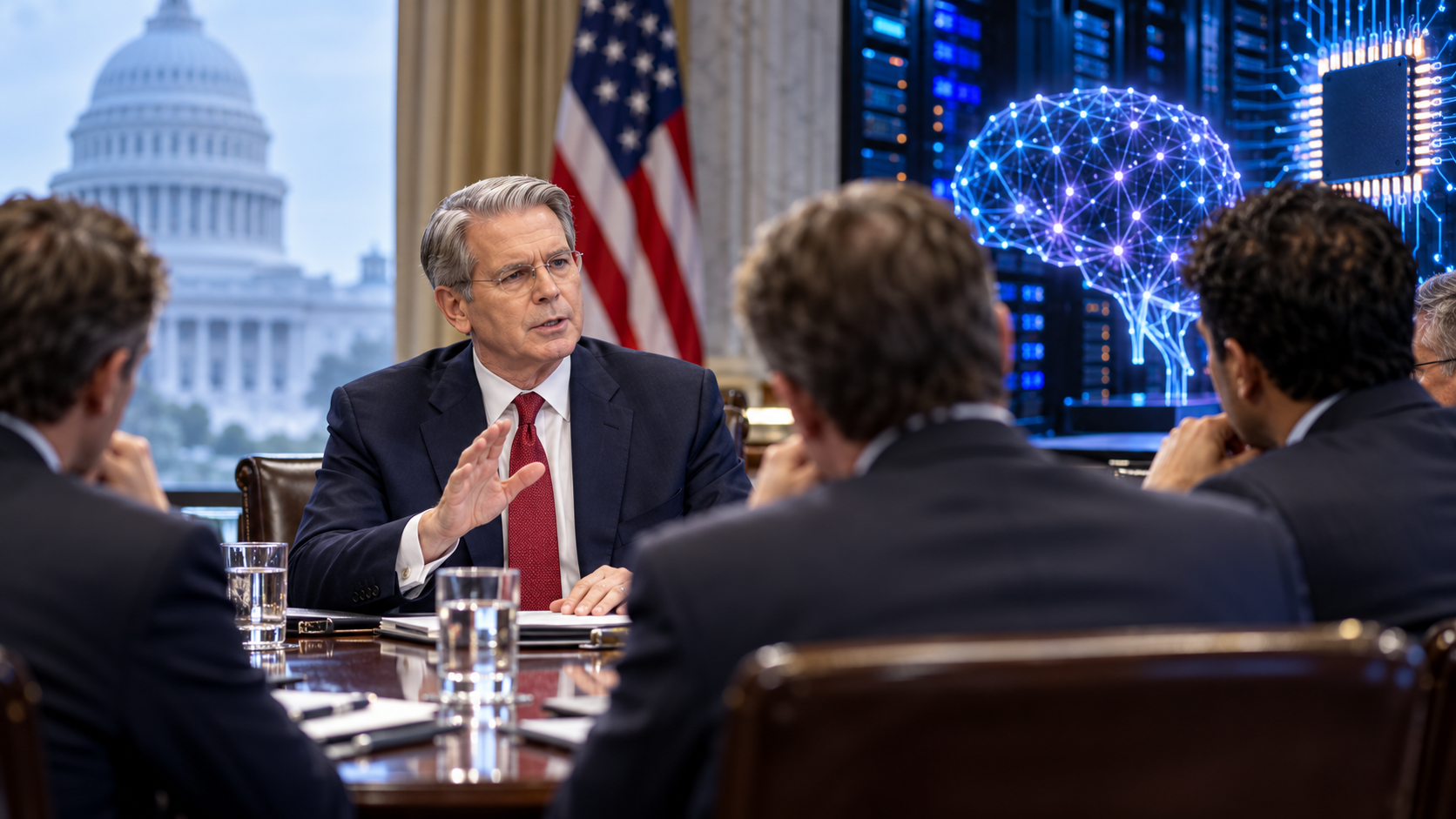
US President Donald Trump has announced the creation of the Super Intelligence Force, a federal task force intended to centralise executive-branch policy and coordinate national efforts in advanced artificial intelligence.
The initiative places the new force at the centre of government engagement with private industry, civil society, safety advocates and organisations connected to critical infrastructure. Trump said the effort is intended to help the United States maintain its leadership in what his administration calls Super Intelligence.
New terminology for federal operations
The announcement follows an executive order titled “Inaugurating the Era of Super Intelligence”. The order directs the US government to stop recognising or using “Artificial Intelligence” and “AI” in official settings to the maximum extent permitted by law.
Under the directive, the existing statutory definition of artificial intelligence under Title 15 of the United States Code will temporarily apply to “Super Intelligence”. The Assistant to the President for Science and Technology must submit proposed legislative language to Congress within 60 days.
That submission is expected to propose a federal statutory definition of “Super Intelligence” and recommend corresponding changes to existing US laws. The source material does not provide details of any legislation already introduced in Congress.
Leadership across government functions
The force will be led by a four-member team covering national intelligence, defence, regulation and federal personnel operations. Its members are Director of National Intelligence Jay Clayton, Federal Trade Commission Chairman Andrew Ferguson, Chief Technology Officer and Under Secretary of War for Research and Engineering Emil Michael, and Office of Personnel Management Director Scott Kupor.
Trump said the leadership team will report directly to the President of the United States and Chief of Staff Susie Wiles. The arrangement gives the task force a cross-government role rather than limiting its work to a single department or policy area.
Trump described the force as the government's primary liaison with consumers, public interest groups, religious organisations, critical infrastructure providers and Super Intelligence companies. The stated purpose is to coordinate federal engagement with those groups while protecting US interests and improving the lives of Americans.
White House accord and industry response
The announcement followed a White House luncheon attended by technology executives, including SpaceX and Tesla chief Elon Musk, Meta CEO Mark Zuckerberg, Google CEO Sundar Pichai and NVIDIA CEO Jensen Huang.
Technology leaders and administration officials later briefed reporters on a White House Accord focused on developing Super Intelligence safely. Zuckerberg said the goal was to give Americans and customers confidence that the technology would work as intended.
Anthropic CEO Dario Amodei called for joint action, saying participants needed to work with the President and others to pursue the technology safely. The discussions also included national-security concerns.
Jay Clayton said the meeting produced consensus that American leadership in AI was the most important issue for national security. Trump presented the technological change as an unprecedented period for humanity and described its scale as greater than that of the Internet.
Conclusion
The Super Intelligence Force will coordinate the US government's engagement with industry, public groups and infrastructure providers, while the administration prepares proposed legislation defining the new terminology within 60 days.
Frequently Asked Questions
Q. What is the Super Intelligence Force?
The Super Intelligence Force is a federal task force announced by Donald Trump to coordinate executive-branch policy and national efforts in advanced artificial intelligence.
Q. What terminology does the executive order introduce?
The order uses “Super Intelligence” and “SI” in place of “Artificial Intelligence” and “AI” across executive-branch operations to the maximum extent permitted by law.
Q. Who will lead the force?
Jay Clayton, Andrew Ferguson, Emil Michael and Scott Kupor will lead the four-member team.
Q. Who will receive reports from the leadership team?
Trump said the team will report to the President of the United States and Chief of Staff Susie Wiles.
Q. What groups will the force engage with?
Its planned engagement includes consumers, public interest groups, religious organisations, critical infrastructure providers and Super Intelligence companies.
Q. What must happen within 60 days?
The Assistant to the President for Science and Technology must submit proposed legislative language to Congress for a statutory definition of “Super Intelligence” and related legal amendments.