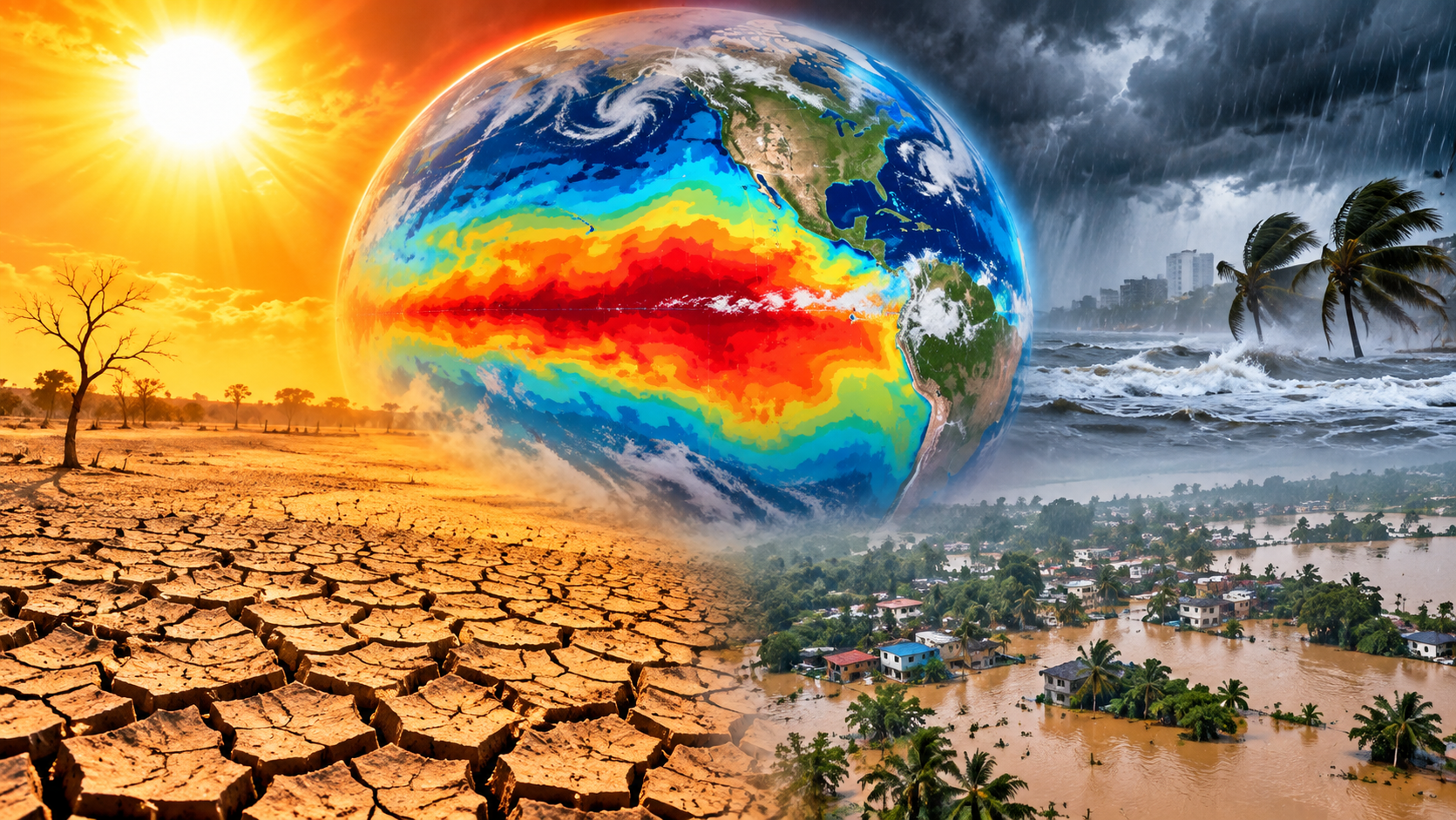
The ongoing Super El Nino could lead to around 451,000 additional heat-related deaths worldwide over 6 months, according to a study by the University of Chicago's Climate Impact Lab. The estimated period runs from September 2026 to February 2027 and includes about 15,800 additional deaths in India.
The study links the projected toll to unusually high temperatures and a greater number of extreme-heat days. It estimates that global land temperatures could remain 1.2°C above normal during the El Nino period. Compared with a typical year, the number of days with extreme heat could rise by 44%.
What the study estimates
The projected deaths are described as additional heat-related fatalities during the 6-month period. In India, nearly half of the estimated total—about 7,400 deaths—could occur between December and February.
The study also says heat-related deaths in India could rise further during the summer season. Its assessment compares the expected conditions with temperatures that climate change could otherwise produce 20 years later.
Michael Greenstone, co-founder of the study, said researchers had long been able to estimate how temperature affects crops. He said the work now also allows estimates of the most severe human consequence—deaths—and can indicate where immediate action could save thousands of lives.
Measures highlighted in the study
The study points to several measures for reducing the impact of extreme heat:
- Heat warnings for affected areas
- Health services for vulnerable groups
- Cooling centres and hydration stations
- Greater protection for workers
- Stronger health systems
These measures are presented as ways for policymakers and health authorities to respond to the projected heat risk. The findings are especially relevant to regions facing the expected increase in extreme-heat days.
Why India is part of the estimate
India's projected additional deaths form part of the worldwide estimate for the period from September 2026 to February 2027. The study identifies the December-to-February window as the period in which about 7,400 of the country's estimated deaths could occur, while also warning that the total could increase during summer.
The report's central assessment is that the combination of higher-than-normal land temperatures and more extreme-heat days could create a substantial health burden. Its recommended response focuses on timely warnings, access to care, cooling facilities, hydration and worker safety.
Conclusion
The study estimates a major rise in heat-related deaths during the Super El Nino period, with India facing about 15,800 additional fatalities. It highlights heat alerts, medical access, cooling support, hydration facilities, worker protection and stronger health systems as key response areas.
Frequently Asked Questions
Q. How many deaths could Super El Nino cause worldwide?
The study estimates around 451,000 additional heat-related deaths worldwide between September 2026 and February 2027.
Q. How many additional deaths could India see?
India could record about 15,800 additional heat-related deaths during the estimated period.
Q. When could most of India's estimated deaths occur?
About 7,400 deaths could occur between December and February.
Q. How much could global land temperatures rise?
The study estimates that global land temperatures could be 1.2°C above normal.
Q. How much could extreme-heat days increase?
The study projects 44% more extreme-heat days than in a typical year.
Q. What measures does the study highlight?
It points to heat warnings, health services for vulnerable groups, cooling centres, hydration stations, worker protection and stronger health systems.