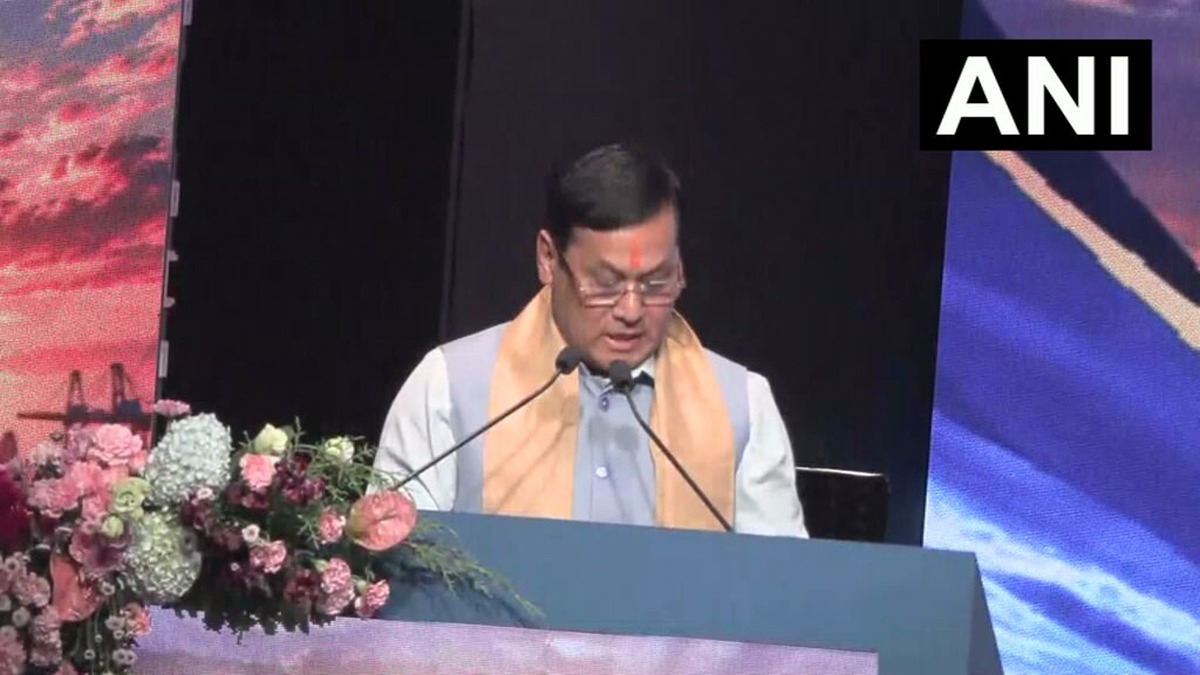
Union Minister of Ports, Shipping & Waterways Sarbananda Sonowal has highlighted India's limited share of export cargo carried by its own vessels, saying the gap has major financial and security implications.
Speaking in Mumbai, Sonowal said Indian-flagged vessels currently carry only 5% of India's export cargo. Foreign shipping liners handle the remaining 95%, according to his remarks.
The financial impact
Sonowal said reliance on foreign carriers leads to an estimated annual foreign exchange outflow of $75 billion. His comments placed the country's shipping capacity at the centre of a wider discussion about the cost of depending on overseas operators for export movement.
He also connected shipping capacity with economic security and energy security. Recent disruptions in the Red Sea, the Black Sea and the Strait of Hormuz, he said, have demonstrated the importance of having sufficient maritime transport capability.
India's shipping targets
The government's Maritime Amrit Kaal Vision 2047 sets long-term targets for India's position in global shipping tonnage. The vision envisages placing the country among the world's top 10 nations by 2030 and among the top 5 by 2047.
The targets come against the backdrop of the current imbalance between Indian-flagged vessels and foreign shipping liners in handling India's export cargo. Sonowal's remarks underline the scale of the shift required if India is to increase its role in transporting its own trade.
Why maritime disruptions matter
The reference to the Red Sea, Black Sea and Strait of Hormuz links shipping routes with wider economic and energy concerns. Disruptions in these areas have been cited as showing how maritime capacity can affect the security of trade and energy movement.
Sonowal's comments therefore brought together 3 issues: India's dependence on foreign carriers, the foreign exchange outflow associated with that dependence, and the need for stronger shipping capacity as part of economic and energy security.
Conclusion
Sonowal's remarks identify India's low share of export cargo carried by Indian-flagged vessels as a central shipping challenge. Maritime Amrit Kaal Vision 2047 sets the longer-term direction, with India seeking a place among the top 10 shipping nations by 2030 and the top 5 by 2047.
Frequently Asked Questions
Q. How much of India's export cargo do Indian-flagged vessels carry?
Indian-flagged vessels carry 5% of India's export cargo, according to Sonowal.
Q. Who handles most of India's export cargo?
Foreign shipping liners handle 95% of the export cargo.
Q. What annual foreign exchange outflow did Sonowal mention?
He cited an estimated annual foreign exchange outflow of $75 billion linked to dependence on foreign carriers.
Q. Which maritime disruptions did Sonowal refer to?
He referred to disruptions in the Red Sea, the Black Sea and the Strait of Hormuz.
Q. What are India's shipping targets under Maritime Amrit Kaal Vision 2047?
The vision seeks to place India among the world's top 10 nations in shipping tonnage by 2030 and the top 5 by 2047.