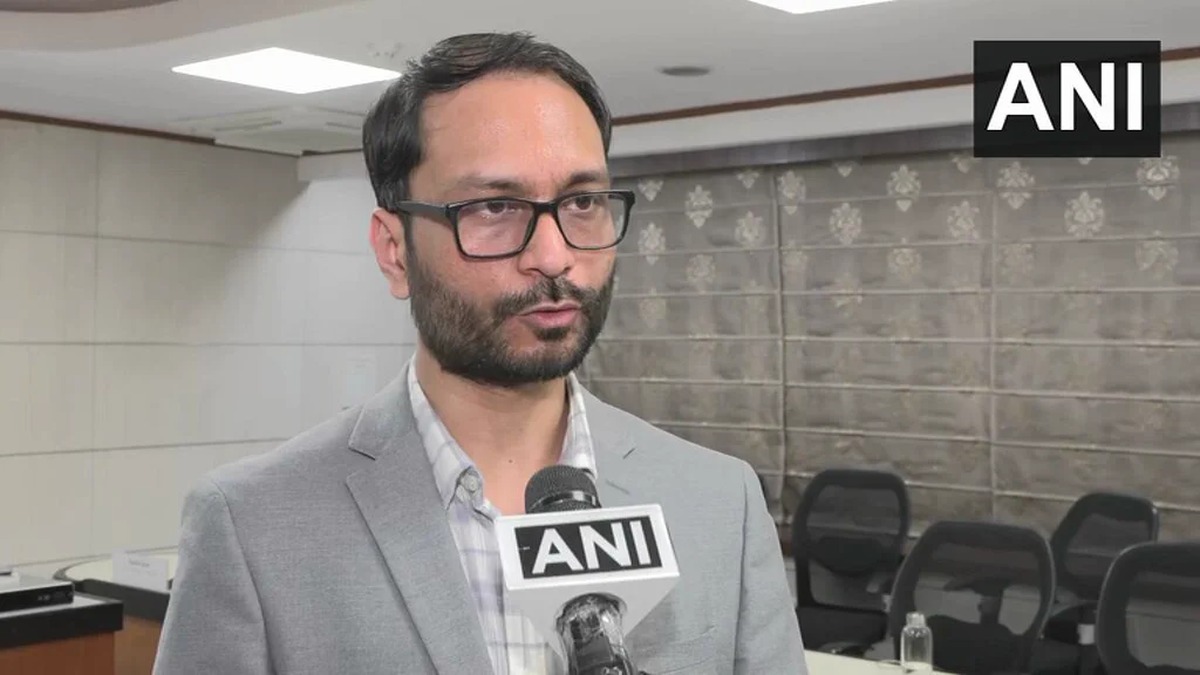
Soket AI CEO and founder Abhishek Upperwal has highlighted the company's effort to develop indigenous AI models for sectors where mathematics, coding and data security are central to operations.
Speaking in Delhi, Upperwal said defence, cybersecurity, banking and finance rely heavily on these capabilities. He described Soket AI's goal as reducing India's dependence on foreign models by developing alternatives that can operate across critical sectors.
Keeping sensitive data in India
Upperwal said locally developed and deployed models could help organisations keep sensitive information within the country. He specifically referred to data from the banking and finance sectors, where unauthorised exposure could create serious security and privacy risks.
“Our goal is to reduce India's dependence on foreign models by developing indigenous alternatives that can function across all our critical sectors,” Upperwal said.
He added that keeping sensitive data inside India could help prevent potential data leaks. His comments focused on deployment control, data location and the ability of organisations to use a model without depending on foreign models or technologies.
On-premises deployment and customisation
According to Upperwal, the model developed by his team can be deployed on-premises or within data centres located in India. On-premises deployment allows an organisation to run the model using infrastructure it controls, while an India-based data centre provides a domestic hosting option.
He also said the model can be fine-tuned to meet specific requirements. This could allow organisations to adapt its use to their own operational needs, while retaining flexibility over how the model is used and where data is stored.
“You have complete flexibility regarding how you use the model and where your data is stored,” Upperwal said.
The comments place data sovereignty alongside model capability as a key consideration for sectors such as defence, cybersecurity and financial services. For organisations handling sensitive information, the stated deployment options could affect decisions about hosting, access and operational control.
What the remarks mean for organisations
The announcement does not provide technical specifications, performance results, deployment timelines or details of organisations currently using the model. It does, however, outline Soket AI's stated approach: build an indigenous alternative, support critical sectors and offer deployment within infrastructure located in India.
The model's proposed flexibility also means that organisations would not have to follow a single storage arrangement, according to Upperwal. They could deploy it on-premises or use data centres in India, depending on their requirements.
For banking and finance, the central issue identified in the remarks is the handling of sensitive data. For defence and cybersecurity, the focus is on models that can support fields dependent on mathematics and coding. The statement does not specify individual use cases within these sectors.
Conclusion
Soket AI says its indigenous model is intended to reduce dependence on foreign AI technologies while supporting secure, flexible deployment for critical sectors. Upperwal said the model can run on-premises or in Indian data centres and can be fine-tuned for specific requirements.
Frequently Asked Questions
Q. Who is Abhishek Upperwal?
Abhishek Upperwal is the CEO and founder of Soket AI.
Q. Which sectors did Upperwal identify?
He identified defence, cybersecurity, banking and finance as sectors that rely heavily on mathematics and coding.
Q. What is Soket AI's stated goal?
Upperwal said the goal is to reduce India's dependence on foreign models by developing indigenous alternatives for critical sectors.
Q. Where can the model be deployed?
He said it can be deployed on-premises or within data centres located in India.
Q. Can the model be customised?
Yes. Upperwal said it can be fine-tuned to suit specific requirements.
Q. What control does the model offer over data storage?
Upperwal said users have flexibility regarding how they use the model and where their data is stored.