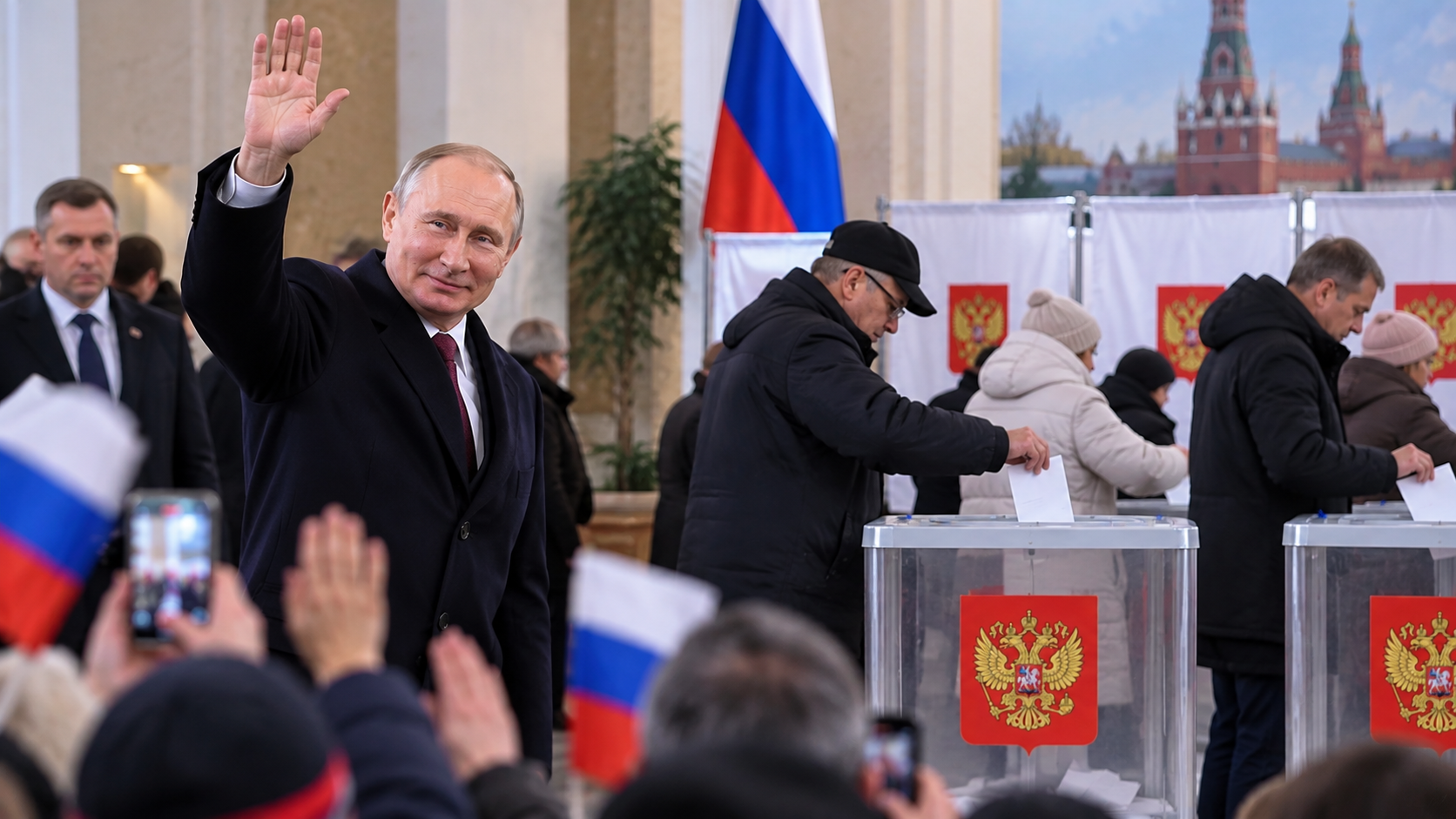
Russia’s 3-day parliamentary election began on 18 September, with voting scheduled to continue until 20 September. President Vladimir Putin’s United Russia party is expected to maintain its strong position in parliament, while the openly anti-war Yabloko party has been barred from contesting the election as a party.
The election is taking place against the backdrop of Russia’s war in Ukraine and includes voting in Russian-controlled parts of Ukrainian territory. Ukraine and the European Union have called that voting illegal. Russia’s decision to hold the election in those areas is likely to remain a central issue surrounding the contest.
Why the election matters to the Kremlin
The vote is not only about selecting members of parliament. The Kremlin wants strong participation to demonstrate that the public remains behind the government and Russian troops during the war in Ukraine.
Putin cast his ballot online on Friday. Before voting began, he said the result would show that millions of people support Russian soldiers and that the country remains united.
This is the first parliamentary election since Russia launched its full-scale military attack on Ukraine in 2022. United Russia is expected to retain its parliamentary dominance, but the election also carries political significance because it is being presented as an indication of public support during wartime.
Yabloko removed from the party contest
Yabloko had been Russia’s only registered party to openly oppose the war in Ukraine. It has called for an end to the conflict and supported peace through negotiations.
Russia’s Supreme Court cancelled the registration of the party’s candidate list in August. The court said Yabloko had used campaign money from people who had received funding from abroad. It also cited the unauthorised use of some graphs and other campaign material, along with breaches of rules governing online campaigning.
Yabloko disputes that explanation. The party says it was excluded because of its opposition to the war in Ukraine.
Some Yabloko candidates are still standing as independents in individual constituencies. Other anti-war figures have been jailed or have left Russia, according to the reported election context.
Voting in Russian-controlled Ukrainian areas
Russia is holding the election for the first time in areas of Donetsk, Luhansk, Kherson and Zaporizhzhia that it controls. Russia claimed in 2022 that all 4 regions had become part of the country, but Ukraine and most other countries do not recognise that claim.
Russia does not have complete control over all 4 regions. The voting is therefore taking place amid an unresolved war and disputed territorial claims. Crimea is also included in the election. Russia seized Crimea in 2014 and incorporated it into the country.
During voting in the Russian-controlled part of Donetsk, an armed Russian soldier was seen stationed near voters. That detail has added to questions about the circumstances in which voting is taking place in the occupied areas.
Ukraine and the European Union have rejected the polling in the occupied Ukrainian territories as illegal. The territorial issue means that the election’s political message extends beyond the distribution of parliamentary seats inside Russia.
Election monitoring and expected results
Russia has not invited election observers from the Organization for Security and Co-operation in Europe. The decision has raised questions about independent monitoring of the vote.
Initial results may begin to emerge from the evening of 20 September. The overall picture is expected to become largely clear by 21 September, with United Russia expected to remain the dominant force in parliament.
The election’s significance will therefore be measured in 2 ways: the seats won by each party and the extent to which the Kremlin can present participation as public backing during the Ukraine war. With Yabloko excluded as a party and voting taking place in Russian-controlled Ukrainian areas, the contest is also drawing scrutiny over political competition and the status of the territories involved.
Conclusion
Russia’s parliamentary election is expected to preserve United Russia’s dominance, while the exclusion of Yabloko and voting in Russian-controlled Ukrainian areas have made the contest a broader test of political competition, wartime support and disputed territorial claims.
Frequently Asked Questions
Q. When is Russia’s 2026 parliamentary election being held?
Voting began on 18 September and is scheduled to continue through 20 September.
Q. Which party is expected to dominate Russia’s parliament?
President Vladimir Putin’s United Russia party is expected to retain its dominance.
Q. Why was Yabloko excluded from the election?
Russia’s Supreme Court cancelled its candidate-list registration in August, citing campaign-funding, campaign-material and online-campaigning violations. Yabloko says the real reason was its opposition to the Ukraine war.
Q. Where are occupied Ukrainian territories included in the vote?
Voting is taking place in Russian-controlled areas of Donetsk, Luhansk, Kherson and Zaporizhzhia, as well as Crimea.
Q. Who has called the voting in occupied Ukrainian areas illegal?
Ukraine and the European Union have called the voting illegal.
Q. When are Russia’s election results expected?
Initial results may begin appearing on the evening of 20 September, and the overall picture is expected to be largely clear by 21 September.
Q. Are international election observers monitoring the vote?
Russia has not invited observers from the Organization for Security and Co-operation in Europe, raising questions about election monitoring.