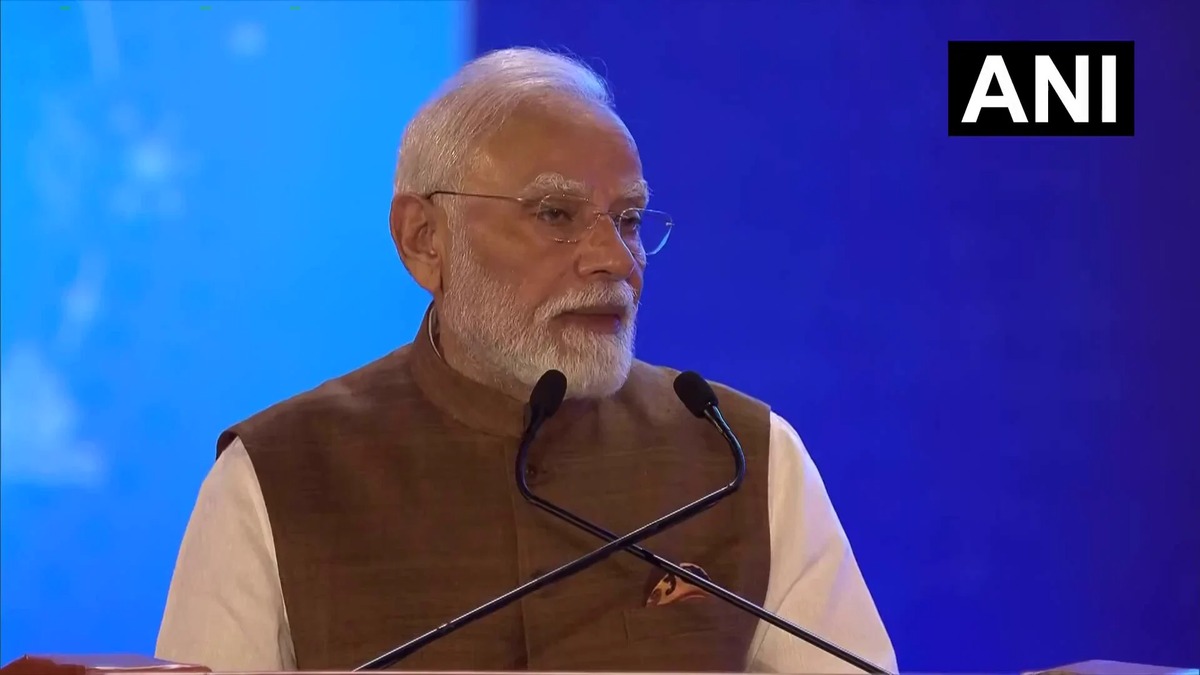
Prime Minister Narendra Modi said India is making progress across artificial intelligence, semiconductor manufacturing, battery storage and 5G, as the country seeks to strengthen its role in emerging technologies.
Speaking in Delhi, Modi said India had hosted the AI Impact Summit this year and launched its own model. He also said the first shipments of chips manufactured in India had begun reaching countries around the world.
The remarks place domestic technology development and large-scale digital delivery at the centre of India's emerging technology ambitions. They also point to the government's emphasis on building capabilities using resources available within the country.
Chips, AI and battery storage
Modi said India was developing capacity in battery storage based on raw materials available domestically. He did not provide figures for manufacturing capacity, shipment volumes or the model launched by India.
His comments on chip shipments indicate that semiconductor manufacturing in India has moved beyond development efforts to initial deliveries, according to the claim in his remarks. The statement did not identify the manufacturing facility, destination countries or the types of chips involved.
The Prime Minister presented artificial intelligence and semiconductor production as part of a wider effort to build confidence in emerging technologies. He said India was strengthening both its capabilities and its confidence in these fields.
Digital infrastructure as a scale advantage
Modi described India's digital stack as a prime example of the country's ability to deliver solutions at scale. He also cited India's 5G technology as another example of that capability.
The digital stack reference connects the government's technology argument to systems designed to support services and transactions across a large population. However, the remarks did not specify which services, platforms or performance measures were being cited.
The comments came amid a broader focus on future technologies. Reports about the Emerging Science, Technology and Innovation Conclave 2026 identified the event as a programme inaugurated by Modi on 27 October 2026. The supplied remarks, however, do not provide further details about the conclave's agenda or announcements.
Technology framed as a public good
Modi said India was moving towards developing secure solutions that could reach people on a massive scale. He linked that goal to a longstanding challenge in science and technology: the tendency to view technological advances as potential weapons.
India's perspective, he said, is that science and technology should serve humanity. That position frames technological development not only as an economic or strategic project, but also as a means of delivering public benefits securely and at scale.
For readers, the practical significance of the speech lies in the sectors identified as priorities: AI, chips, battery storage, digital infrastructure and 5G. The next developments to watch are further details on the model, semiconductor shipments and battery-storage capacity, none of which were specified in the remarks.
Conclusion
Modi said India is combining domestic technology capacity with large-scale digital delivery, while promoting a human-centred approach to AI, chips, 5G and other emerging technologies. The speech provided broad direction but limited operational details about the projects mentioned.
Frequently Asked Questions
Q. What did Narendra Modi say about India's AI progress?
Modi said India hosted the AI Impact Summit this year and launched its own model. He did not name the model or provide technical details.
Q. What did he say about semiconductor manufacturing?
He said the first shipments of chips manufactured in India had begun reaching the rest of the world. He did not identify the facility, destinations or chip types.
Q. What is India doing in battery storage?
Modi said India is working to build battery-storage capacity based on raw materials available within the country.
Q. Which digital technologies did Modi highlight?
He cited India's digital stack and 5G technology as examples of solutions that can be delivered at scale.
Q. What approach to technology did Modi advocate?
He said science and technology should serve humanity, rather than being viewed primarily as potential weapons.
Q. Where did Modi make the remarks?
The remarks were made in Delhi.