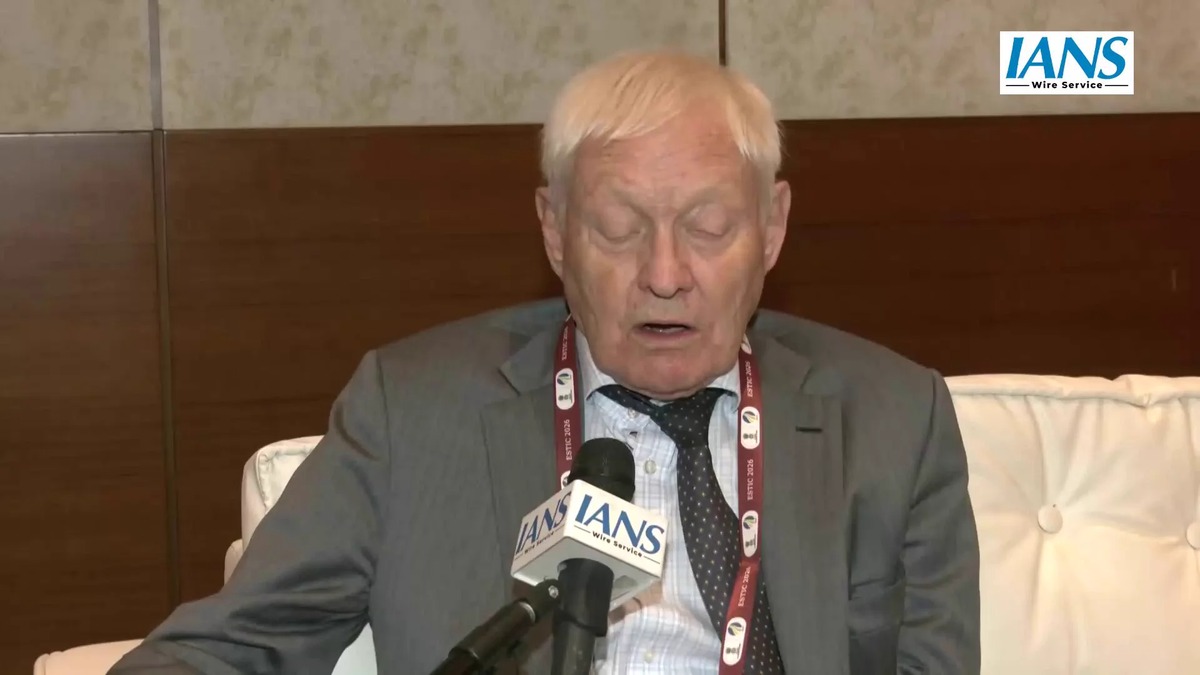
Columbia University Irving Medical Center scientist Joachim Frank has warned against treating artificial intelligence as an autonomous force in science, saying it should remain a supporting tool rather than drive scientific work.
Speaking in Delhi, Frank, who received the Nobel Prize in Chemistry in 2017, said he viewed AI as “ancillary and not a driving force”. He argued that science, particularly for researchers trained in the field, is fundamentally empirical.
Frank's warning about AI's capabilities
Frank said he believed there was “a very big misunderstanding” about what artificial intelligence can do. He described it as dangerous to follow a path based on exaggerated expectations of AI's capabilities.
He acknowledged that AI can process very large datasets and identify trends. Those abilities, he said, give the technology a useful supporting role in scientific work.
However, Frank rejected the idea that AI can operate independently in science. “It cannot be autonomous. It must not be autonomous,” he said, adding that AI can only have an ancillary role.
His comments place emphasis on the distinction between computational assistance and scientific judgment. AI may help researchers examine information and identify patterns, but Frank said empirical science should remain the foundation of scientific practice.
What the remarks mean for scientific work
The comments underline a cautious view of AI's growing role in research. The technology can assist with large amounts of data, but Frank's position is that it should not replace the human-led process of empirical inquiry.
For researchers and the wider public, the central issue is how AI is used. Frank's remarks support using the technology to support analysis while rejecting claims that it should independently direct scientific work.
Conclusion
Joachim Frank's verified position is that AI can help scientists handle large datasets and discover trends, but it should remain an ancillary tool and must not become autonomous in science.
Frequently Asked Questions
Q. Who is Joachim Frank?
Joachim Frank is a scientist associated with Columbia University Irving Medical Center and the 2017 Nobel Prize in Chemistry.
Q. What role does Frank believe AI should have in science?
He believes AI should have an ancillary, or supporting, role in scientific work.
Q. What benefit of AI did Frank acknowledge?
He said AI can handle very large datasets and discover trends.
Q. Does Frank believe AI can be autonomous in science?
No. He said AI cannot and must not be autonomous.
Q. Why did Frank criticise current views of AI?
He said there was a major misunderstanding about AI's capabilities and called it dangerous to follow that path.
Q. What does Frank mean by empirical science?
His remarks describe science as grounded in empirical work, with AI assisting rather than driving the process.