Himalayan glaciers are melting 65% faster than they were a decade ago, raising the risk of major changes in river flows, water availability and livelihoods across South Asia. A new study warns that the Hindu Kush-Himalaya is moving towards a dangerous tipping point as glaciers continue to lose mass.
The region could reach peak water flow by mid-century. River discharge may increase before reaching that point, but is expected to decline afterwards. That transition could affect farming, hydropower projects, household water supplies and the livelihoods of millions of people.
Why peak water matters
Peak water refers to the point at which glacier-fed river flows reach their maximum before beginning to fall. For communities dependent on Himalayan rivers, the change could mean greater flood risks in the earlier phase, followed by reduced water availability.
The Hindu Kush-Himalaya stretches across 8 countries, from Afghanistan to Myanmar. The mountain system is a major source of water for South Asia, and hundreds of crores of people depend on its rivers.
The Himalayan region covers about 18% of India’s land area but accounts for roughly 35% of the country’s share of natural disasters. The study warns that accelerating glacier loss could increase the risks of floods, landslides and droughts, adding pressure to agriculture, energy projects and daily water needs.
Recent glacier collapse highlights the danger
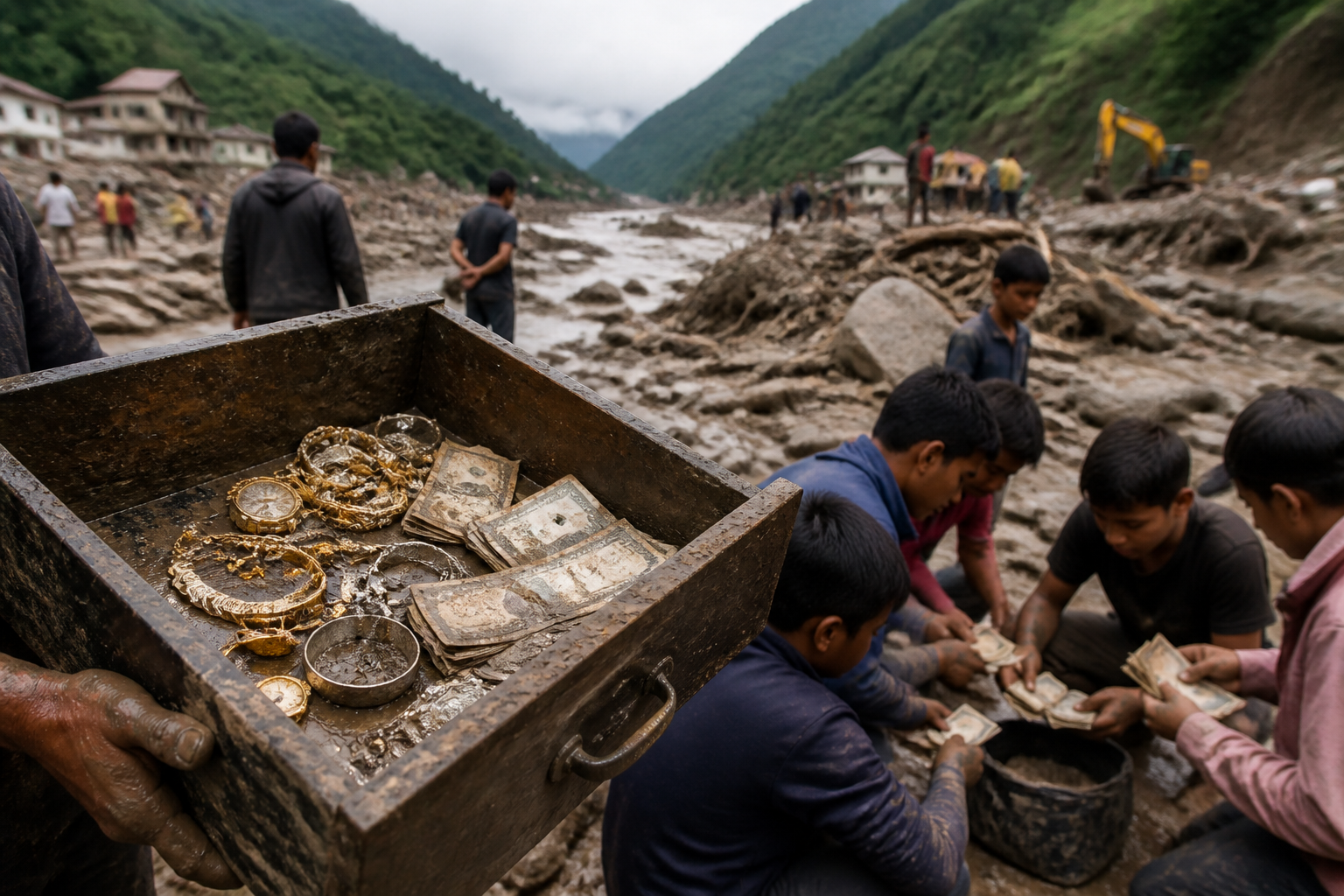
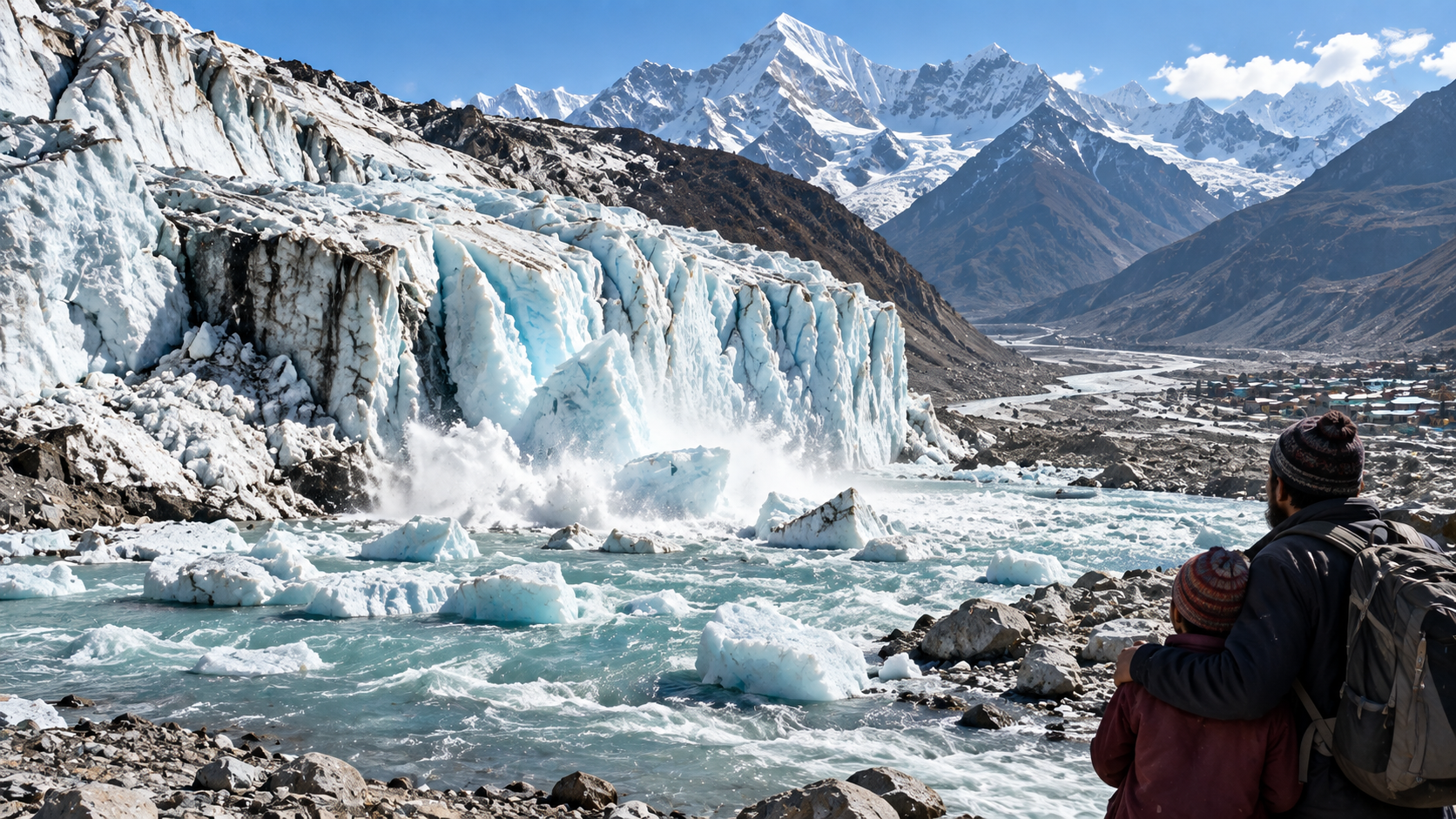
A glacier collapse near the Nepal-Tibet border in late August triggered a series of landslides and floods in nearby valleys. More than 1300 deaths have been confirmed in Nepal and Tibet, while more than 5300 people remain missing.
The disaster has highlighted the wider danger created by retreating glaciers. As ice withdraws, unstable lakes can form behind loose rock and ice. These natural barriers can fail suddenly, sending destructive floods into valleys where large populations live.
Monitoring remains limited
The study was prepared by Systemiq in partnership with the Integrated Mountain Initiative, the International Centre for Integrated Mountain Development and India’s GB Pant National Institute of Himalayan Environment.
It estimates that the region has about 40 thousand glaciers, but only 21 are being monitored on the ground. The limited coverage makes it harder to track changes and identify threats early across such a large and difficult landscape.
India has about 200 glacial lakes classified as high risk. Of these, 56 are placed in the very high-risk category. Communities living downstream remain exposed to the possibility of sudden lake outbursts and flooding.
Economic and social consequences
The Himalayas influence more than 20% of India’s gross domestic product, according to the study. Changes in glacier-fed rivers could therefore affect not only mountain communities but also wider economic activity linked to agriculture, electricity generation and water supply.
The impact on livelihoods may be especially serious for people whose income depends on farming and predictable seasonal water. A rise in extreme events, followed by declining river flows, would create different but connected challenges for communities, infrastructure and local economies.
What the study calls for
The study identifies stronger monitoring, early-warning systems and climate adaptation as key needs. It also stresses the importance of preparing local communities and regularly checking glacial lakes considered dangerous.
Better observation could help authorities identify unstable lakes and changing glacier conditions sooner. Early warnings and local preparedness could then support a faster response when risks increase.
Conclusion
The study presents rapid glacier loss as a growing threat to water security, livelihoods and infrastructure across the Hindu Kush-Himalaya. Its central warning is that stronger monitoring, early alerts and adaptation are needed as the region approaches peak water flow and faces greater instability.
Frequently Asked Questions
Q. How much faster are Himalayan glaciers melting?
The glaciers are melting 65% faster than they were a decade ago.
Q. When could the Hindu Kush-Himalaya reach peak water flow?
The region could reach peak water flow by mid-century.
Q. What may happen after peak water flow?
River flows may begin to decline after reaching their peak.
Q. How many glaciers are estimated to be in the region?
The region has about 40 thousand glaciers.
Q. How many glaciers are currently being monitored on the ground?
Only 21 glaciers are being monitored on the ground.
Q. How many high-risk glacial lakes are in India?
India has about 200 glacial lakes classified as high risk, including 56 in the very high-risk category.
Q. What happened near the Nepal-Tibet border?
A glacier collapse in late August triggered landslides and floods in nearby valleys. More than 1300 deaths have been confirmed and more than 5300 people remain missing.
Q. Which areas could be affected by changing river flows?
Farming, hydropower projects, household water supplies and livelihoods could be affected.