India's Election Commission is facing renewed questions over its credibility and independence after a report described repeated disagreements among its 3 members. The reported dispute centres on decisions involving voter-list revision, the enrolment of new voters, access to voter data and the reliability of election software.
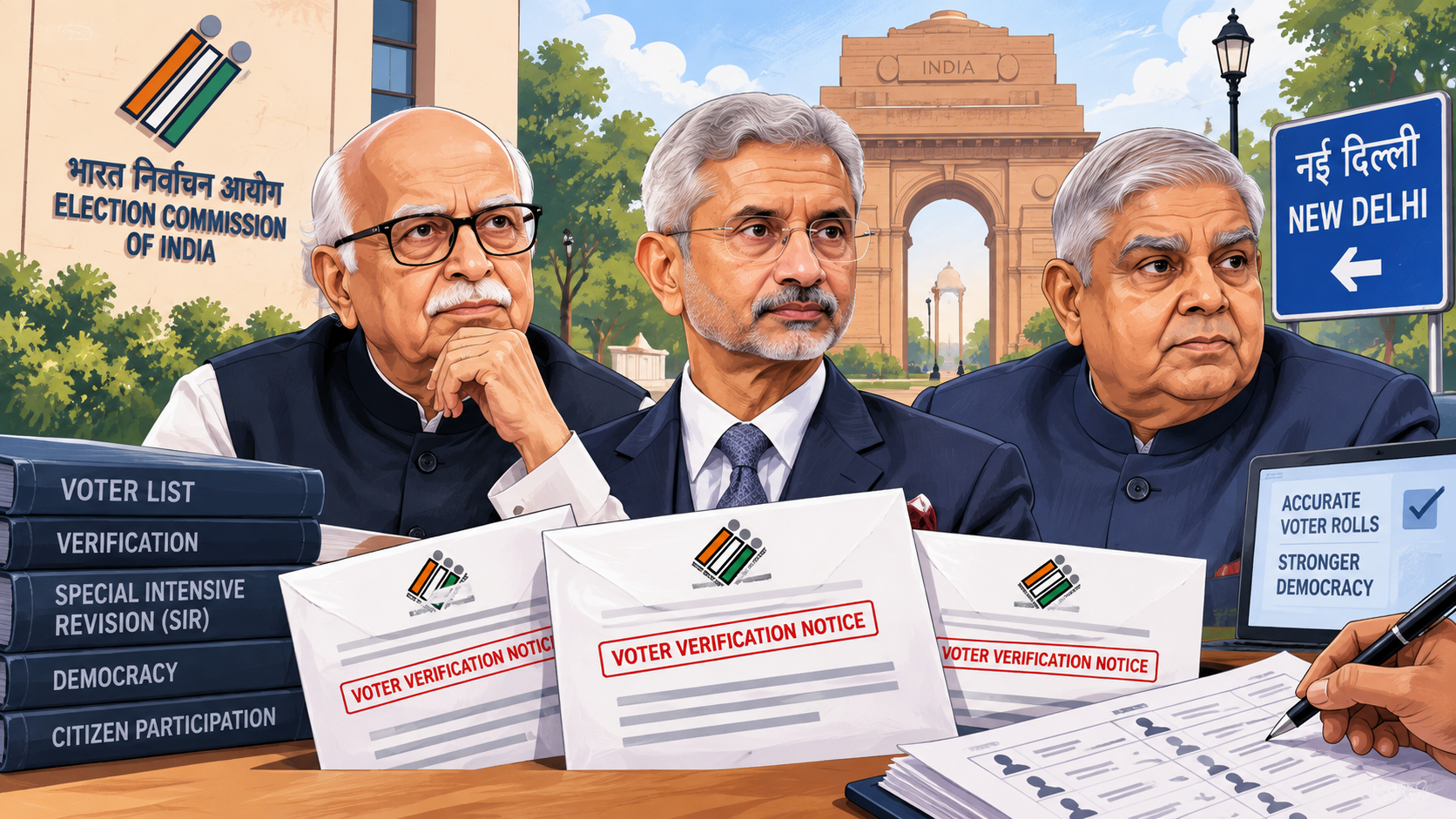
The immediate controversy is linked to the Special Intensive Revision, or SIR, of electoral rolls. The process began in Bihar and was described by the Commission as routine. More than 13 crore names have since been removed from voter lists under the process, prompting debate over whether the Commission is taking on a role connected to determining citizenship.
Opposition parties have alleged that the Narendra Modi government is using the Commission to shape voter lists in its favour. The central government has rejected those allegations. Against that backdrop, a report by The Indian Express has highlighted alleged differences inside the Commission itself.
What the reported objections concern
According to the report, Election Commissioners Sukhbir Singh Sandhu and Vivek Joshi raised at least 14 formal objections on record during the past 10 months. The objections reportedly said that some decisions and orders were taken or issued without their knowledge. On one day, 4 objections were recorded.
The reported concerns included steps for adding new voters and removing names from electoral rolls. The 2 commissioners also objected to the centralisation of access to the voter database in Delhi, warning that this could bypass state officials. Some actions related to adding new voters were described in a written objection as “unauthorised and illegal”.
The dissenting commissioners also complained to the Cabinet Secretary over concerns about the reliability of the software. Copies of the objections were reportedly sent to Chief Election Commissioner Gyanesh Kumar and to some Deputy Election Commissioners overseeing the relevant work.
one written objection attributed to Sandhu alleged that the Commission acted against the written advice of 2 election commissioners. It described the action as “unauthorised and illegal”.
Commission's response
After the report, the Election Commission ed an 8-point statement on X. In its fifth point, it said that focusing only on selected internal notes or discussions while ignoring several approvals, decisions, directions and initiatives taken over 10 months would not present the complete picture.
The Commission said it had taken several decisions, issued directions, launched nearly 40 new initiatives and carried out electoral reforms during the past year. It said these included nationwide voter-list improvements, including SIR, and that the decisions were taken with the consensus of the full Commission.
The reported disagreement has nevertheless raised questions about how decisions are made inside the constitutional body and how dissenting views are recorded. The controversy also comes after a series of earlier episodes involving disagreements or changes at the top of the Commission.
Earlier disagreement involving Ashok Lavasa
In May 2019, Election Commissioner Ashok Lavasa sought the inclusion of dissenting or minority views in Commission orders on alleged violations of the Model Code of Conduct. Then Chief Election Commissioner Sunil Arora did not accept the request.
On 16 May 2019, Lavasa withdrew from meetings concerning Model Code complaints. He had objected to the handling of complaints and to the omission of his minority view from final orders.
During the general election, Lavasa disagreed on 5 occasions with clean chits given to Prime Minister Narendra Modi and BJP president Amit Shah in cases involving alleged Model Code violations.
Arora said disagreements among election commissioners had primarily remained within the Commission and that its 3 members were not expected to agree on everything. He also said that keeping disagreements private was preferable because the election process had to continue.
The Congress criticised the episode. Party spokesperson Randeep Surjewala said the refusal to record Lavasa's dissent damaged the Commission's institutional integrity and alleged political pressure from the Modi government.
Arun Goel's resignation before the 2024 election
Election Commissioner Arun Goel resigned shortly before the 2024 general election. President Droupadi Murmu accepted the resignation with effect from 9 March. Goel's term was due to continue until 2027, and his departure came when the announcement of the Lok Sabha election schedule was expected within days.
The Congress expressed concern about the functioning of what it called the world's largest democracy. Congress general secretary K. C. Venugopal said there was no transparency about how the constitutional election body worked or how the government exerted pressure on it.
A dispute dating back to 2009
The material also records an earlier dispute involving Chief Election Commissioner N. Gopalaswami. In January 2009, he recommended to the President that Election Commissioner Navin Chawla be removed from office.
The episode shows that disagreements within the Commission are not limited to the current dispute. However, the latest reported objections have drawn particular attention because they concern voter-list changes, database access and the internal process for approving decisions.
Appointments under the 2023 law
The 3 current election commissioners were appointed during the Modi government's tenure under a 2023 law. The selection committee included the Prime Minister, the Union Home Minister and the Leader of the Opposition in the Lok Sabha.
When Sukhbir Singh Sandhu and Gyanesh Kumar were appointed election commissioners in March 2024, Congress leader Adhir Ranjan Chowdhury, the opposition member on the committee, recorded his disagreement with the appointment process. In February 2025, when Gyanesh Kumar was appointed Chief Election Commissioner and Vivek Joshi was appointed election commissioner, Rahul Gandhi, then Leader of the Opposition in the Lok Sabha, also recorded his disagreement.
The appointment disputes form part of the broader debate over the Commission's independence. The latest internal objections have added a separate question: whether differences among commissioners are being adequately considered and documented before decisions are issued.
Conclusion
The Election Commission's response says major decisions and reforms were approved by the full Commission. The reported objections by 2 commissioners, however, have intensified scrutiny of voter-list revision, data access, software reliability and the way dissent is handled inside the institution.
Frequently Asked Questions
Q. What is the latest controversy involving the Election Commission?
A report said 2 election commissioners recorded at least 14 formal objections over 10 months concerning several decisions and orders.
Q. What is SIR in the context of voter lists?
SIR means Special Intensive Revision, a process for revising electoral rolls that began in Bihar and was described by the Commission as routine.
Q. What did the Election Commission say in response?
The Commission said focusing on selected internal notes would not present the complete picture and stated that major decisions and reforms had the consensus of the full Commission.
Q. Who was Ashok Lavasa?
Ashok Lavasa was an election commissioner who sought the recording of minority views in orders concerning alleged Model Code of Conduct violations in 2019.
Q. When did Arun Goel resign?
Arun Goel's resignation was accepted with effect from 9 March, shortly before the 2024 general election.
Q. Who recommended Navin Chawla's removal?
Chief Election Commissioner N. Gopalaswami sent the recommendation to the President in January 2009.
Q. Who is on the selection committee for election commissioners under the 2023 law?
The committee includes the Prime Minister, the Union Home Minister and the Leader of the Opposition in the Lok Sabha.