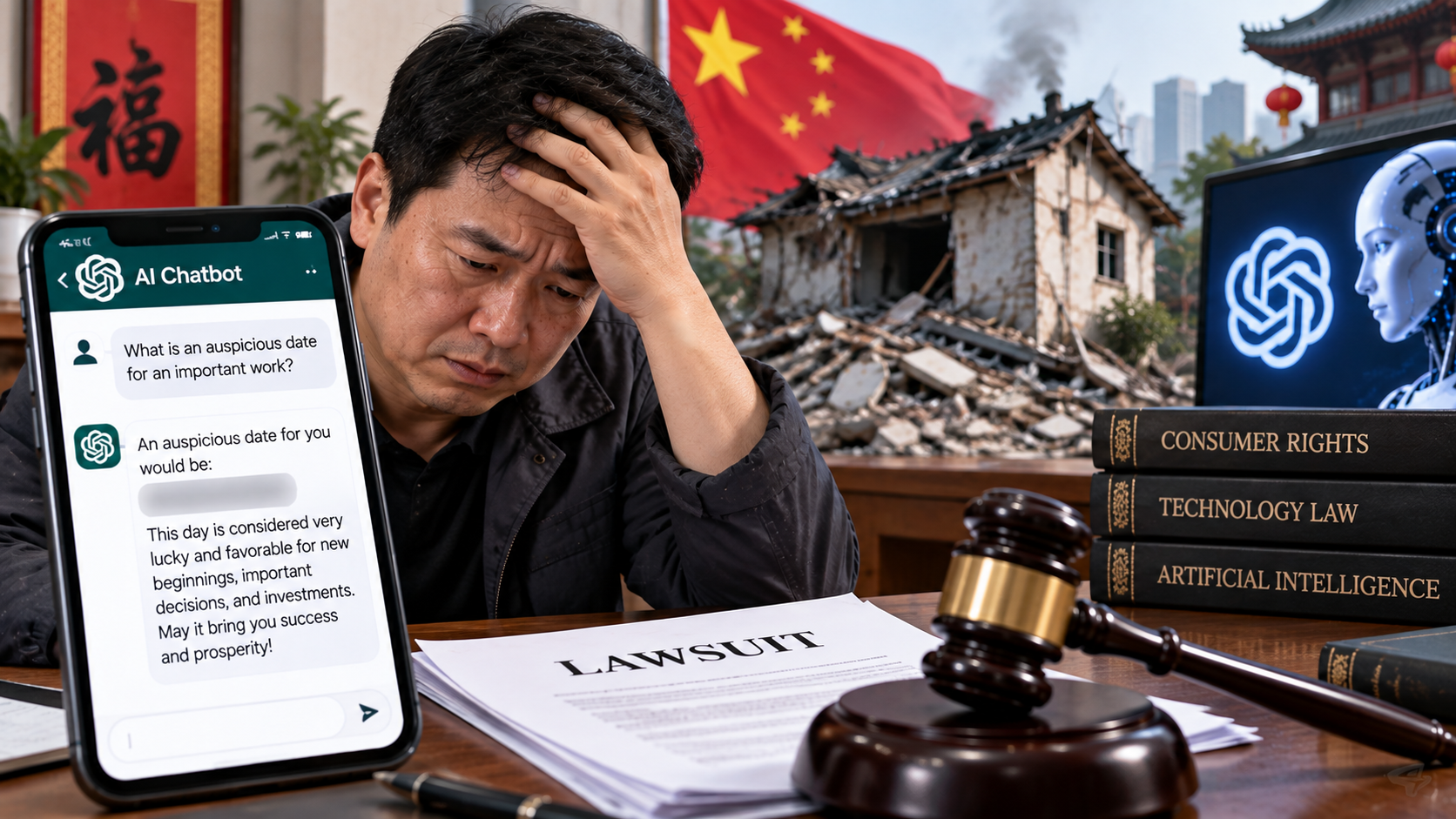
A man in eastern China has sued an AI company after using its chatbot to choose a burial date for his mother. Shi, from Jiashan county in Zhejiang province, says the advice was misleading and contributed to family tensions after a relative suffered serious injuries in a traffic accident shortly after the funeral.
The case involves Beijing Chuntian Zhiyun Technology, whose software Shi frequently used for tasks including organising work contracts. The lawsuit has recently been heard by a local court and remains ongoing. Shi is seeking an apology and compensation, although the amount has not been disclosed.
How the burial date was selected
Shi’s mother died from a sudden illness in April. As the youngest of 5 siblings, he wanted an auspicious date for her burial, a decision that can carry importance for families who follow traditional Chinese almanacs and related beliefs about celestial movements.
After consulting a feng shui master, Shi and his family first chose April 20. He later became worried because the date was the fourth day after his mother’s death. Local customs in the account regard even-numbered days as unlucky, prompting him to seek another opinion from an AI chatbot.
The chatbot recommended April 19 and advised the family to burn paper horses and paper money before the funeral procession. These items are traditionally believed to provide essentials for the deceased during the journey to the afterlife.
The advice also contained a contradiction. The chatbot suggested a burial time between 7 AM and 9 AM, but at the same time stated that April 19 was not an auspicious date. Shi had already informed relatives of the arrangements and said the date could not then be changed.
Family linked accident to burial date
Shortly after the funeral, one of Shi’s relatives was seriously injured in a traffic accident. The specific timing of the crash was not disclosed.
Some family members attributed the incident to the burial date, believing it had disturbed the family’s feng shui and brought bad luck. Shi said the chatbot’s recommendation added to strained relations within the family and argued that the company should bear responsibility for the guidance it provided.
The case does not establish that the burial date caused the accident. The reported connection is based on the family’s belief and Shi’s complaint about the chatbot’s advice.
Company challenges the complaint
Beijing Chuntian Zhiyun Technology argued that no online infringement had taken place. Its terms of use say AI-generated content is for reference only and does not amount to professional advice. Users also accept the relevant service agreement when they use the software.
Shi has challenged that position. He argues that the user agreement unfairly transfers responsibility to users, does not provide sufficient warnings and lacks adequate review of the information sources used by the AI system.
The chatbot also helped Shi prepare legal documents and outline litigation procedures for the case against its developer. That detail has drawn attention because the same tool was involved both in the disputed burial-date advice and in preparing the legal challenge.
Debate over AI responsibility
Online reactions have been divided. one view is that AI remains only a tool and that users must be able to assess its answers independently. Another focuses on the unusual fact that Shi used AI to help pursue a lawsuit against the company behind the chatbot.
The dispute raises questions about how users should treat AI-generated guidance when it touches on personal, cultural or sensitive decisions. In this case, the court must consider Shi’s claims about warnings, responsibility and information review alongside the company’s service terms.
The local court has heard the case, but no final outcome or compensation figure has been reported.
Conclusion
Shi’s lawsuit remains unresolved. Its outcome will depend on the court’s assessment of the chatbot’s advice, the company’s user agreement and the responsibility assigned to each side.
Frequently Asked Questions
Q. Why did Shi sue the AI company?
Shi says the chatbot gave misleading advice about his mother’s burial date and funeral practices. He is seeking an apology and compensation.
Q. Which company is involved in the case?
The defendant is Beijing Chuntian Zhiyun Technology.
Q. What burial date did the chatbot recommend?
It recommended April 19 after Shi had initially selected April 20 with his family and a feng shui master.
Q. What time did the chatbot suggest for the burial?
It suggested a time between 7 AM and 9 AM, while also stating that April 19 was not an auspicious date.
Q. What happened after the funeral?
one of Shi’s relatives suffered serious injuries in a traffic accident. Some family members linked the incident to the burial date through their feng shui beliefs.
Q. How has the company responded?
The company argued that no online infringement occurred and pointed to terms stating that AI-generated content is for reference rather than professional advice.
Q. Is the court case finished?
No. The case has recently been heard at the local court and remains ongoing.
Q. How did AI assist Shi with the lawsuit?
The chatbot helped him draft legal documents and outline litigation procedures for his case against the company.