China's push to use artificial intelligence as part of its economic transformation is facing a warning from business and academic figures: enthusiasm for the technology may be running ahead of market realities, while its gains could remain concentrated among a relatively small part of society.
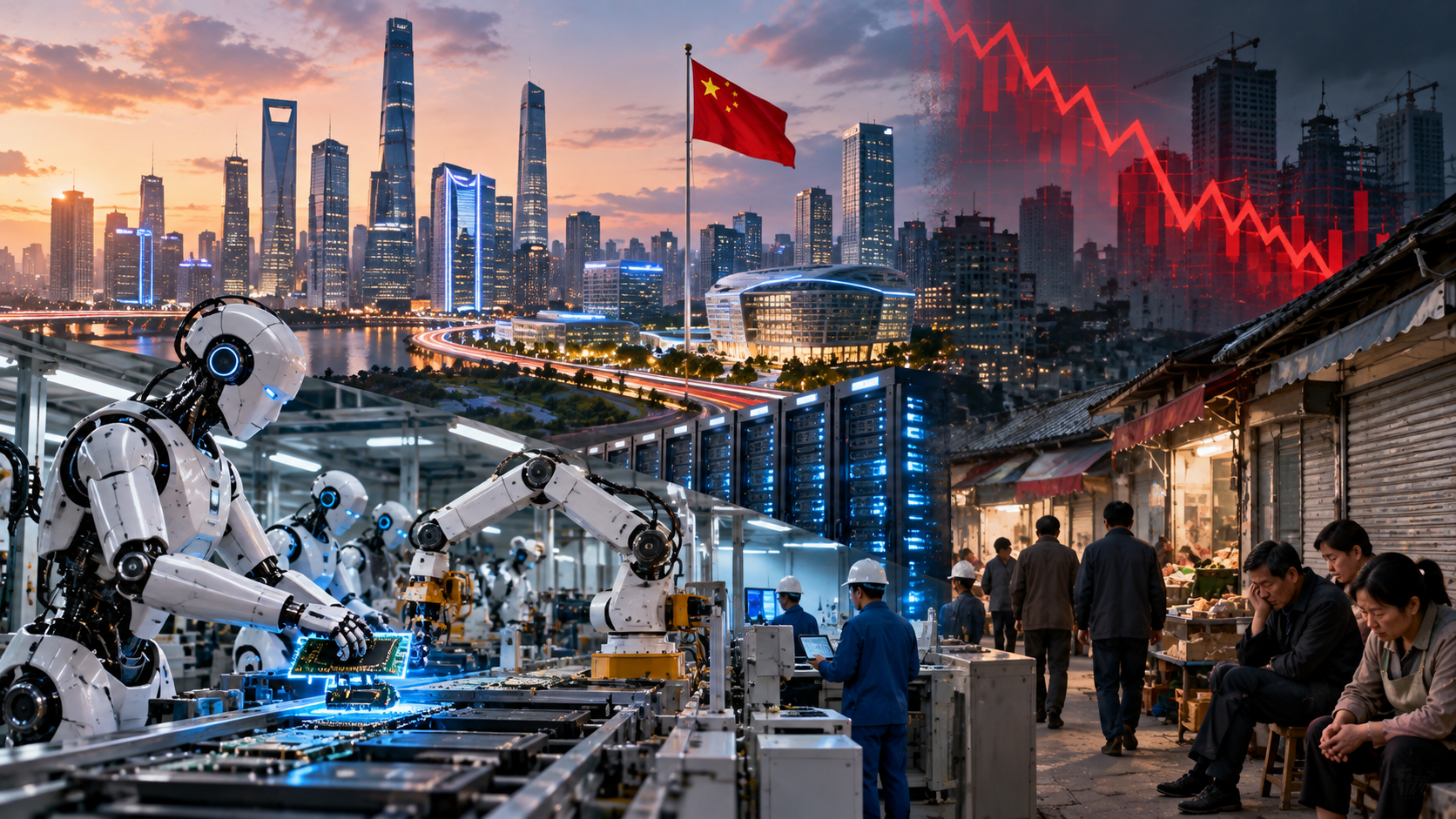
The concerns focus on 2 related issues. one is the steep valuation assigned to some humanoid robotics companies. The other is whether AI-led growth will improve incomes and consumption for lower-income workers, rather than widening the wealth gap.
Robot valuations under scrutiny
Daniel Zhang, managing partner of FirstLight Capital and former chairman and CEO of Alibaba Group Holding, said the sharp decline in some Chinese humanoid robotics stocks reflected expectations that had become excessive.
Zhang was speaking at the FutureChina Business Forum in Singapore on Friday. He described Unitree Robotics as a strong company with a visionary entrepreneur, but said no company could withstand expectations set at such a high level.
Unitree, a rapidly growing Chinese humanoid robot maker, saw its shares fall 55 per cent from their peak less than a month after its listing on Shanghai's Nasdaq-style Star Market. The move has added to scrutiny of the valuations attached to companies in the sector.
Chinese regulators have also increased scrutiny of humanoid-robot start-ups seeking listings on mainland stock exchanges amid concerns about excessive market hype, according to The Information. That attention is expected to affect Deep Robotics and Leju Robot, which remain unprofitable after filing for initial public offerings.
Zhang said many robot makers were preparing for IPOs, but warned that companies would struggle if their valuations were cut in half after listing. He argued that economic progress required attention to objective conditions rather than expectations alone.
Who benefits from AI growth?
Fan Gang, an economics professor at Peking University, raised a broader concern about the distribution of AI's benefits. He said new growth dividends were reaching a relatively small group, while lower-income workers had not yet seen comparable gains.
Fan warned that AI could make the imbalance more serious. In his view, the economy would face problems if the general population did not receive salary increases and public consumption did not expand.
The issue places the technology debate beyond investment returns. It also links AI development to household purchasing power and the ability of the wider population to participate in economic growth.
Innovation beyond technology
Foo Jixun, senior managing partner at Singapore-based investment firm Granite Asia, said investors had committed billions of US dollars to AI and robotics. He also pointed to consumer trends outside high technology as potential sources of opportunity.
Foo cited the global popularity of Pop Mart's Labubu toys and rising interest in fitness competitions such as Hyrox. He said these examples showed how lifestyle and consumer changes were creating possibilities beyond the technology sector.
He argued that innovation supporting industrial upgrading and economic transition should not be limited to high technology and AI. Services and cultural industries, he said, should also be part of that process.
The annual 2-day forum was organised by Business China, a non-profit organisation launched in 2007 by Singapore's founding prime minister, Lee Kuan Yew, to strengthen regional ties and promote dialogue.
Conclusion
The discussion at the forum points to a dual challenge for China's AI-led transformation: keeping robotics valuations grounded while ensuring that economic gains reach more workers. The speakers also highlighted services and cultural industries as important parts of broader innovation.
Frequently Asked Questions
Q. Why are economists concerned about China's AI boom?
They are concerned that high expectations may have pushed up some robotics valuations and that AI's economic gains could remain concentrated among a small group.
Q. What happened to Unitree Robotics shares?
Unitree Robotics shares fell 55 per cent from their peak less than a month after the company's listing on Shanghai's Nasdaq-style Star Market.
Q. Which humanoid robot companies may face greater scrutiny?
The heightened attention is expected to affect Deep Robotics and Leju Robot, which remain unprofitable after filing for IPOs.
Q. What did Fan Gang say about AI and inequality?
The Peking University economics professor said AI could make the uneven distribution of economic gains more serious if incomes and public consumption did not increase.
Q. What sectors could benefit from innovation beyond AI?
Foo Jixun said innovation should also extend to services and cultural industries, alongside examples such as consumer toys and fitness competitions.