The government has removed the location-based restriction for serving central government employees seeking coverage under the Central Government Health Scheme (CGHS). Employees who live or are ed outside CGHS-covered areas can now choose the scheme, provided they meet the remaining eligibility conditions and pay the prescribed contribution.
The change may help eligible employees who were previously outside the scheme’s geographic coverage. However, choosing CGHS is a permanent decision under the revised rules and cannot be changed later.
What has changed under CGHS
Earlier, a serving central government employee’s residence or ing location could limit eligibility for CGHS. The revised rule removes that geographic condition for employees who are otherwise eligible.
Employees who select CGHS must also provide an undertaking. They must confirm that neither they nor their eligible family members will claim medical benefits under both CGHS and the Central Services (Medical Attendance) Rules, 1944.
Employees already living or ed in areas covered by CGHS remain mandatorily covered by the scheme. They cannot choose facilities available under the CS(MA) Rules instead.
Action over incorrect information
The government has warned that submitting false or misleading information to obtain medical benefits can result in serious action. Possible consequences include disciplinary proceedings and recovery of benefits received improperly.
The requirement to provide an undertaking means employees opting for CGHS must avoid claiming benefits under both medical systems for themselves or eligible family members.
What is CGHS?
The Central Government Health Scheme is a government healthcare programme for serving and retired central government employees and their eligible family members. It began in Delhi on 1 July 1954, with the aim of providing medical care and easing difficulties related to reimbursement claims for outpatient medicines.
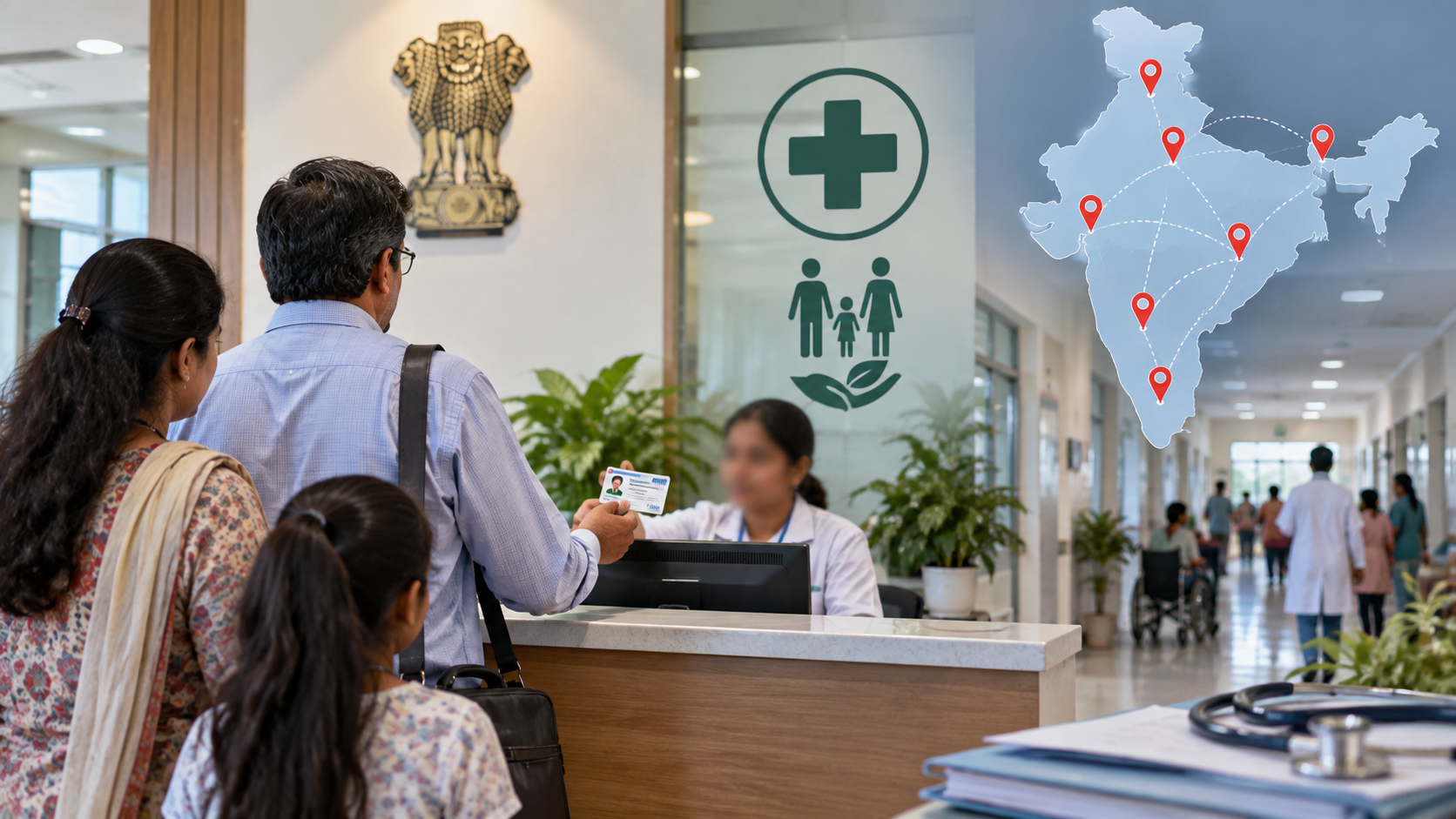
The programme has since expanded beyond Delhi. Its services are delivered through wellness centres, polyclinics, laboratories and empanelled hospitals. Eligible pensioners and certain other beneficiary categories are also covered.
According to the Ministry of Health and Family Welfare’s 2024-25 annual report, CGHS had expanded to 81 cities and was serving approximately 46.87 lakh beneficiaries.
What employees should remember
- Employees outside CGHS-covered areas may now opt for the scheme if they satisfy the other conditions and pay the prescribed contribution.
- The choice cannot be changed after CGHS is selected.
- Employees in areas already covered by CGHS must remain under the scheme.
- An undertaking is required to prevent claims under both CGHS and the CS(MA) Rules, 1944.
- False or misleading information may lead to disciplinary action and recovery of benefits.
Conclusion
The rule change extends the option of CGHS to eligible serving central government employees beyond covered geographic areas, while retaining contribution, undertaking and non-dual-claim requirements. Employees already in covered areas remain required to use CGHS.
Frequently Asked Questions
Q. What is the main CGHS rule change?
Serving central government employees outside CGHS-covered areas can now opt for the scheme if they meet the other conditions and pay the prescribed contribution.
Q. Can an employee change the decision after choosing CGHS?
No. The choice to opt for CGHS cannot be changed later.
Q. Can employees in CGHS-covered areas choose CS(MA) facilities instead?
No. Employees living or ed in areas already covered by CGHS must remain covered by the scheme.
Q. What undertaking is required when choosing CGHS?
The employee must confirm that they and their eligible family members will not claim medical benefits under both CGHS and the Central Services (Medical Attendance) Rules, 1944.
Q. What can happen if incorrect information is provided?
The employee may face disciplinary action, and benefits obtained improperly may be recovered.
Q. Who is covered by CGHS?
CGHS serves serving and retired central government employees, eligible family members, eligible pensioners and certain other beneficiary categories.
Q. When did CGHS begin?
CGHS began in Delhi on 1 July 1954.
Q. How large was CGHS in 2024-25?
The scheme covered 81 cities and served approximately 46.87 lakh beneficiaries, according to the Ministry of Health and Family Welfare’s annual report.