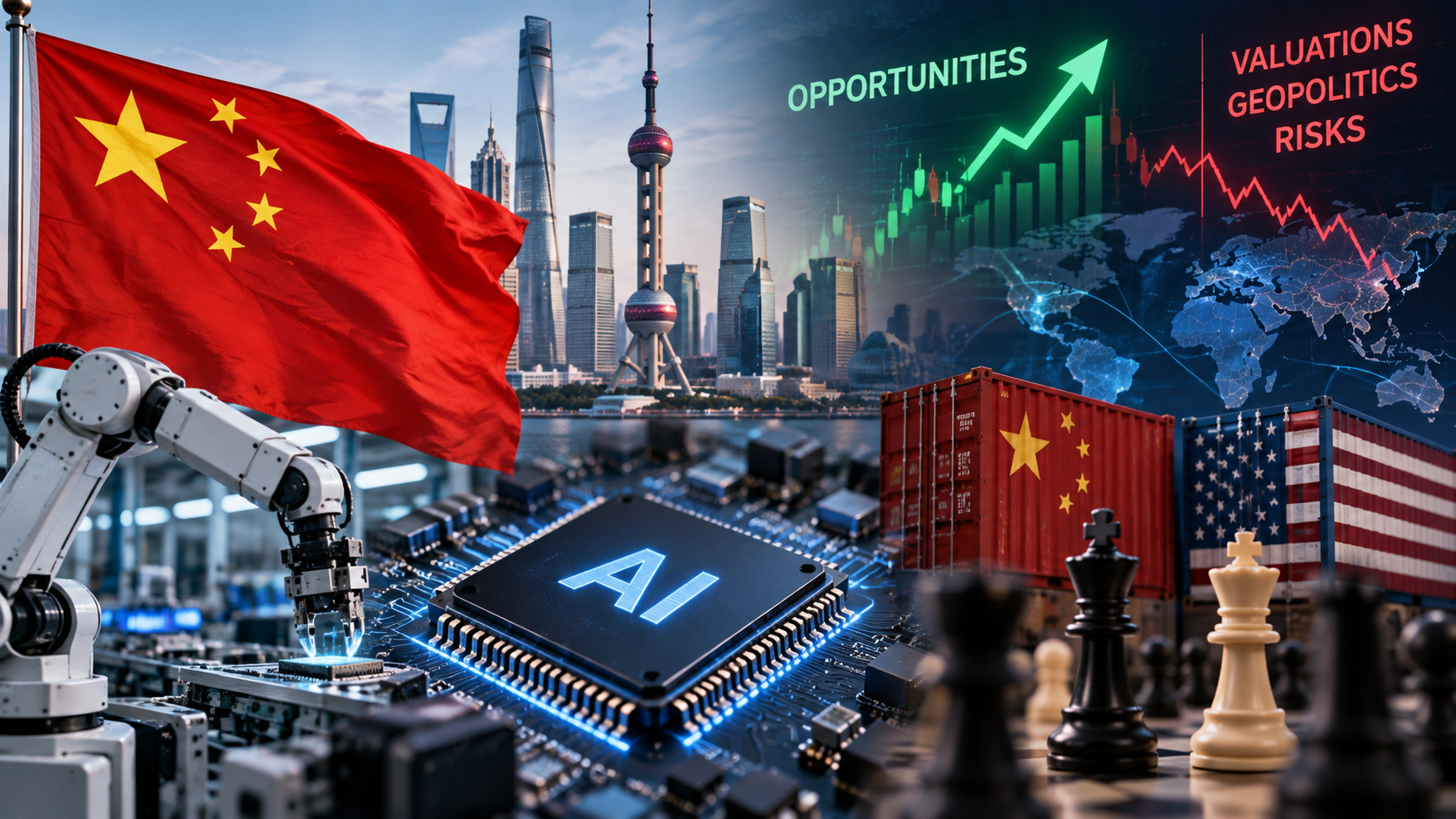
Bank of America sees China's push for technology self-reliance creating fresh opportunities in artificial intelligence stocks, while warning that high valuations and geopolitical tensions are making the sector a riskier investment area.
Winnie Wu, Bank of America's head of Asia-Pacific equity strategy research and co-head of China equity research, said at a media briefing in Hong Kong on Tuesday that Chinese technology companies were catching up with overseas rivals. A series of high-profile listings has also widened the investment choices available in the market.
3 groups with different risks
The bank divides China's AI-related stocks into 3 broad categories. Semiconductor equipment makers, foundries, memory-chip companies and AI accelerator developers could benefit from both AI growth and Beijing's technology self-reliance and import-substitution efforts.
These companies mainly serve the domestic market, which Wu said could leave their earnings relatively insulated from a possible slowdown in US AI investment. Valuations remain a concern, however. Some stocks were trading at between 50 and 150 times earnings even after recent declines, while investor positioning had become relatively crowded.
A second group includes Chinese suppliers supporting the global AI infrastructure buildout. Optical-component makers, printed-circuit-board companies and other hardware producers fall into this category. Their valuations were around 20 to 40 times earnings, lower than those of some domestic-focused AI companies.
That international exposure also creates additional risks. These suppliers are more dependent on US AI capital expenditure and could be affected by possible restrictions on Chinese technology, according to Bank of America.
The third category covers AI applications, ranging from large-language models to humanoid robots and physical AI edge devices. Investors have taken a more cautious view of these companies because there is no clear “killer app”, switching costs are low and price competition is emerging.
Trade talks add uncertainty
The assessment comes as investors await a meeting between Chinese President Xi Jinping and US President Donald Trump in Washington this week. Trade, artificial intelligence and technology export restrictions are on the agenda.
Xi is scheduled to visit the US from Wednesday to Friday and meet Trump on Thursday. It will be their second face-to-face meeting this year.
Wu said US restrictions on Chinese technology could have a limited short-term effect on earnings because Chinese companies remain dominant suppliers for some US companies. Regulatory uncertainty could still weigh on valuations, she said.
Spending forecast points to wider demand
Separately, Bank of America forecasts that China's AI capital expenditure will increase from US$90 billion in 2025 to US$330 billion by 2030. Continued investment in computing infrastructure is expected to drive demand for power equipment, energy storage and other parts of the supply chain.
Conclusion
Bank of America's assessment points to opportunities in China's AI supply chain, but the risks differ sharply across hardware, infrastructure suppliers and applications. Valuations, international exposure and policy uncertainty remain central considerations for the sector.
Frequently Asked Questions
Q. What is creating opportunities in China's AI stocks?
China's technology self-reliance drive, improving domestic capabilities and high-profile listings are broadening investment opportunities.
Q. Which Chinese AI companies could benefit from self-reliance efforts?
Semiconductor equipment makers, foundries, memory-chip companies and AI accelerator developers are identified as potential beneficiaries.
Q. Why are some China AI stocks considered expensive?
Some stocks were trading at between 50 and 150 times earnings despite recent declines, while investor positioning had become relatively crowded.
Q. Which suppliers face greater exposure to US AI spending?
Chinese makers of optical components, printed circuit boards and other AI-related hardware have greater exposure to global infrastructure spending and possible technology restrictions.
Q. Why are AI applications viewed more cautiously?
Investors are concerned about the lack of a clear “killer app”, low switching costs and emerging price competition.
Q. What is Bank of America's China AI spending forecast?
The bank forecasts that China's AI capital expenditure will rise from US$90 billion in 2025 to US$330 billion by 2030.