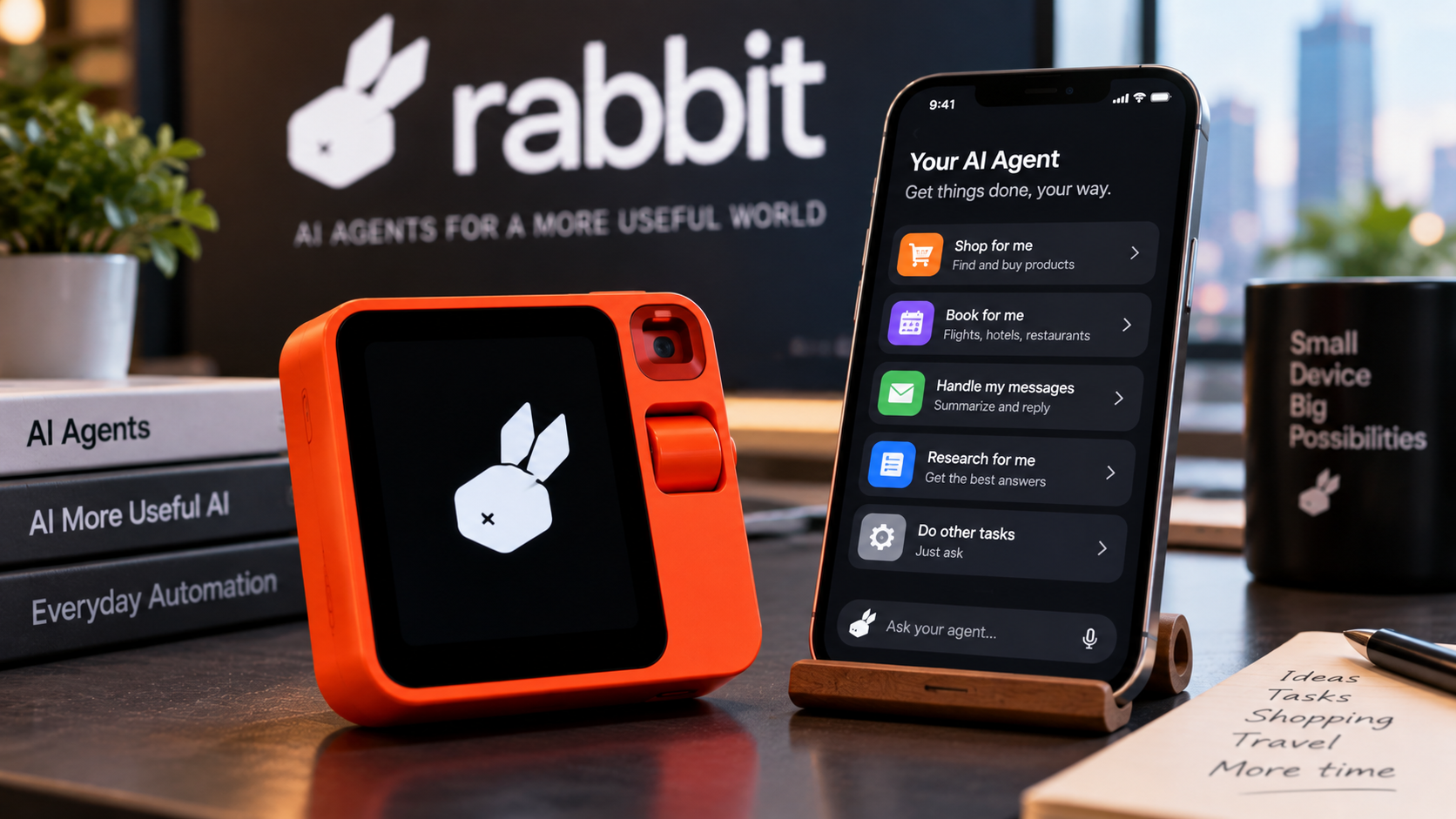
Rabbit is moving its AI strategy away from dedicated hardware and toward software that can operate across devices users already own. The company has announced OS3, a standalone agentic operating system (Agentic Operating System) that can be used through a desktop browser, Telegram on a phone or iMessage.
OS3 is also arriving as a software update for Rabbit's R1, the orange-red device that drew attention after its launch at CES 2024. The Rone was designed to let users speak requests to an AI assistant, including tasks such as booking an Uber or ordering food on DoorDash. Early reviews were harsh, with WIRED giving the device a 3/10 rating.
The new platform represents a sharp change in emphasis. Rabbit originally promoted dedicated hardware as an alternative to smartphone apps, but OS3 is designed to place the agent on top of existing computers and messaging tools. Anyone can try the platform starting today, according to the company.
How Rabbit says OS3 works
OS3 runs in the cloud and connects to desktop software, files and web pages through a local agent node installed on Windows, Mac or Linux. Rabbit says its Direct Large Action Model, or DLAM, technology allows the system to perform local software tasks and write and debug code autonomously.
A single account can connect up to 5 machines. The system decides which linked device should handle a particular request. Its interface is a continuous chat stream rather than a collection of separate conversation threads. Rabbit describes the format as a place where users can enter their intent while the system coordinates the models and tools needed for the task.
The platform also supports third-party skills. Users can paste a public URL for an agent skill into the chat, after which OS3 can install it without requiring technical expertise.
Rabbit is using a Bring Your Own Key, or BYOK, model. There is no monthly subscription fee, but users must provide API keys from providers such as OpenAI or Anthropic, or connect local open-source models.
From Rone updates to a smaller hardware role
Rabbit says it has released around 50 updates for the Rone over the past year and a half. The company also points to a Discord community of more than 12,000 users that provides feedback on potential features. Rone owners can integrate OpenClaw or Hermes AI agents instead of relying only on Rabbit's proprietary models.
The company is no longer manufacturing the R1, and remaining inventory is declining. Rabbit says it has no plans for an R2. Instead, its next hardware product is a Cyberdeck, described as a dedicated “vibe coding” machine that will run OS3 and is expected within “months.”
Rabbit says the Rone can still function as an input and output device for OS3. The company also says people continue to purchase the device through its website, although that activity does not include sales through Amazon, Target or Best Buy.
Rabbit's account of the Rone business
Rabbit founder Lyu says the company delivered more than 100,000 Rone devices worldwide and recorded return rates below 5 percent. He also says the hardware produced a margin of roughly 45 to 50 percent. Unlike many competing AI products, Rabbit does not charge a subscription for its AI features.
Lyu says Rabbit has raised around $60 million and employs 15 people. He attributes the company's limited pace to having fewer resources than AI studios that raised billions of dollars.
The company also faced financial pressure around this time last year after a planned launch in India was blocked by regulations. A handful of employees went on strike and said they were not being paid. Lyu says Rabbit later secured more funding and is now on stronger financial footing, adding that there are no issues with the company's health.
Examples of OS3's intended use
Lyu describes OS3 as a way to handle routine tasks from a phone while the work is carried out on a connected computer. In one example, he receives weekly Excel sales reports for the R1. Previously, he would review a report on his phone, return to his PC and manually transfer information into a master sheet. With OS3, he can send a Telegram request and have the agent perform the task on the computer.
In another example, Lyu asked OS3 to represent him in a Slack conversation while he was unavailable during a video shoot. Rabbit says the agent identified itself as Lyu's agent, spoke with an engineer for 50 minutes and accessed files on Lyu's computer to help answer questions.
Data handling and the next step
Rabbit says its local agent does not store, copy or sell data. Conversations and memory logs are held on Rabbit's servers, while file contents remain on the user's machine. When a task needs model reasoning, however, relevant prompts pass through Rabbit's servers to the selected model provider, which processes the data under its own terms.
The launch places Rabbit's main bet on an agent that travels across existing screens rather than on a new pocket device. The Rone remains part of that system, but OS3 is now the company's central software platform.
Conclusion
Rabbit's OS3 launch shifts the company from dedicated AI hardware toward a cross-platform agent that uses existing computers, phones and messaging services. The Rone will receive the software, while manufacturing winds down and Rabbit prepares a Cyberdeck as its next hardware release.
Frequently Asked Questions
Q. What is Rabbit OS3?
OS3 is Rabbit's standalone agentic operating system for carrying out tasks across connected devices, software, files and web pages.
Q. Which devices and services can access OS3?
Users can access it through a desktop browser, Telegram or iMessage. Its local agent node works with Windows, Mac and Linux computers.
Q. Does OS3 require a Rabbit Rone?
No. OS3 can be used without an R1. The Rone can also serve as an input and output device for the platform.
Q. Does OS3 have a monthly subscription fee?
No. Rabbit says OS3 has no monthly subscription fee, but users must supply API keys or connect local open-source models.
Q. What is happening to the Rabbit Rone?
Rabbit is no longer manufacturing the R1, and existing stock is declining. The device will continue to receive a role within the OS3 platform.
Q. Will Rabbit release an R2?
Rabbit says it has no plans for an R2. Its next hardware product is a Cyberdeck intended to run OS3.
Q. How many machines can one OS3 account connect?
one OS3 account can link up to 5 machines, with the system selecting which device should perform a task.
Q. How does Rabbit describe its data handling?
Rabbit says file contents remain on the user's machine, while conversations and memory logs are stored on Rabbit's servers. Prompts requiring model reasoning are sent to the relevant model provider through Rabbit's servers.