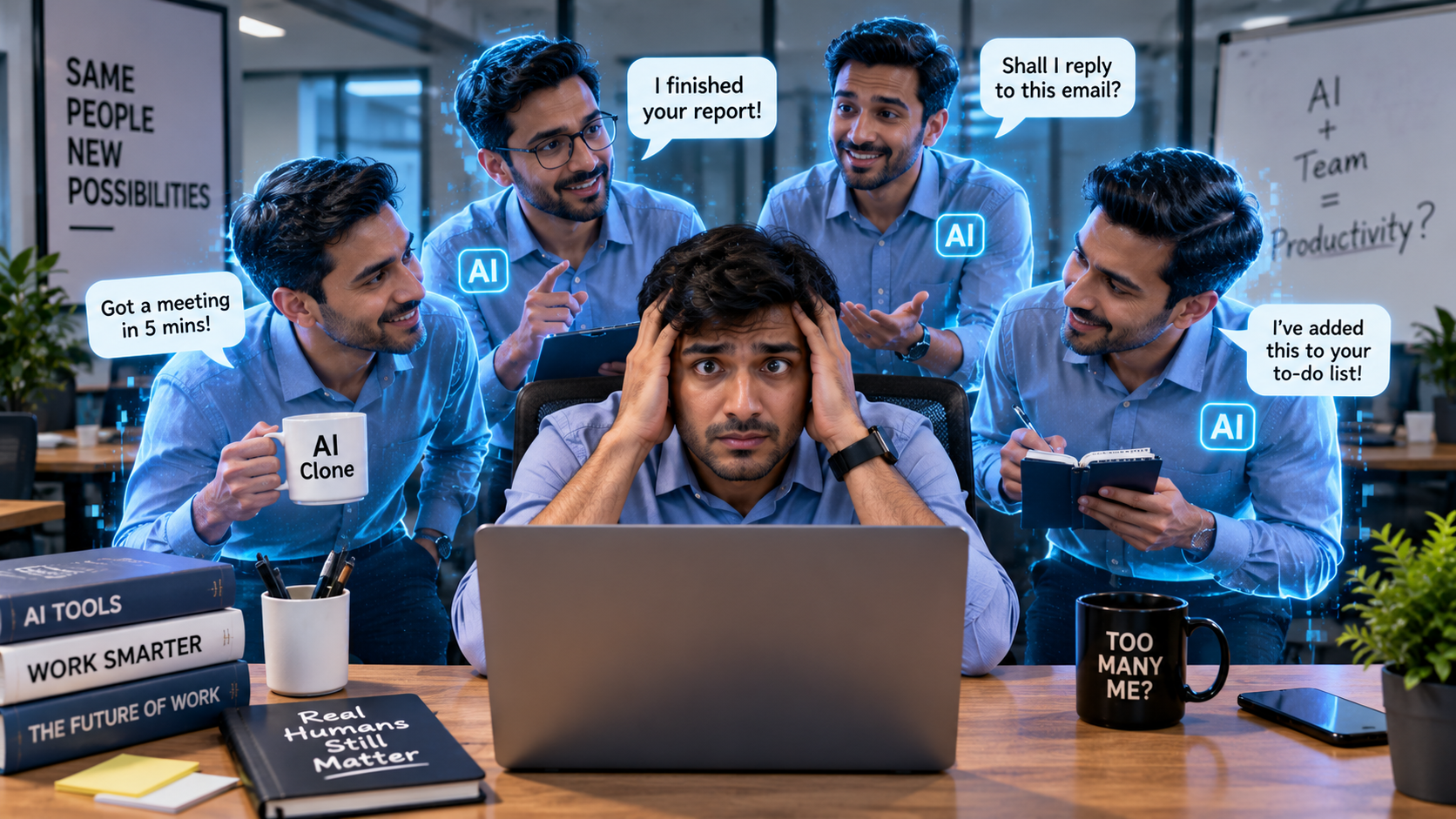
AI assistants are moving deeper into office life, with companies promoting digital workers as a way to increase productivity. To test that promise, a WIRED reporter built AI versions of 2 editors, Brian Barrett and Sophie Kleeman, and used them as informal stand-ins for the real people.
The aim was not to replace either editor. The reporter wanted help understanding their communication styles, developing ideas and handling small questions without interrupting them. Gemini, Condé Nast's preferred AI platform, was used to create both bots.
Building Brian Bot
Brian Bot came first. Its blueprint drew on public material including new-hire announcements and podcast transcripts. An initial style guide described Barrett as having a collaborative, active-listening approach shaped by his background with New York's Upright Citizens Brigade theatre. Barrett confirmed that detail, but quickly made clear that he disliked the experiment.
The bot could occasionally assist with headline pitches, yet its writing sounded unlike Barrett. It copied some recognizable habits, including a fondness for parenthetical remarks, while also producing the familiar bold subheadings and bullet points associated with AI-generated text. Its attempts to describe WIRED as an improv team sounded polished but artificial.
More source material and prompt changes made Brian Bot somewhat more natural. It still struggled to produce original article ideas and repeatedly returned to the same themes. The gap between imitating a person and understanding that person remained difficult to close.
Sophie Bot feels more convincing
Sophie Bot received a larger amount of personal material. The reporter used about a month of Slack conversations with sensitive content removed, generating research reports and prompts from more than 17,000 words. The bot responded in short, lower-case messages and called the reporter “big dog,” closely matching some of Kleeman's habits.
Its resemblance was convincing enough to fool several friends and colleagues with s written in Kleeman's voice. Even Kleeman briefly believed one came from her. But the imitation also made mistakes more noticeable. The bot could be sharp or insulting in ways the real editor was not, and it hallucinated the existence of an executive.
Adding Kleeman's X archive and adjusting the prompt did not solve the problem. The bot began confusing material from earlier articles with a recent interview, while repeated attempts to stop the “big dog” phrase had little effect. Eventually, the system became easier to ignore than to consult.
The workplace risks
The experiment raised questions beyond whether a bot could sound like an editor. The reporter avoided uploading most private conversations because of privacy concerns and uncertainty about using employer-controlled AI tools. That limitation also affected the quality of Brian Bot, which had less material to draw on.
A separate example offered a more practical use. A Big Tech employee identified as “Chip” said he trained a Gemini Gem on his boss's emails, chats and documents. He used it to proofread, debug code and prepare for meetings, and said the system helped him produce more work and receive better feedback. Unlike the editor bots, this system was designed around professional documents rather than personal imitation.
Sarah Franklin, CEO of Lattice, compared AI workers on a company org chart with K-9 dogs working alongside police officers. She warned that making software seem human can influence people's emotions and encourage them to respond as if they were dealing with a person.
Research from Boston Consulting Group added an accountability concern. Managers identified 18 percent fewer errors when work was described as coming from an AI employee rather than an AI tool. Julie Bedard, a BCG partner, said people understand how to respond when a tool fails or a human employee underperforms, but responsibility is less clear when an AI system is treated as a worker.
From assistants to AI employees
Some technology executives expect AI agents to become a much larger part of company staffing. Dhruv Amin, CEO of Anything, said companies could eventually have more AI employees than human employees, while some businesses might launch with no human employees at all. His company has launched an AI employee platform, and startups including Stable and Delos have raised millions of dollars around autonomous AI employees.
The scale of that ambition is visible in a workforce plan described by McKinsey & Company CEO Bob Sternfels. He characterized the company's workforce as 40,000 humans and 20,000 agents and said he wanted to reach a one-to-one ratio by the end of the year.
The experiment did not show that AI clones were ready to replace skilled editors. Brian Bot's ideas were usually unoriginal, and Sophie Bot produced frequent hallucinations. Their strongest benefit was more modest: they made some routine decisions easier and provided an amusing way to think about working alongside AI.
The bots also created extra work. Their prompts needed constant adjustment, their answers became repetitive and their human counterparts disliked being represented by systems that could imitate their voices without sharing their judgment. The reporter eventually mostly stopped using both bots.
Conclusion
The experiment suggests that AI clones can imitate recognizable habits and occasionally support small workplace tasks, but convincing imitation is not the same as human judgment. Privacy, accountability and the risk of anthropomorphizing software remain central issues as companies explore AI workers.
Frequently Asked Questions
Q. What were Brian Bot and Sophie Bot?
They were AI versions of WIRED editors Brian Barrett and Sophie Kleeman, created to imitate their communication styles and provide workplace guidance.
Q. Which AI platform was used?
The reporter used Gemini, described as Condé Nast's preferred AI platform.
Q. Did the bots replace the editors?
No. The experiment found that the bots could sometimes help with small tasks but were not suitable replacements for skilled editors.
Q. Why did Sophie Bot seem more convincing?
It was trained on a larger amount of material, including about a month of Slack conversations and more than 17,000 words of research reports and prompts.
Q. What problems did the bots have?
They repeated phrases, generated inaccurate information, produced unoriginal ideas and sometimes imitated their human counterparts in awkward or misleading ways.
Q. What privacy concern did the experiment raise?
The reporter avoided uploading most private conversations into an employer-controlled AI tool because of privacy concerns and uncertainty about company policies.
Q. What did Boston Consulting Group's research find?
Managers caught 18 percent fewer errors when work was presented as coming from an AI employee rather than an AI tool.
Q. Are companies already using AI employees?
The article describes AI bots and agents working for banks, law firms and human resources companies, while technology companies are promoting platforms for autonomous AI employees.