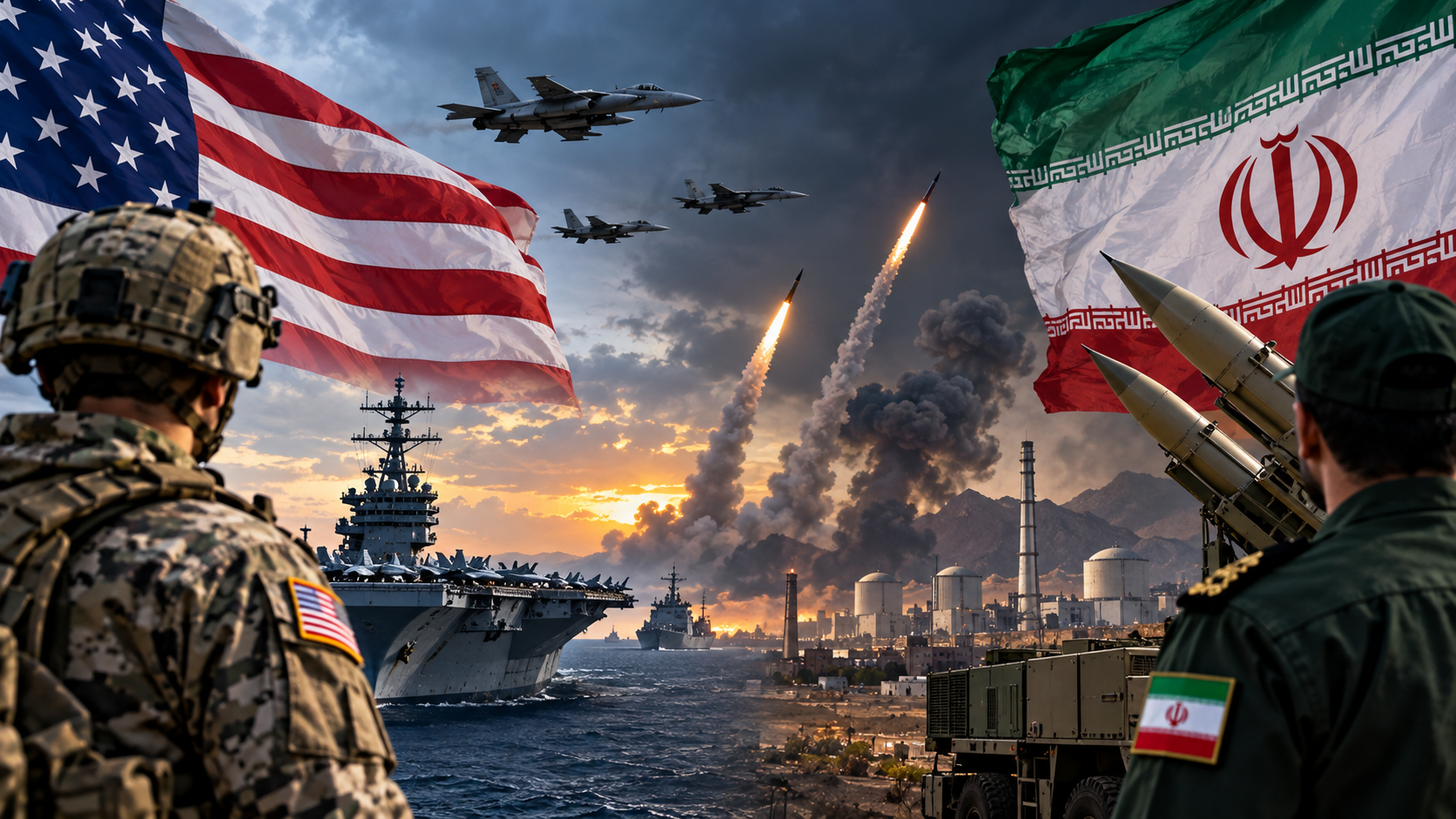
A reported assessment within the Trump administration has raised the possibility that the conflict with Iran could continue until the end of Donald Trump’s presidential term in 2029, presenting a far longer timeline than the president has recently suggested.
The assessment, attributed to private discussions involving senior officials including Vice President JD Vance and Secretary of State Marco Rubio, came as US media coverage shifted from asking when the war might end to examining whether it could become a prolonged regional conflict with serious consequences for energy markets.
Trump has repeatedly indicated that he expects a quicker conclusion. In a recent statement, he said he believed the war would end shortly after the US midterm elections, scheduled in 2 months. He also alleged that Iran was trying to influence the election outcome by helping candidates with a less hard-line approach toward Tehran gain power in Congress.
Why the Strait of Hormuz matters
The Strait of Hormuz and the Persian Gulf have become central to coverage of the conflict. Reports have focused on attacks involving Iranian tankers, Iran’s missile retaliation against US bases in Jordan and claims by Iranian military officials that they had struck a US fleet in southern Iranian waters.
US Central Command has said that no US warship was targeted. CNN also reported that there was no indication the situation would end soon, raising questions about whether negotiations could resume while military operations and threats continue.
The Strait of Hormuz has also emerged as a key obstacle to any effort to end the conflict. The Washington described the US approach as combining a naval blockade with economic sanctions, placing control and management of the waterway at the centre of the confrontation.
Oil prices add to the pressure
The economic impact has become a major part of the war’s coverage. Major US media outlets reported that Brent crude had moved above $100 per barrel and warned that prices could rise further.
The Associated Press reported that some analysts were considering possible prices of $120 or even $150 if disruption to shipping through the Strait of Hormuz became more severe. Those figures are presented as possible outcomes linked to worsening transport disruption, rather than as confirmed price targets.
The concern extends beyond Hormuz. Media coverage has also linked the broader crisis to fighting involving Yemen’s Houthi rebels and Saudi Arabia. Attacks by the Houthis on Saudi energy infrastructure, along with counterattacks by forces supporting Yemen’s Saudi-backed government, have been presented as another threat to the energy transition through the Bab el-Mandeb route.
The result is a focus on simultaneous risks around 2 strategic energy chokepoints: the Strait of Hormuz and Bab el-Mandeb.
Competing views of Iran’s position
Media coverage close to Trump has portrayed Iran as facing unprecedented pressure, with its military capacity and economic foundations weakened. From that perspective, attacks on US vessels are treated as signs of desperation.
Other coverage, including by The New York Times, The Washington and CNN, has offered a different assessment. It has argued that Iran continues to demonstrate an ability to impose heavy costs on the United States and the global economy, and that a maximum-pressure strategy could intensify the conflict instead of forcing Tehran to surrender.
That disagreement helps explain the attention given to the reported possibility of a conflict lasting until 2029. It suggests that at least part of the US government is considering the confrontation as more than a short-term crisis, even as Trump publicly points to an earlier end.
Conclusion
The central uncertainty is whether the conflict follows Trump’s expectation of a near-term end or develops into a prolonged regional confrontation. The reported 2029 assessment, military activity around Hormuz and Bab el-Mandeb, and the rise in Brent crude above $100 have made the war’s potential energy and economic impact a central concern.
Frequently Asked Questions
Q. How long could the US-Iran conflict continue?
The reported assessment suggests it could continue until the end of Trump’s presidential term in 2029.
Q. What has Trump said about when the war could end?
Trump has said he believes the war could end shortly after the US midterm elections, which are due in 2 months.
Q. Why is the Strait of Hormuz important in this conflict?
The waterway is central to shipping and energy-market concerns, and reports describe its control and management as a major obstacle to ending the conflict.
Q. How high could oil prices rise?
Some analysts cited by the Associated Press have discussed possible prices of $120 or $150 if shipping disruption through the Strait of Hormuz worsens.
Q. Was a US warship hit?
US Central Command said that no US warship was targeted.
Q. Which other route is part of the wider energy concern?
The Bab el-Mandeb route has also been linked to regional attacks and risks affecting the energy transition.