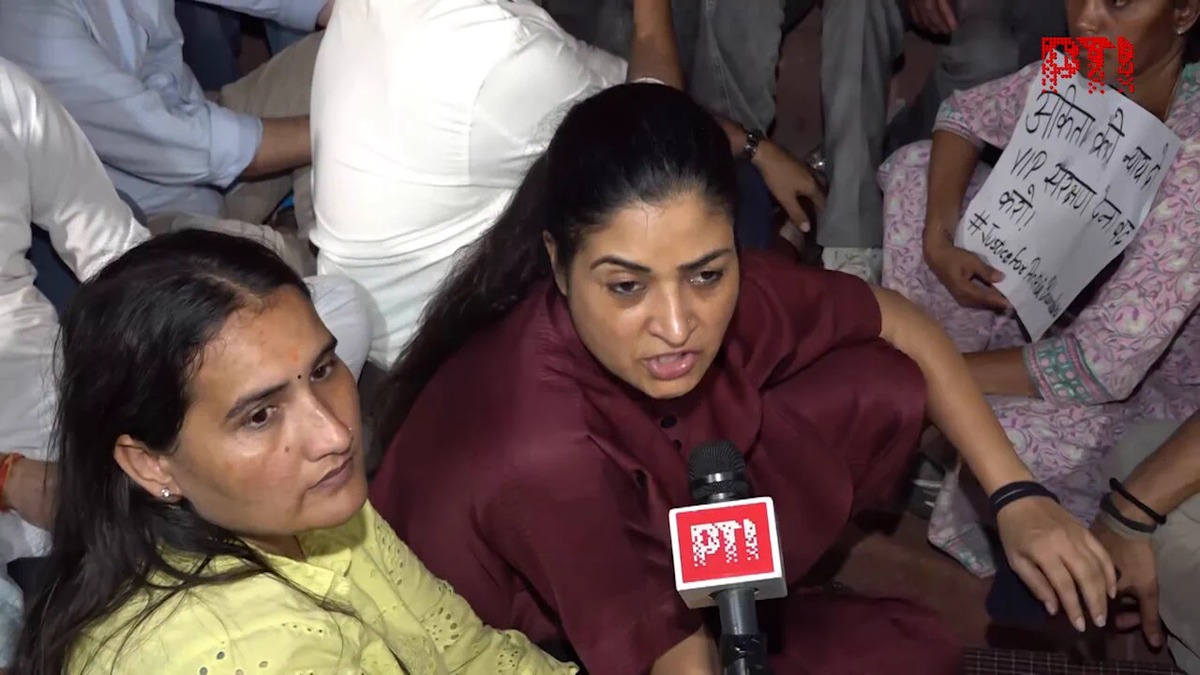
Ramlila Maidan has again become central to Delhi's protest politics after Jantar Mantar was removed from the list of authorised demonstration venues. Delhi Police has designated three locations for protests: Ramlila Maidan, Burari and CBD Ground.
The ground in Old Delhi has long served both governments organising public rallies and movements challenging those in power. Its history includes events linked to India's freedom struggle, political opposition, the Emergency, the Ram temple movement and the campaign for a strong Lokpal law.
A designated protest venue
According to PTI, Ramlila Maidan covers 12 acres and can accommodate 50,000 people. Booking the ground for 1 day costs a total of ₹1.21 lakh, including a refundable security deposit and tax.
India Today reported, citing officials, that the venue is available for only 3 days this year: 29, 30 and 31 December. Booking is handled through the horticulture department of the Municipal Corporation of Delhi. Organisers also need a no-objection certificate from Delhi Police.
Officials said a smaller section may be available without charge, but that space can hold only 150 people. The requirements and limited availability make the venue's administrative process significant for organisations planning public demonstrations.
The ground's association with Ram Leela performances began when several organisations in Old Delhi started holding them there. Over time, those events gave the venue its present name. At a time when Delhi had few larger open spaces, the ground became a preferred location for political rallies and direct public outreach.
From freedom-era politics to national events
During the freedom struggle, Ramlila Maidan became a prominent place for Mahatma Gandhi, Jawaharlal Nehru, Sardar Patel and other leaders to register opposition. The venue later hosted figures ranging from Muhammad Ali Jinnah and Nehru to Baba Ramdev and Anna Hazare.
In December 1952, Shyama Prasad Mukherjee conducted a satyagraha there over the Jammu and Kashmir issue. Nehru held large public meetings at the ground in 1956 and 1957.
On 28 January 1961, Britain's Queen Elizabeth addressed a large public gathering at Ramlila Maidan. On 26 January 1963, Lata Mangeshkar performed at an event attended by Nehru.
During the 1965 war against Pakistan, Prime Minister Lal Bahadur Shastri repeated the slogan “Jai Jawan, Jai Kisan” at a large meeting at the venue. In 1972, Prime Minister Indira Gandhi held a rally there to celebrate the formation of Bangladesh and victory in the war against Pakistan. The event drew strong public support, according to the account.
A platform for opposition movements
On 25 June 1975, Jayaprakash Narayan joined opposition leaders at Ramlila Maidan and called for the removal of Indira Gandhi's government, described in the report as a dictatorial government. Opposition parties returned to the venue in February 1977 to take their message to the public.
At a meeting held under the Janata Party banner, Babu Jagjivan Ram appeared on the stage with Morarji Desai, Chaudhary Charan Singh, Chandrashekhar and Atal Bihari Vajpayee. The gathering brought together leaders who had left Congress and were associated with the opposition effort.
During the 1980s and 1990s, Boat Club became a location for protests. After demonstrations there were prohibited during Prime Minister Narasimha Rao's tenure, the Bharatiya Janata Party selected Ramlila Maidan for the Ram temple movement.
Congress, the Bharatiya Janata Party, other political parties, organisations and religious groups have continued to hold programmes at the venue.
The 2011 movements
Ramlila Maidan was again in the national spotlight in 2011, when Anna Hazare led a nationwide movement demanding a strong Lokpal law. The movement later led to the formation of the Aam Aadmi Party under Arvind Kejriwal's leadership, followed by the party's government in Delhi.
That same year, Baba Ramdev held a fast at the ground against black money and corruption. Delhi Police later took action, after which he had to leave the venue.
Conclusion
The removal of Jantar Mantar from Delhi's authorised protest venues has placed Ramlila Maidan in renewed focus. Its current role as a designated demonstration site follows a long history of rallies, opposition campaigns, public celebrations and major political movements.
Frequently Asked Questions
Q. Which locations has Delhi Police designated for protests?
Delhi Police has designated Ramlila Maidan, Burari and CBD Ground.
Q. How large is Ramlila Maidan?
The ground covers 12 acres and can accommodate 50,000 people, according to PTI.
Q. How much does a one-day booking cost?
A one-day booking costs a total of ₹1.21 lakh, including a refundable security deposit and tax.
Q. When is the ground available this year?
Officials cited by India Today said it is available on 29, 30 and 31 December.
Q. Who handles bookings for the venue?
Bookings are handled through the horticulture department of the Municipal Corporation of Delhi, and a no-objection certificate from Delhi Police is required.
Q. What was Anna Hazare's movement at the ground about?
In 2011, Anna Hazare led a nationwide movement at the venue demanding a strong Lokpal law.
Q. Which other 2011 protest took place there?
Baba Ramdev held a fast against black money and corruption, but left after Delhi Police took action.