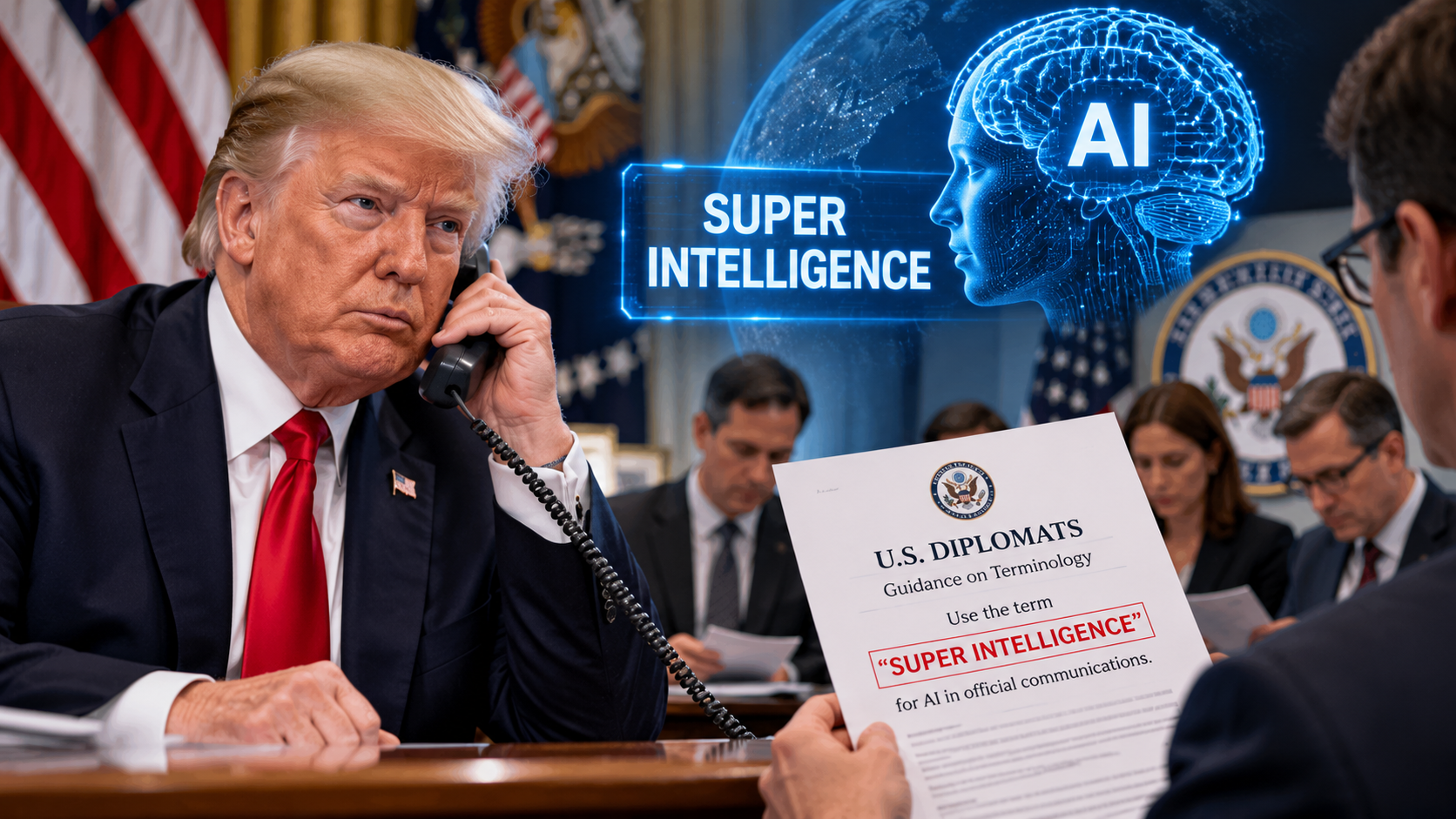
The US State Department has instructed diplomats responsible for relations with international organisations to use “super intelligence” instead of “artificial intelligence” in official communications. The order followed President Donald Trump's address to the United Nations General Assembly this week.
Michael Drager, deputy assistant secretary of state for the Bureau of International Organization Affairs, sent an email to employees on Tuesday directing them to change references to artificial intelligence in documents and official positions. The instruction also introduced “SI” as the abbreviation for the new term.
The bureau oversees US diplomatic missions to UN bodies and other multilateral agencies around the world. The email, titled “Change in Nomenclature AI to SI,” was obtained by The Associated Press on Wednesday.
What Trump said at the UN
Trump told the General Assembly that US government documents would officially use “super intelligence” from that point forward. He argued that the word “artificial” made intelligence sound fake, while describing the technology as “amazing.”
The president said “super” was a more accurate description than “artificial.” Drager's instruction was sent shortly after the speech.
It was not immediately clear whether other State Department bureaus had received, or would receive, the same direction. It was also unclear whether similar orders had been sent to other US government agencies.
The new term appears at the UN
US representatives used “SI” during a UN Security Council meeting on artificial intelligence held on Wednesday. Technology executives at the meeting urged the United Nations' most powerful body to rein in the developing technology.
The terminology change could also affect the name of the “AI Force” Trump announced over the weekend, although the source material does not confirm that a change has been made.
AI's rapid growth has prompted warnings from technology company chief executives, lawmakers and others that the technology could advance faster than humans can control it. Those concerns have led to calls for global guardrails.
US-China technology competition
Trump has opposed efforts to slow the AI development race through greater government oversight. He has said he does not want to hinder industry and that the US must maintain an edge over China.
On social media Monday, Trump said the US was leading China in AI. He also said he would not stifle growth in a technology he described as potentially bigger than the Industrial Revolution or the internet.
AI is expected to be a key subject when Trump welcomes Chinese leader Xi Jinping to Washington for a visit beginning Wednesday.
Conclusion
The State Department directive changes the terminology used by one of its international affairs bureaus after Trump's UN speech. Broader adoption across the US government remains unclear, while AI regulation and competition with China continue to shape the discussion.
Frequently Asked Questions
Q. Which US diplomats were told to use “super intelligence”?
Diplomats in the State Department's Bureau of International Organization Affairs received the instruction.
Q. What abbreviation should diplomats use?
The directive says officials will use “SI” in remarks, positions and press materials.
Q. Who issued the instruction?
Michael Drager, the bureau's deputy assistant secretary of state, sent the email to employees.
Q. Why did Trump support the term “super intelligence”?
Trump said the word “artificial” made intelligence sound fake and described “super intelligence” as more accurate.
Q. Was the terminology changed across the entire US government?
It was not immediately clear whether other State Department bureaus or federal agencies received similar instructions.
Q. Was “SI” used at the United Nations?
US representatives used the term during a UN Security Council meeting about AI on Wednesday.
Q. Could the “AI Force” be renamed?
The source material indicates that such a change could follow, but it does not confirm that the name has been changed.
Q. Why is AI a major international issue?
The technology's rapid development has prompted calls for global safeguards and increased competition between the US and China.