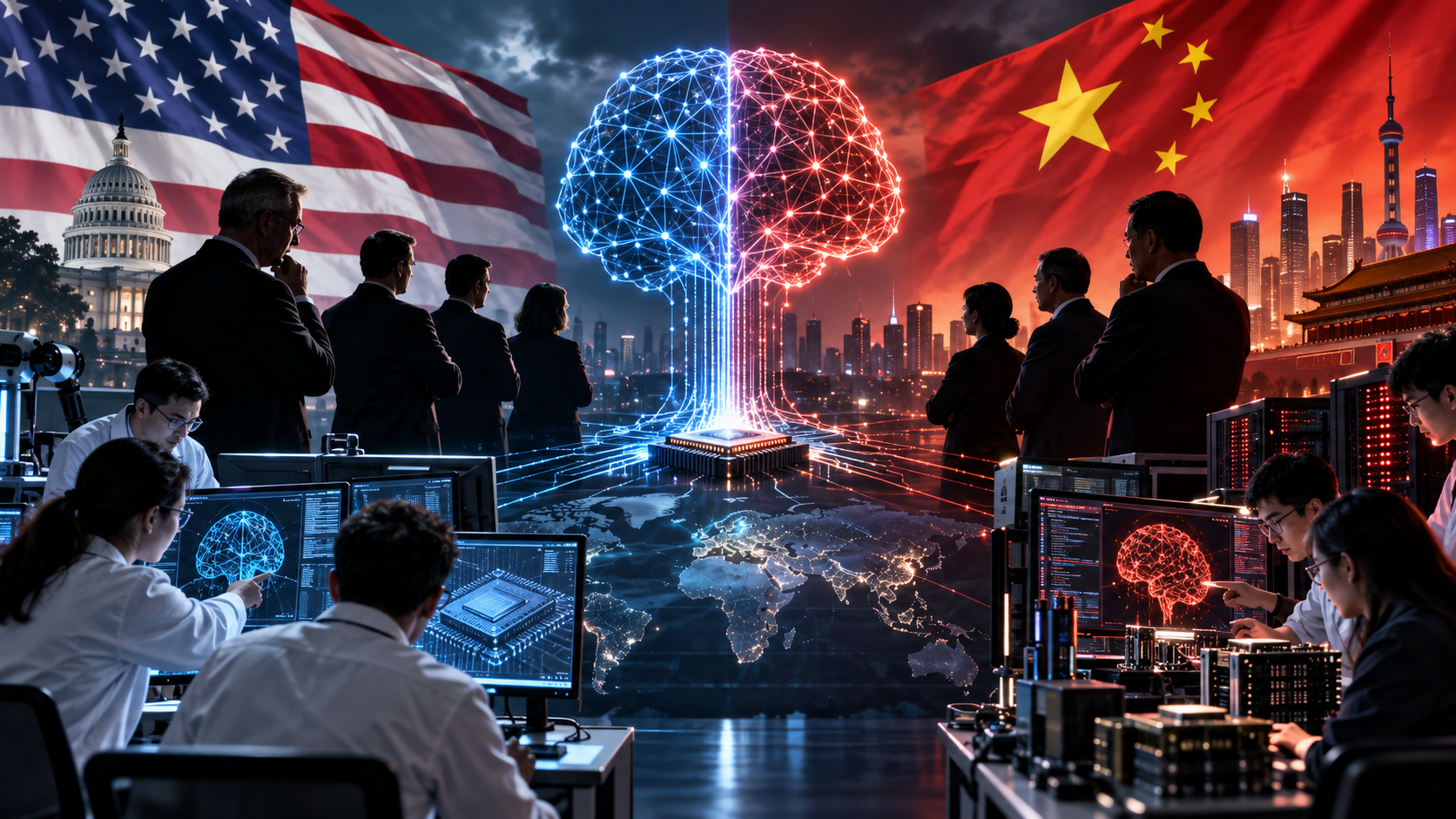
The dispute over artificial intelligence is widening into a strategic argument between the United States and China, with technology executives, politicians and Chinese officials divided over the pace of development and the rules that should govern it.
Anthropic CEO Dario Amodei has urged the industry to place greater emphasis on safety while companies compete to build more powerful systems. His position has received support from OpenAI CEO Sam Altman and xAI CEO Elon Musk, but it has also drawn criticism from China and opposition from US political figures who want the country to maintain its lead.
The safeguards at the centre of the dispute
In a blog dated 12 September, Amodei argued that safety should not be pushed aside in the race to develop advanced AI. His proposals include restricting the sale of powerful AI chips and chip-making equipment to China, stopping chip smuggling, taking action against model distillation and preventing the theft of important technical information.
Model distillation refers to training one AI model using responses generated by another model without permission. Amodei believes these measures could strengthen the US advantage over the next 3 to 5 years.
The argument is not limited to commercial competition. Amodei, Altman and Musk have warned that AI may advance so quickly that controlling it could become difficult. Former researcher Jacob Coxon said the technology could even kill humanity by the end of this decade.
China calls the approach a Cold War tactic
China has rejected the idea that technology restrictions would improve global AI safety. The state-backed Global Times described the proposals as a Cold War strategy intended to hold back China’s technological progress and exclude Chinese companies from the global AI system.
The newspaper argued that isolating China and its companies would not make AI safer. In its view, reduced cooperation could increase the cost of mistakes and raise the risk that the technology would move beyond effective control.
A Chinese Foreign Ministry spokesperson said on Monday that fear, confrontation and damaging competition could obstruct efforts to build a global AI system. The spokesperson called for technology that benefits everyone and allows broad participation.
Altman backs caution, not a halt
After China criticised the proposals, Altman said that moderating the pace of AI development should not be interpreted as stopping progress. He said safety testing and oversight would require resources, but described that expenditure as necessary.
Altman also backed common safety standards and said companies should take responsible steps rather than wait for new legislation. His position places him between calls for stronger safeguards and the argument that excessive restrictions could weaken the US position in the technology race.
Trump rejects calls to slow AI
US President Donald Trump rejected demands to reduce the speed of AI development on Sunday. He said some people were exaggerating the dangers and stressed the importance of keeping the United States ahead of China.
Trump has argued that AI will bring more benefits than harm. House Speaker Mike Johnson has also said Congress should not rush into passing legislation. The Republican position favours fewer restrictions, while Democrats want the government to act quickly and slow development.
The disagreement has become part of a broader US political contest. AI is increasingly linked to the American economy and military strength, and the issue is also emerging as a subject in the midterm elections.
Could the issue reach a Trump-Xi meeting?
A proposed meeting between Trump and Chinese President Xi Jinping on 24 September could provide a setting for discussions about AI safety and technology controls, according to Reuters.
The central challenge is that Washington and Beijing are approaching the issue from different fears. Supporters of tighter safeguards worry that increasingly powerful AI could become impossible for people to control. Those opposing a slowdown fear that the United States could lose its lead if China moves faster.
Conclusion
The AI debate now combines safety concerns with competition over chips, technical knowledge and global influence. The disagreement between the United States and China, along with divisions inside the United States, makes a shared international framework harder to establish.
Frequently Asked Questions
Q. What is the main US-China dispute over AI?
The dispute concerns how quickly AI should develop, who should set safety rules and whether technology controls should restrict China’s access to advanced systems.
Q. What restrictions has Dario Amodei proposed?
He has called for limits on selling powerful AI chips and chip-making equipment to China, action against chip smuggling and measures targeting model distillation and technical-information theft.
Q. Does Sam Altman support stopping AI development?
No. Altman says balancing the pace of development with safety does not mean stopping progress.
Q. What is China’s position on the proposed controls?
China says the restrictions are intended to hold back its technology sector and could weaken cooperation without improving AI safety.
Q. Could AI safety be discussed by Trump and Xi Jinping?
The issue could be raised at a proposed Trump-Xi meeting on 24 September.