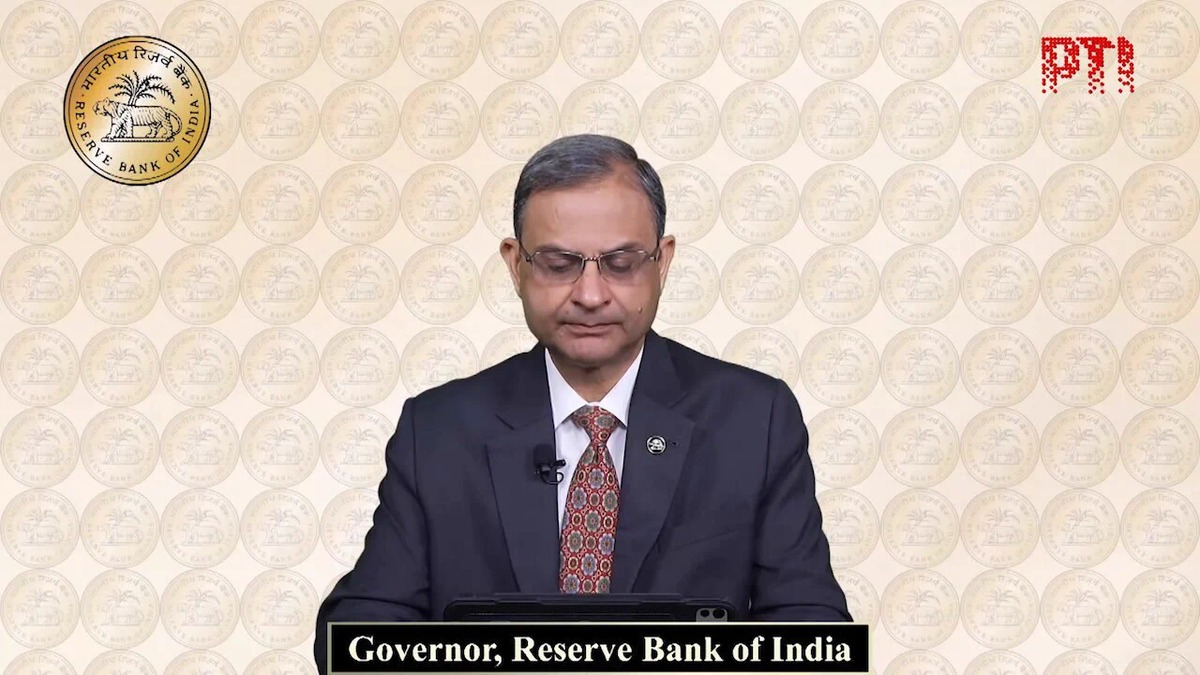
RBI Governor Sanjay Malhotra said the Monetary Policy Committee has changed its policy stance to calibrated tightening by a majority of 4-2, citing a less favourable inflation outlook and continuing global uncertainty.
The governor said the committee reached its decision after assessing geopolitical developments, domestic economic momentum and available inflation data. He described the global environment as challenging, while saying that India's economy remained strong and broadly based.
Why the MPC changed its stance
Malhotra said the committee's assessment was shaped by the view that inflation and its outlook were no longer as benign as they had been last year. The change in stance therefore accompanied the MPC's review of the economy's price pressures and wider conditions.
He also said the Indian economy was expected to remain resilient. According to the governor, economic momentum was broad-based rather than concentrated in a narrow part of the economy.
The statement did not provide a separate repo-rate decision in the supplied material. It focused instead on the MPC's change in stance and the reasoning behind that decision.
Inflation projections cited by the governor
Headline CPI inflation is expected to average almost 5.8 per cent over the next three quarters, including the current quarter, Malhotra said. Core inflation has been projected at 4.4 per cent for this financial year.
These projections formed part of the committee's explanation for its policy approach. The governor linked the assessment to the available data and to the MPC's judgment that inflation conditions had become less favourable than last year.
The inflation outlook is being considered alongside the economy's resilience. Malhotra said the committee saw strength in India's economic activity even as international geopolitical developments continued to create a difficult external setting.
What the statement establishes
The MPC's decision was not unanimous. 4 members supported the move to calibrated tightening, while 2 members did not support it, according to the governor's statement.
The supplied announcement does not identify the individual votes of the 6 members. It also does not set out further measures, a timetable or a separate explanation of how the new stance will be implemented.
The immediate verified message is that the MPC has adopted a tighter policy stance because inflation and its outlook require closer attention. At the same time, the governor presented the domestic economy as strong, broad-based and resilient.
Conclusion
The RBI's MPC has moved to calibrated tightening by a 4-2 majority. Governor Sanjay Malhotra attributed the decision to a challenging global context and an inflation outlook that is less benign than last year, while maintaining that India's economy remains resilient.
Frequently Asked Questions
Q. What stance did the MPC adopt?
The MPC changed its stance to calibrated tightening.
Q. Was the decision unanimous?
No. The change was approved by a majority of 4-2.
Q. What did the governor say about India's economy?
Sanjay Malhotra said the Indian economy was strong, its momentum was broad-based and the economy was expected to remain resilient.
Q. What did the governor say about the global environment?
He said geopolitical developments had made the global context challenging.
Q. What is the projected headline CPI inflation?
Headline CPI inflation is expected to average almost 5.8 per cent over the next three quarters, including the current quarter.
Q. What is the core inflation projection?
Core inflation is projected at 4.4 per cent for this financial year.
Q. Why did the MPC change its stance?
The governor said inflation and its outlook were not as benign as they were last year, based on the available data.