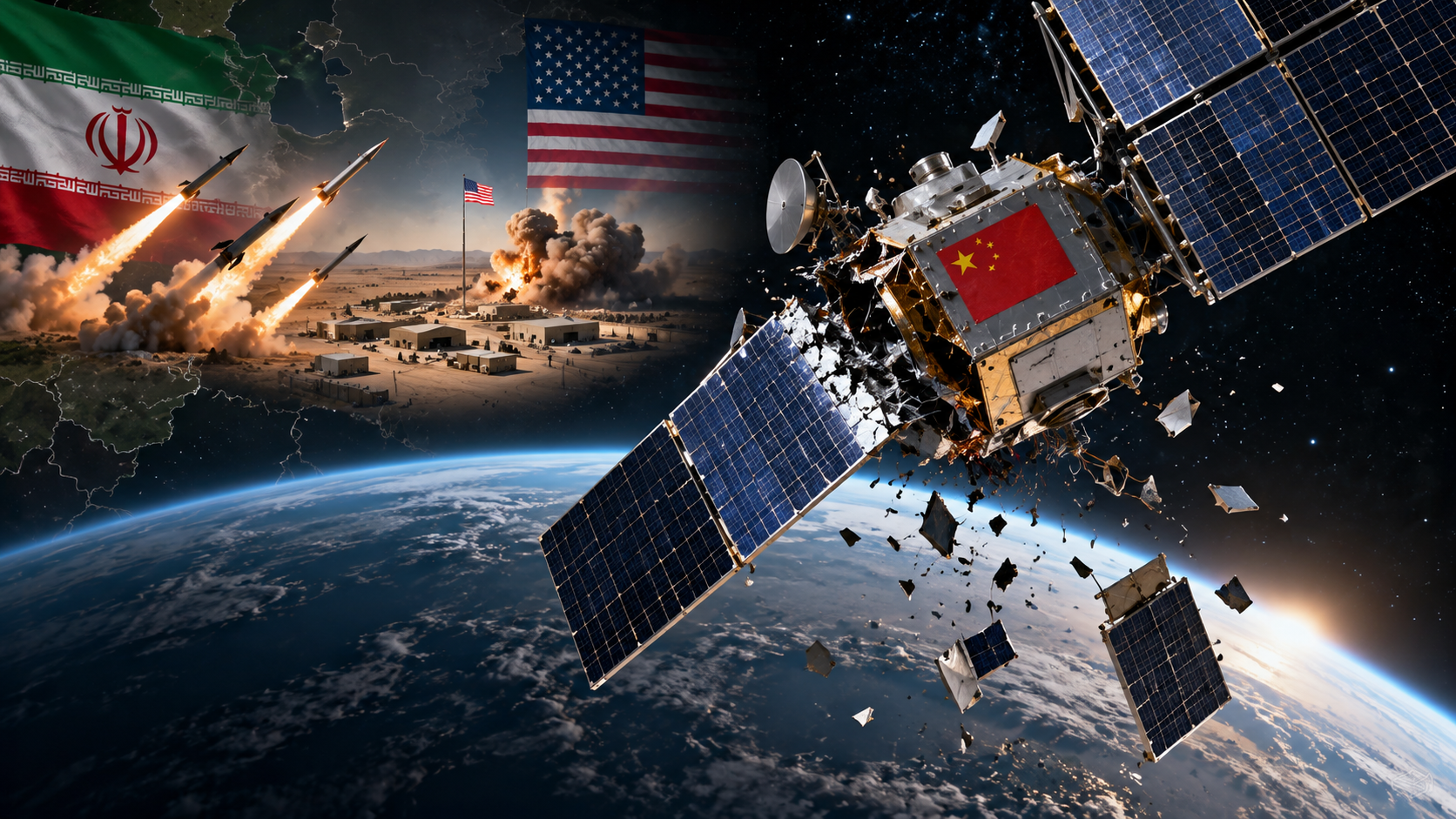
Iran reportedly received high-resolution satellite s of Jordan’s Muwaffaq Salti Air Base from China before a missile attack in July 2026, according to a recent Wall Street Journal report. The strike killed 3 US soldiers and wounded several others, making the alleged transfer of ry a significant issue in tensions between Washington and Beijing.
s were reportedly supplied for both the period before and after the attack. US officials described the alleged Chinese assistance as the clearest and strongest evidence that support from China had a deadly effect on American forces. China’s embassy denied the allegations.
US officials have avoided directly accusing the Chinese government of taking part in the attack. They have, however, acknowledged cooperation at the company level. The case has renewed scrutiny of commercial and quasi-military satellite data that can help military planners identify targets and assess damage.
Satellite ry and the Jordan base attack
High-quality ry can assist with target selection and -strike damage assessment, according to experts cited in the report. Several days after the attack, Iran released detailed s of damage at the base. Those s appeared more capable than material normally associated with commercial sources, the report said.
Washington had previously imposed sanctions on some Chinese satellite companies over concerns that they could provide Iran with ry suitable for military use. The latest allegations have therefore added a new dimension to existing US-China disputes over technology, security and military competition.
The reported ry transfer does not establish that the Chinese government directly ordered or supported the attack. China’s embassy rejected the allegations, while US officials distinguished between possible company-level cooperation and direct state involvement.
Yaogan-50 (02) breaks up in orbit
About 6 weeks after the attack, China’s Yaogan-50 (02) military reconnaissance satellite broke apart in orbit. The satellite was launched in March 2026 and had been operating in an unusual retrograde orbit.
The US Space Force tracked at least 43 debris pieces from the breakup. They spread across an altitude range of 600 to 1100 kilometres, where limited atmospheric drag means such fragments could remain in orbit for decades.
No official explanation for the breakup has been given. Experts have raised the possibility of a propulsion-system failure, a battery problem or a collision with another piece of debris. China has not issued a detailed public statement, although its own tracking systems also recorded some of the fragments.
The Yaogan satellite series is generally associated with military surveillance, including monitoring ships and troop movements. China describes the satellites as having civilian uses such as land surveying.
Timing fuels speculation
The 2 developments occurred close enough in time to attract attention. The first involved alleged Chinese ry being used in connection with an attack on a US base. The second involved the breakup of a Chinese reconnaissance satellite in orbit.
There is no official claim that the United States targeted the satellite. There is also no official statement ruling out that possibility. The available reporting therefore leaves the cause unresolved rather than establishing a deliberate attack.
Analysts may regard the breakup as a coincidence or a technical failure. The broader geopolitical environment has nevertheless encouraged speculation. The uncertainty is compounded by the potential consequences of the debris, which could pose a hazard to other satellites.
Wider impact on space security
The episode highlights how satellite intelligence can influence modern conflicts alongside conventional weapons. Commercial or semi-military data may affect operations on the ground, while failures or collisions in orbit can create risks far beyond the original event.
The breakup also adds to concerns about the growing amount of space debris. Fragments at the reported altitude can remain for decades, potentially making orbital operations more difficult. The incident has increased calls for greater transparency, although no concrete evidence currently shows that the satellite was intentionally destroyed.
The allegations are also likely to draw attention to how Chinese companies handle sensitive data. China has said it controls its companies, but questions remain about the possibility of commercially shared information reaching military users. The United States is expected to continue watching such cooperation because of its implications for the safety of American forces.
The development comes amid an existing US-China technology and military rivalry and could increase tensions before the Trump-Xi summit. It also underlines that strategic competition now extends beyond land and sea into orbit, where the same event can carry military, commercial and diplomatic significance.
Conclusion
The reported satellite-transfer and the later breakup of Yaogan-50 (02) are connected by timing but not by any proven cause. The attack allegations, the unresolved orbital incident and the resulting debris concerns have placed satellite data and space security at the centre of wider US-China tensions.
Frequently Asked Questions
Q. What happened at Muwaffaq Salti Air Base?
Iran carried out a missile attack on the Jordan-based US facility in July 2026. The attack killed 3 US soldiers and wounded several others.
Q. What support did Iran reportedly receive from China?
A Wall Street Journal report said Iran received high-resolution satellite s of the base before the attack. s were reportedly available for both before and after the strike.
Q. Did China admit direct involvement in the attack?
No. China’s embassy denied the allegations, and US officials stopped short of accusing the Chinese government of direct involvement.
Q. What happened to Yaogan-50 (02)?
The Chinese military reconnaissance satellite broke apart in orbit about 6 weeks after the attack. The US Space Force tracked at least 43 resulting debris pieces.
Q. How high did the satellite debris spread?
The fragments were tracked between 600 and 1100 kilometres in altitude.
Q. Why did the satellite break apart?
The official cause remains unknown. Possible explanations raised by experts include a propulsion-system failure, a battery problem or a collision with other debris.
Q. Could the debris remain in orbit for decades?
Yes. At the reported altitude, low atmospheric drag means the fragments could remain in orbit for decades.
Q. Is there proof that the satellite was deliberately destroyed?
No concrete evidence has been reported showing that the satellite was intentionally destroyed.