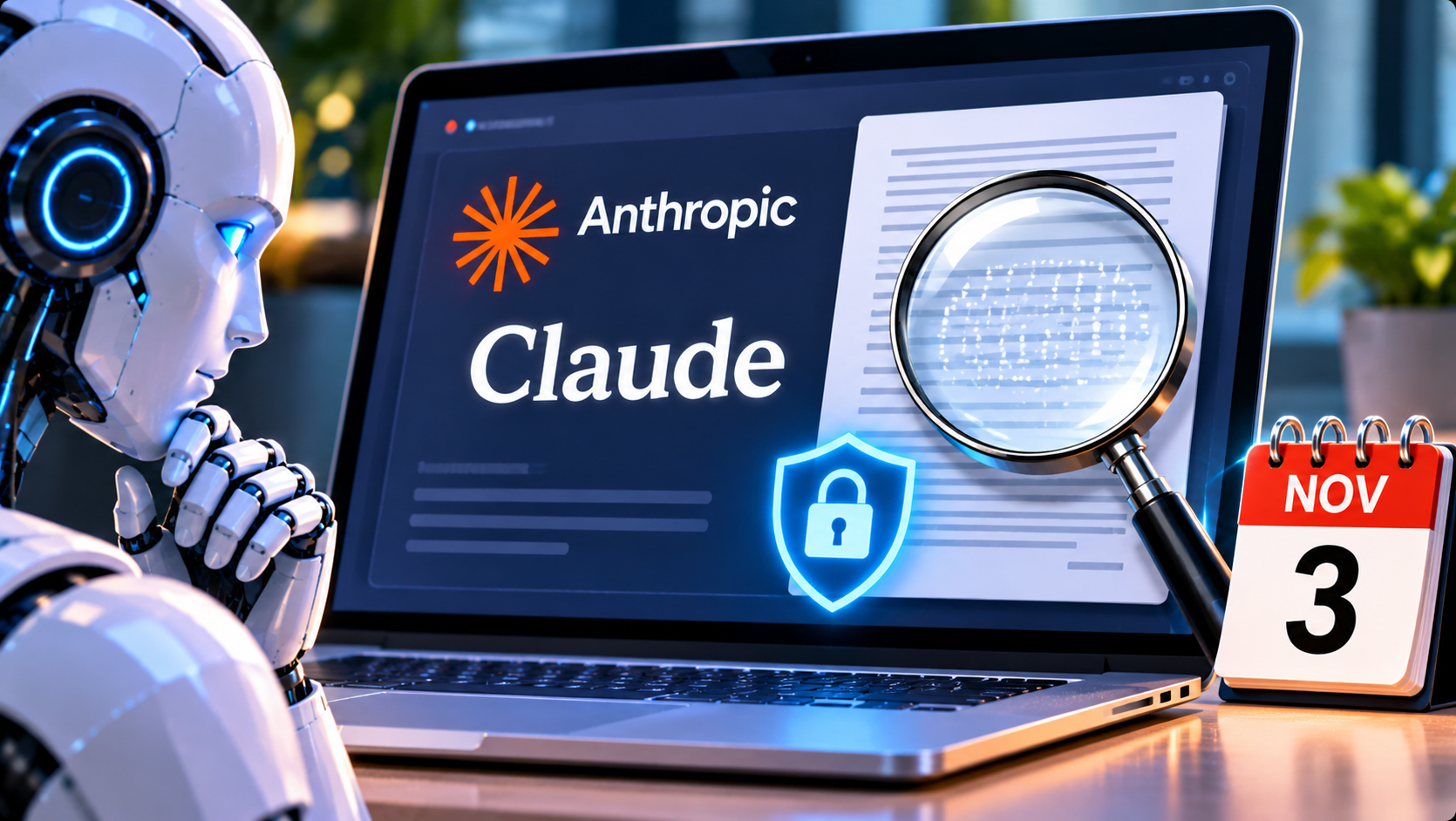
Anthropic is set to extend invisible text watermarks to older Claude models from November 3, according to reports published by BigGo Finance and Mashable. The change would broaden watermarking beyond newer versions of the company's AI assistant.
The development matters because text produced by Claude may become identifiable across a wider range of model versions. For users, the immediate significance is that earlier Claude models may no longer produce text without the same invisible marking associated with newer models.
What is changing
The reports identify November 3 as the start date for extending invisible text watermarks to older Claude models. They do not specify which older models are included or describe how users will detect the markings in ordinary text.
An invisible watermark is designed to remain unobtrusive to readers while providing a way to distinguish AI-generated material. The supplied reports do not provide technical details about Anthropic's method, its accuracy or who will be able to inspect the watermark.
The reported expansion could be relevant to students, workplaces, publishers and developers using Claude-generated text. However, the available information does not establish how the change will affect individual users, whether existing text will be processed retroactively or whether every Claude response will carry the marking.
Wider watermarking debate
Earlier reports published by TechCrunch and YourStory in August 2026 said Anthropic planned to watermark text generated by its AI models. The Hindu later reported that Anthropic released more information amid user confusion about Claude's watermarking.
More recent background reports have placed Anthropic's move in a wider industry discussion. ThePrint reported on October 7, 2026, that Claude users in India were already receiving marked output and that OpenAI was considering watermarking ChatGPT text in the European Union. An October 8 report by EdTech Innovation Hub similarly said OpenAI had joined Anthropic in text watermarking, with a limited ChatGPT rollout in the European Union.
Those reports concern related watermarking developments, but they do not establish that Anthropic's November 3 expansion will use the same approach as OpenAI or apply under the same regional conditions.
What users should know
The confirmed change in the available reporting is the planned extension to older Claude models and the November 3 start date. No model list, user settings, technical explanation or removal process has been provided in the supplied material.
Users who depend on older Claude versions may therefore need to watch for further information from Anthropic about affected models and how the watermarking system works. The available reports do not indicate whether Anthropic has announced additional changes to access, pricing or model performance.
Conclusion
Anthropic is reported to be extending invisible text watermarks to older Claude models from November 3. The move would widen the reach of Claude's text-marking system, but the available reports do not yet specify the affected models or technical details.
Frequently Asked Questions
Q. What is Anthropic changing?
Anthropic is reported to be extending invisible text watermarks to older Claude models.
Q. When is the reported change scheduled to begin?
The reported start date is November 3, 2026.
Q. Which older Claude models will be affected?
The available reports do not identify the specific older models included in the expansion.
Q. Can readers see the invisible watermark?
The reports describe it as invisible, but they do not explain how it can be detected or inspected.
Q. Does the change apply retroactively to existing text?
The available information does not say whether previously generated text will receive a watermark.
Q. Has Anthropic previously discussed text watermarking?
Yes. Reports in August 2026 said Anthropic planned to watermark text generated by its AI models, followed by reporting about user confusion and further information from the company.
Q. Is OpenAI making a similar move?
Background reports said OpenAI was considering or joining text-watermarking efforts, including a limited ChatGPT rollout in the European Union. Those reports describe a separate development from Anthropic's reported November 3 expansion.