Anthropic has warned prospective investors that the expansion of artificial-intelligence infrastructure could expose the company to higher costs, regulatory barriers and reputational damage. The concerns appear in its filing for an initial public offering submitted on Monday.
The company said efforts to secure power could face regulatory hurdles if communities or authorities believe its activities are affecting utility costs or the wider environment. It also acknowledged growing scrutiny of data-centre development, including concerns about environmental effects, land use and water consumption.
Why the filing matters
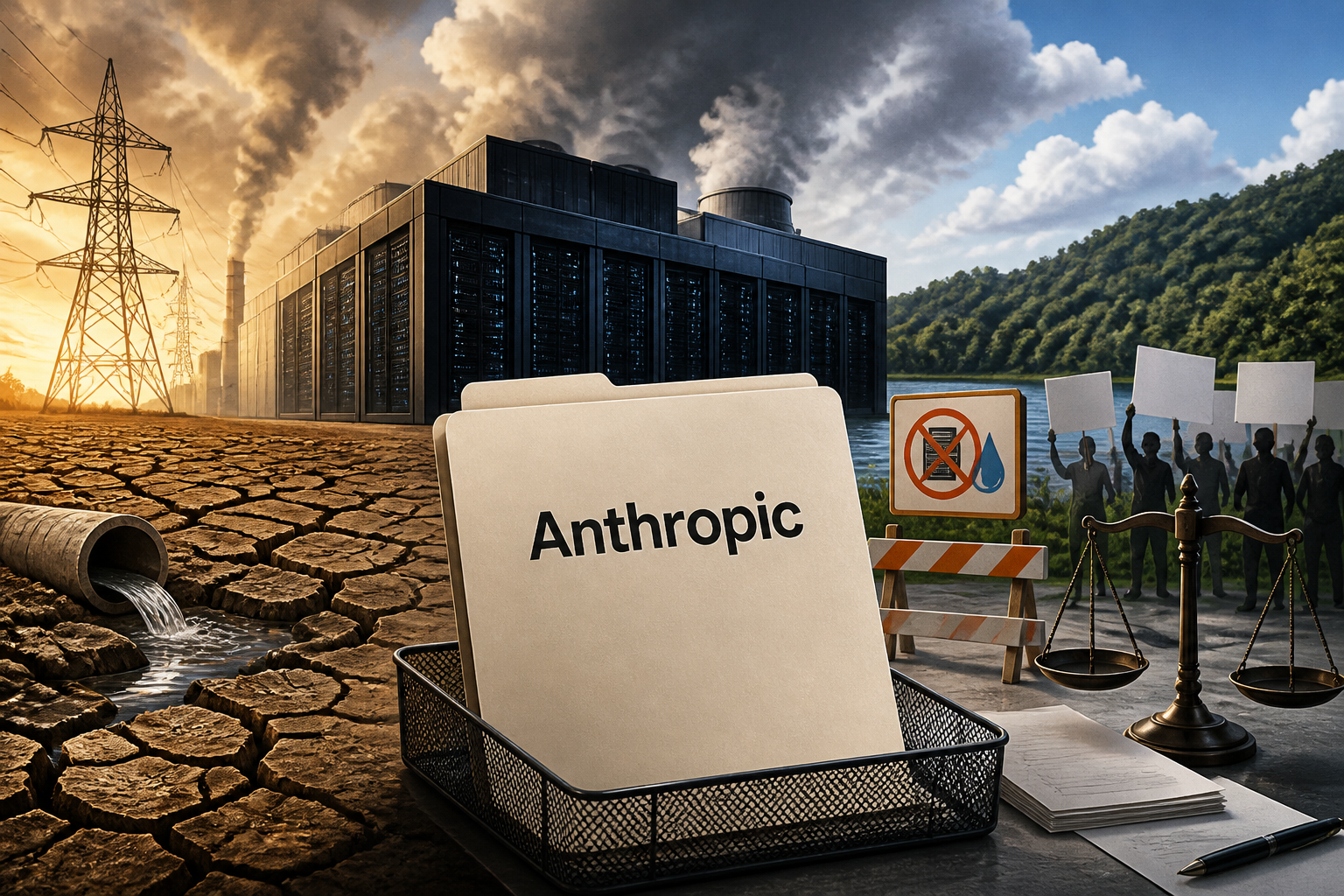
AI companies depend on data centres that require substantial electricity and water. Anthropic said public opposition to these facilities could make infrastructure expansion more difficult, particularly where local communities are concerned about pressure on scarce resources.
The company also identified climate change as a potential operating risk. Higher average temperatures could increase the electricity and water needed to cool equipment at facilities on which Anthropic depends, according to the filing.
That creates a direct link between environmental conditions and business expenses. The filing presents those effects as risks that could grow over time rather than as a separate issue outside the company's financial planning.
Wider scrutiny of AI infrastructure
The filing comes as activist groups, community members, regulators and investors examine the environmental and social effects of artificial intelligence. Some states have considered moratoriums on new data-centre construction while assessing possible effects on the environment and power prices.
Anthropic said backlash could harm its reputation. It also referred to increasing scrutiny of its environmental, social and governance practices and reporting in the United States and internationally.
The company highlighted concerns about the power-intensive nature of its business, water use and reliance on critical minerals. It said some investors could use these non-financial factors when making investment decisions and might decline to invest if they consider its policies and actions inadequate.
Blaine Townsend, director of sustainable, responsible and impact investing at Bailard, said AI's risks and opportunities had become financial and fiduciary considerations. Townsend said investors would want disclosures to address data-centre locations, water consumption and energy demand.
Bailard's research has identified data centres in communities already affected by pollution, AI's water use and its energy demand as material parts of the sector's environmental footprint, Townsend said.
A developing infrastructure challenge
The filing places Anthropic's environmental disclosures alongside the practical difficulties facing companies seeking enough power for AI operations. Oracle Corp. recently cited force majeure after opposition from environmental nonprofits and regulatory setbacks complicated efforts to secure power for a data-centre campus in New Mexico. The project is intended to provide computing power for OpenAI.
Anthropic's disclosure also differs from SpaceX's initial filing, which did not mention climate change. SpaceX later amended its filing to include water scarcity as a risk factor.
For Anthropic, the issue extends beyond securing electricity. The company's filing connects infrastructure growth with land, water, cooling, climate conditions, public confidence, regulatory oversight and investor judgment.
Conclusion
Anthropic's IPO filing shows that power demand, water use, climate change and public opposition are being presented as business and investment risks linked to AI infrastructure expansion.
Frequently Asked Questions
Q. What did Anthropic warn about in its IPO filing?
Anthropic warned that opposition to AI data centres, rising power and water demand, climate change and regulatory scrutiny could increase costs and harm its reputation.
Q. When did Anthropic submit the filing?
The company submitted its initial public offering filing on Monday.
Q. Why could climate change increase Anthropic's costs?
Anthropic said higher average temperatures could increase the power and water required to cool equipment at facilities on which it depends.
Q. What environmental concerns did Anthropic identify?
The filing referred to power use, water consumption, land use, environmental effects and reliance on critical minerals.
Q. How could the concerns affect investors?
Anthropic said some investors might decide not to invest if they considered its environmental, social and governance policies and actions inadequate.
Q. Who is examining the environmental effects of AI infrastructure?
Activist groups, community members, regulators and investors are scrutinising the sector's environmental and social effects.
Q. What happened with the New Mexico data-centre project?
Oracle Corp. cited force majeure after environmental opposition and regulatory setbacks complicated efforts to secure power for a New Mexico campus intended to provide computing power for OpenAI.