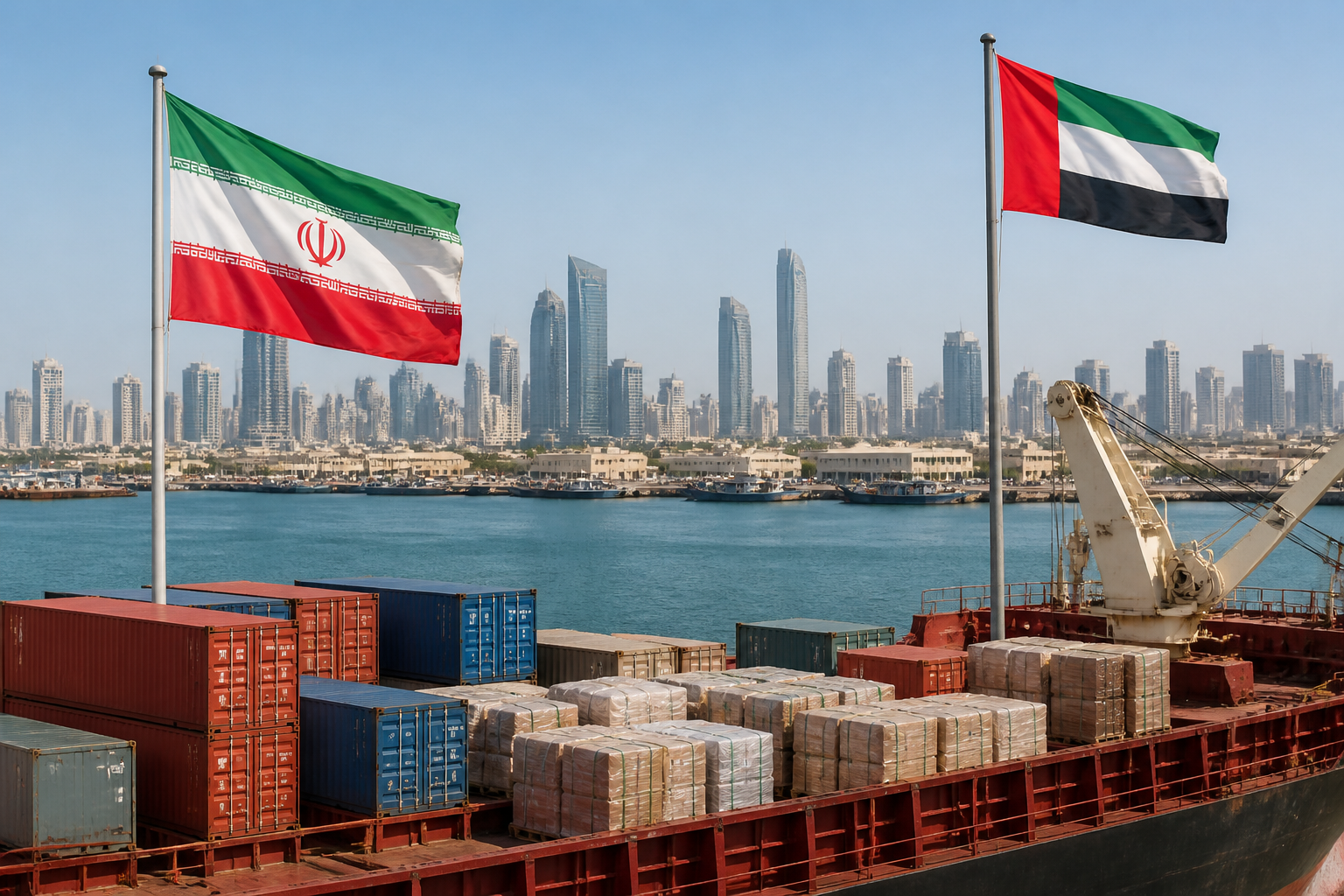
The UAE’s decision to suspend trade and financial dealings with Iran has put a long and complicated relationship under renewed pressure. The UAE’s Defence Ministry said two ballistic missiles had been launched from Iran towards its maritime vessels. Iran denied the allegation, while the UAE said both missiles fell into the sea and one landed in waters it considers part of its territory.
The UAE Foreign Ministry described the alleged action as an escalation and said dealings with Iran would stop. The development matters because Dubai has served for decades as an important commercial and financial link for Iran, particularly when sanctions made direct access to international markets more difficult.
A relationship shaped by geography and history
Iran and the UAE face each other across the Strait of Hormuz. The UAE became a federation in 1971, bringing together Abu Dhabi, Dubai, Sharjah, Ajman, Umm Al Quwain, Fujairah and Ras Al Khaimah. Before independence, the emirates were under British protection and were governed separately by their own rulers.
At that time, Iran was the stronger regional power. Under Shah Mohammad Reza Pahlavi, it had oil wealth, modern cities, a developed military and close ties with Western countries. The emirates, by contrast, were smaller communities whose economies were associated with fishing, pearl diving and local trade.
Three islands in the Strait of Hormuz have remained a major point of dispute. Abu Musa, Greater Tunb and Lesser Tunb were claimed by the emirates of Sharjah and Ras Al Khaimah, while Iran maintained that they belonged to it. As British forces withdrew and the emirates moved towards independence, Iran took control of the three islands. The UAE has had to live with that dispute while dealing with a much larger neighbouring power.
Dubai’s role after Iran’s isolation
Iran’s position changed after the 1979 Islamic Revolution. The shah was removed, an Islamic Republic was established under Ayatollah Khomeini, and Iran became increasingly isolated. Sanctions complicated its ability to sell oil, obtain goods and move money internationally.
Dubai then became a key route for Iranian commerce. Goods needed by Iran were imported through Dubai and carried onward by Iranian traders to Bandar Abbas in small boats. Iranian businesspeople established themselves in Dubai, and Iranian families settled there. Money also moved through Dubai’s banks and markets, while payments were made through hawala networks.
The source material also describes claims that Iranian oil was transferred to UAE tanker vessels at sea after tankers switched off their locations. These arrangements made the UAE an important economic outlet for Iran despite sanctions. A prolonged confrontation could therefore damage Iranian trade, while also putting pressure on the UAE’s close commercial relationship with its neighbour.